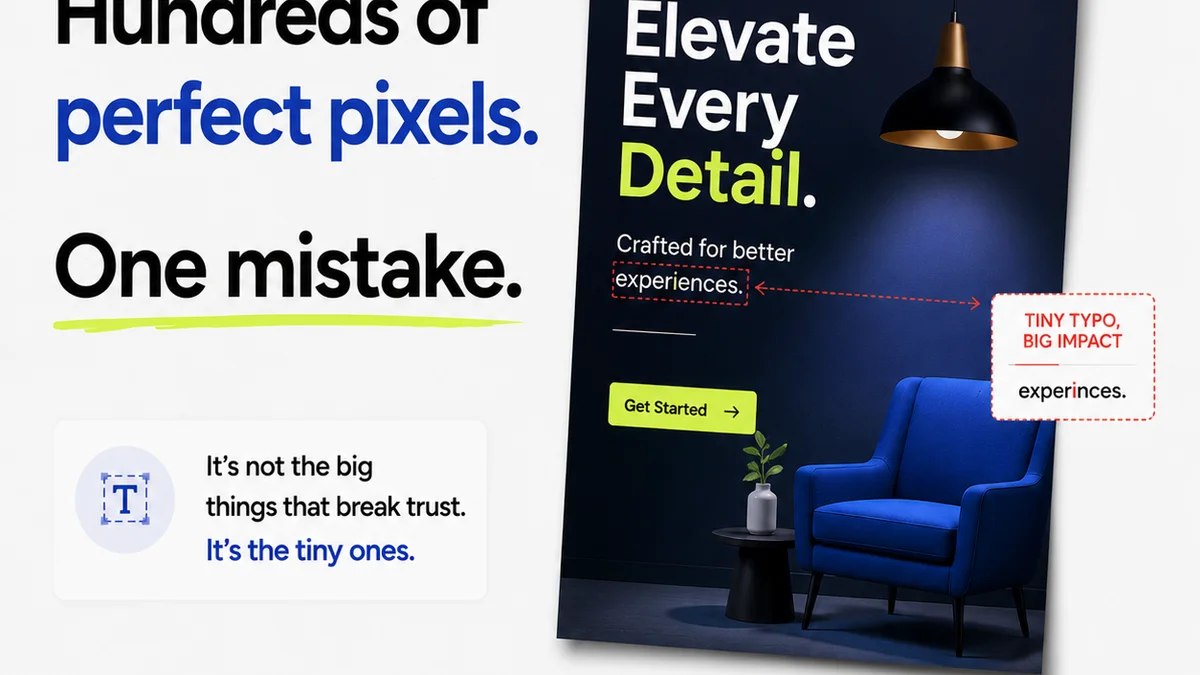
Everyone thinks marketing asset QA is about catching typos and broken links. That’s the surface level. The real goal is far more fundamental: ensuring the work you deliver is not just *correct*, but *effective* and *brand-aligned* every single time.
This isn't about a final proofread. It's about building a robust quality assurance process into the very fabric of your agency's workflow.
1. The Myth of the 'Final Review'
The common wisdom is that a dedicated QA step, usually right before delivery, is enough. A final check before the client sees it. This assumption is dangerously incomplete.
It treats QA as a gatekeeper, a last-minute filter. It implies that everything before this point was somehow less rigorous.
The hard truth? QA isn't a final checkpoint. It's a continuous operational discipline. It’s woven into every stage of creative production, from initial brief to final asset deployment.
The Cost of Reactive QA
- Missed deadlines due to last-minute fixes.
- Client frustration over easily avoidable errors.
- Damage to your agency’s reputation for sloppiness.
- Wasted resources on rework that should have been prevented.
This reactive approach is inefficient and damaging. It turns quality into an afterthought, rather than a foundation.
2. Defining Marketing Asset QA in Practice
Marketing asset Quality Assurance (QA) is the systematic process of verifying that all creative assets meet predefined standards for accuracy, functionality, brand consistency, and strategic alignment before they are released to the target audience or client.
This goes way beyond spell-check.
Key Pillars of Effective QA
- Accuracy: Is all information correct? Dates, prices, names, contact details?
- Functionality: Do all interactive elements work as intended? Links, buttons, forms, animations?
- Brand Consistency: Does the asset adhere to brand guidelines? Logo usage, color palette, typography, tone of voice?
- Technical Specifications: Does it meet platform requirements? File formats, sizes, resolutions, accessibility standards?
- Strategic Alignment: Does the asset effectively communicate the intended message and support the campaign goals?
- Legalities & Compliance: Are all necessary disclaimers, disclosures, and legal requirements present and correct?
Each of these pillars needs dedicated attention, not just a quick glance.
3. Integrating QA Throughout the Workflow
The most effective marketing asset QA isn't a single event; it's a series of checks and balances integrated at critical junctures. Think of it as building quality in, not inspecting it on.
Early-Stage Validation
QA starts the moment a project brief is finalized. Are the objectives clear? Are the target audience definitions precise? Is the scope of work well-defined and understood?
This phase prevents foundational misunderstandings that lead to costly rework later.
Mid-Production Checks
As creative concepts develop and assets are designed, regular checkpoints are crucial. This could involve:
- Internal creative reviews against the brief.
- Technical reviews for platform compatibility.
- Brand guideline adherence checks.
This is where you catch deviations before they become deeply embedded in the work.
Pre-Delivery Rigor
This is the traditional QA stage, but it’s far more comprehensive than a simple proofread. It involves:
- Cross-functional Review: A team member not directly involved in the creation should review.
- Platform Testing: Assets must be tested in the environments they'll be used (e.g., different browsers, devices, social media platforms).
- Accessibility Audit: Ensure compliance with standards like WCAG.
- Final Content Verification: A last check on all textual and numerical data.
This stage is about confirming everything aligns before the final handoff.
Post-Deployment Monitoring
Quality doesn't end at delivery. Monitoring live assets for performance, unexpected bugs, or compliance issues is also part of a mature QA strategy.
This feedback loop informs future projects.
4. Building a QA Checklist That Actually Works
A checklist is a tool, not a strategy. But a *good* checklist, used correctly, is invaluable. It ensures consistency and prevents oversights.
Beyond Basic Proofreading
Your checklist needs to cover more than just grammar and spelling. It should be a comprehensive guide tailored to your agency and client needs.
- Content Accuracy: Verify all facts, figures, names, dates, prices, and contact information.
- Grammar & Spelling: Standard proofreading, but also check for consistent tone.
- Brand Compliance: Logo usage, color palettes, typography, messaging voice.
- Legal & Disclaimers: Ensure all required legal text is present, accurate, and correctly formatted.
- Technical Specs: File types, dimensions, resolutions, color modes (RGB/CMYK), character limits, bitrates.
- Call to Actions (CTAs): Are they clear, compelling, and functional?
- Links & URLs: All links functional? Correct destinations? Tracking parameters correct?
- Platform Specifics: Ad specs, social media image ratios, email client rendering.
- Accessibility: Alt text for images, sufficient color contrast, keyboard navigation (for interactive elements).
Create templates for different asset types (social posts, web banners, email templates, print ads) to streamline the process.
Making Checklists Actionable
A static document is easily ignored. Integrate your checklist into your project management system or use a dedicated tool.
Assign responsibility for completing and signing off on checklist items. This fosters accountability.
5. The Human Element in QA
Technology can automate much of QA, but human oversight remains critical. AI can catch typos, but it struggles with nuance, brand voice, and strategic intent.
The Value of a Fresh Pair of Eyes
A reviewer who wasn't involved in the creation process brings an objective perspective. They can spot errors or inconsistencies that the original creator might overlook due to familiarity.
Specialized QA Roles
For larger agencies, consider having dedicated QA specialists. They develop expertise in spotting common issues and understanding complex technical requirements.
They also act as a neutral party, focused solely on quality, not just project delivery.
6. Where Revue Fits In
Managing marketing asset QA effectively requires centralized visibility and streamlined communication. This is where a tool like Revue becomes essential.
Revue helps by:
- Centralizing Feedback: All client and internal feedback resides in one place, linked directly to the asset. No more hunting through emails or Slack channels.
- Streamlining Revisions: Track every version and revision, ensuring that feedback is addressed and approved systematically.
- Providing Clear Audit Trails: Maintain a clear record of who reviewed what, when, and what decisions were made. This is invaluable for accountability and dispute resolution.
- Facilitating Quality Checks: Use the platform to conduct internal QC before client review, ensuring assets meet agency standards before they even go out.
By structuring your feedback and approval process within Revue, you inherently build more robust QA checks into your workflow. It’s not just about managing feedback; it’s about managing quality.
7. Common Pitfalls to Avoid
Even with the best intentions, QA processes can falter. Be aware of these common traps:
- Over-reliance on automation: Tools are great, but they can't replace human judgment for brand voice or strategic alignment.
- Insufficient training: Ensure your team understands the QA process, the checklists, and their responsibilities.
- Lack of clear standards: If brand guidelines or technical specs are vague, QA becomes subjective and ineffective.
Frequently asked questions
What is the primary goal of marketing asset QA?
The primary goal of marketing asset QA is to ensure that creative assets are not only accurate and functional but also effectively communicate the intended message, align with brand guidelines, and meet strategic objectives before they are deployed.
How can agencies improve their marketing asset QA process?
Agencies can improve their QA process by integrating checks throughout the workflow, developing comprehensive checklists tailored to asset types, assigning clear responsibilities, utilizing technology for centralized feedback and version control, and ensuring human oversight for nuanced aspects like brand voice and strategic alignment.
Is QA only a final step before delivery?
No, effective QA is not just a final step. It's a continuous process that should be integrated at multiple stages of the creative workflow, starting from the initial brief validation through mid-production checks and post-deployment monitoring.
How does a tool like Revue help with marketing asset QA?
Revue centralizes feedback, streamlines revision and approval tracking, provides audit trails, and facilitates internal quality checks. This structured approach helps ensure that all feedback is addressed systematically and that assets meet agency and client standards before final delivery.