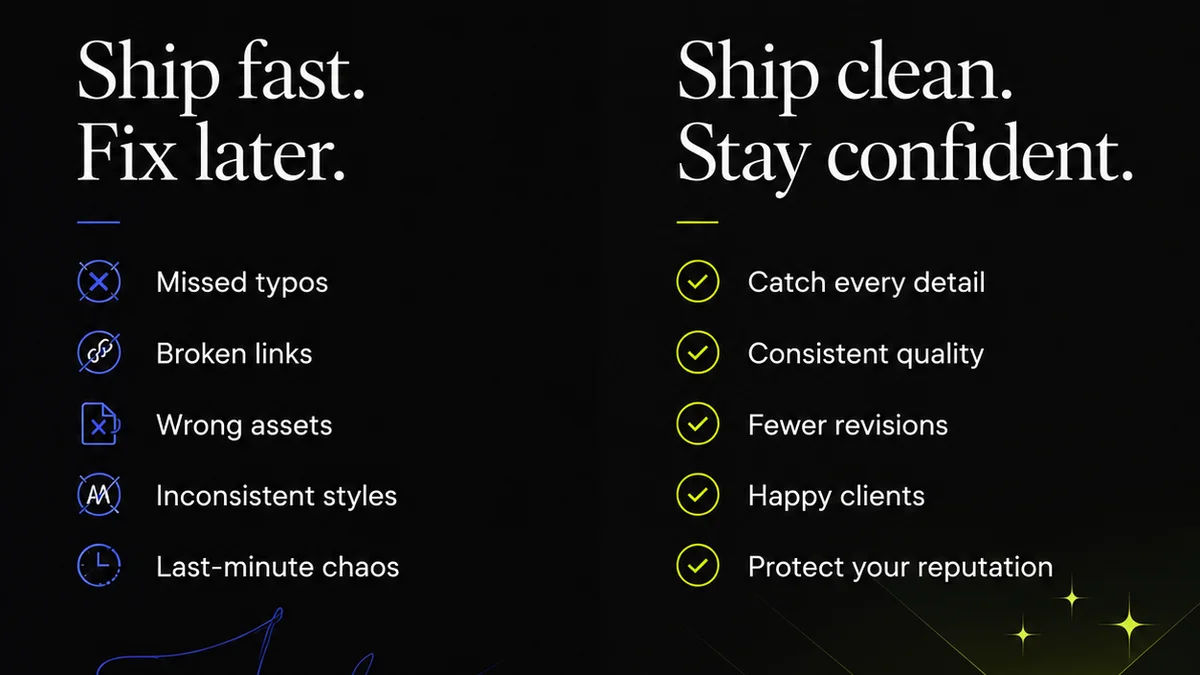
Everyone thinks a marketing campaign checklist is about ticking boxes: write copy, design assets, schedule posts. None of that is wrong. But it’s incomplete.
The real work isn't just doing the tasks; it's ensuring they're done right, aligned, and ready to perform. It’s about the hidden dependencies and the subtle details that separate campaigns that fizzle from those that fly.
1. The Strategy Foundation: Beyond the Brief
Before a single pixel is designed or a word of copy is written, the strategy must be rock-solid. This means dissecting the brief, not just reading it.
Understanding the 'Why'
Every campaign starts with a goal. But what's the *real* business objective? Is it brand awareness, lead generation, direct sales, or customer retention? Clarity here dictates every other decision.
Audience Deep Dive
Who are you *really* talking to? Go beyond basic demographics. Understand their pain points, their aspirations, their media consumption habits, and their current relationship with your brand or product.
- What keeps them up at night?
- Where do they spend their time online and offline?
- What language resonates with them?
- What are their existing perceptions of your offering?
Competitive Landscape Analysis
What are your competitors doing? More importantly, what are they *not* doing? Identify gaps and opportunities. Don't just track their ads; understand their messaging, their positioning, and their recent performance.
Defining Success Metrics
How will you measure success? This needs to be quantifiable and directly tied to the campaign goals. Vague KPIs lead to vague results.
- Specific, Measurable, Achievable, Relevant, Time-bound (SMART) goals are essential.
- Key Performance Indicators (KPIs) must be clearly defined for each channel and overall.
2. Creative Development: Clarity Over Cleverness
This is where many campaigns stumble. The pressure to be creative can overshadow the need for clarity and strategic alignment.
Core Message Consistency
Does every piece of creative reinforce the central campaign message? Inconsistencies dilute impact and confuse the audience.
Your core message should be simple, memorable, and directly address the audience's needs or desires.
Channel-Specific Adaptation
Assets aren't one-size-fits-all. What works on Instagram won't necessarily work on LinkedIn or in a print ad. Each channel requires tailored creative.
- Format differences (image sizes, video lengths, character limits).
- Audience expectations on each platform.
- Tone of voice suitability.
Call to Action (CTA) Precision
What do you want people to do next? Your CTA needs to be clear, compelling, and easy to act upon. Ambiguous CTAs lead to inaction.
Is the CTA prominent? Is it relevant to the preceding content? Is the landing page experience seamless?
Brand Guideline Adherence
Are you staying true to the brand? This isn't just about logos and colors; it's about tone, voice, and overall brand personality.
Consistency builds trust and recognition. Deviations can damage brand perception.
3. Technical Execution: The Unseen Infrastructure
This is the operational backbone. Neglect it, and even brilliant creative will fail.
Landing Page Experience
The journey doesn't end with a click. The landing page must deliver on the promise of the ad or link. A poor landing page experience is a conversion killer.
- Page load speed: Is it fast enough? Test it.
- Mobile responsiveness: Does it look and function perfectly on all devices?
- Clear navigation: Can users easily find what they need?
- Form simplicity: Is the lead capture process frictionless?
According to Nielsen Norman Group, users often scan rather than read, making clear design and CTAs critical.
Tracking and Analytics Setup
If you can't measure it, you can't improve it. Ensure all tracking codes, UTM parameters, and conversion goals are correctly implemented *before* launch.
- Google Analytics / Adobe Analytics setup.
- Pixel implementation (Facebook, LinkedIn, etc.).
- UTM parameter consistency.
- Server-side tagging considerations.
Ad Platform Configuration
Are your ads set up correctly in each platform? Budgets, targeting, bidding strategies, and ad creatives must be meticulously configured.
- Audience segmentation accuracy.
- Budget pacing and allocation.
- Ad scheduling and delivery optimization.
Legal and Compliance Checks
Don't get tripped up by regulations. Ensure all copy, imagery, and data collection practices are compliant with relevant laws (e.g., GDPR, CCPA).
- Privacy policy links.
- Cookie consent banners.
- Disclaimers and terms of service.
4. Distribution and Amplification: Reaching the Right People
Great creative and solid tech are useless if your audience never sees it.
Media Plan Alignment
Does your media plan accurately reflect the target audience and campaign goals? Are you buying placements that make sense?
Ensure your media buy is strategic, not just a list of publications or platforms.
Phased Rollout Strategy
Consider a phased approach. Test your creative and targeting with a smaller audience before a full-scale launch. This allows for optimization based on real-world data.
- Pilot testing phase.
- A/B testing of creatives and audiences.
- Gradual scaling based on performance.
Cross-Channel Integration
Are your channels working together? Email, social, paid ads, and organic content should ideally complement each other, creating a cohesive customer journey.
Reinforce messaging across platforms without being overly repetitive.
Community and Influencer Engagement
If applicable, how are you activating your community or relevant influencers? This can significantly amplify your reach and credibility.
- Identify relevant voices.
- Provide clear briefs and assets.
- Monitor and engage with their content.
5. Post-Launch Monitoring and Optimization: The Perpetual Cycle
The campaign doesn't end at launch. Continuous monitoring and optimization are key to maximizing ROI.
Real-Time Performance Tracking
Keep a close eye on your KPIs. Are you hitting your targets? Identify underperforming areas quickly.
Regular check-ins (daily or every few days) are crucial in the initial phase.
Data Analysis and Insights
Go beyond surface-level metrics. Understand *why* certain aspects are performing well or poorly. Look for patterns and correlations.
- Audience segment performance.
- Creative element effectiveness.
- Channel contribution analysis.
Iterative Adjustments
Be prepared to pivot. Based on data, make informed adjustments to targeting, creative, bidding, or even budget allocation.
This is where agility pays off.
Reporting and Debrief
Compile comprehensive reports that not only show what happened but also provide actionable insights for future campaigns. Conduct a thorough debrief with the team.
- Key learnings documented.
- Recommendations for future strategies.
- Performance against initial goals.
Where Revue Fits In
Managing all these moving parts, especially across multiple stakeholders and feedback rounds, can be chaotic. This is where a centralized platform becomes invaluable.
Revue helps streamline the marketing campaign workflow by providing a single source of truth for feedback and approvals.
Imagine:
- Centralized Client Feedback: No more digging through emails or Slack messages. All client comments on creative assets are in one place, linked directly to the version being reviewed.
- Revision and Approval Visibility: Track the status of every asset. See who has reviewed, who needs to approve, and the history of changes. This eliminates bottlenecks and confusion.
- Quality Control Checks: Ensure brand consistency, adherence to briefs, and technical specifications are met before final delivery. Integrate these checks directly into your workflow.
By organizing the feedback loop and making approvals transparent, Revue frees up your team to focus on strategy and execution, rather than administrative overhead.
Final Thought
A marketing campaign checklist isn't just a document; it's a system for ensuring strategic alignment, creative integrity, and operational excellence. Are you treating your checklist as a rigid rulebook, or as a dynamic tool for continuous improvement?
Frequently asked questions
What is the most overlooked part of a marketing campaign checklist?
The technical execution and legal compliance are often rushed or overlooked. Ensuring tracking is set up correctly, landing pages are optimized, and all legal requirements are met *before* launch is critical for success and avoiding costly mistakes.
How often should a marketing campaign checklist be updated?
A marketing campaign checklist should be reviewed and updated at least annually, or whenever significant changes occur in marketing technology, regulations, or your agency's processes. It's a living document, not a static one.
Can a marketing campaign checklist be too detailed?
Yes, a checklist can become overwhelming if it's overly granular or includes every single micro-task. The goal is to cover critical checkpoints and strategic elements. Focus on the 'what' and 'why,' allowing teams flexibility on the 'how' within defined parameters.
How does a checklist help with client feedback on marketing campaigns?
A checklist ensures that all necessary review points are considered, not just subjective aesthetic feedback. It prompts discussions about strategic alignment, performance metrics, and technical feasibility, leading to more constructive client input and fewer revision cycles.