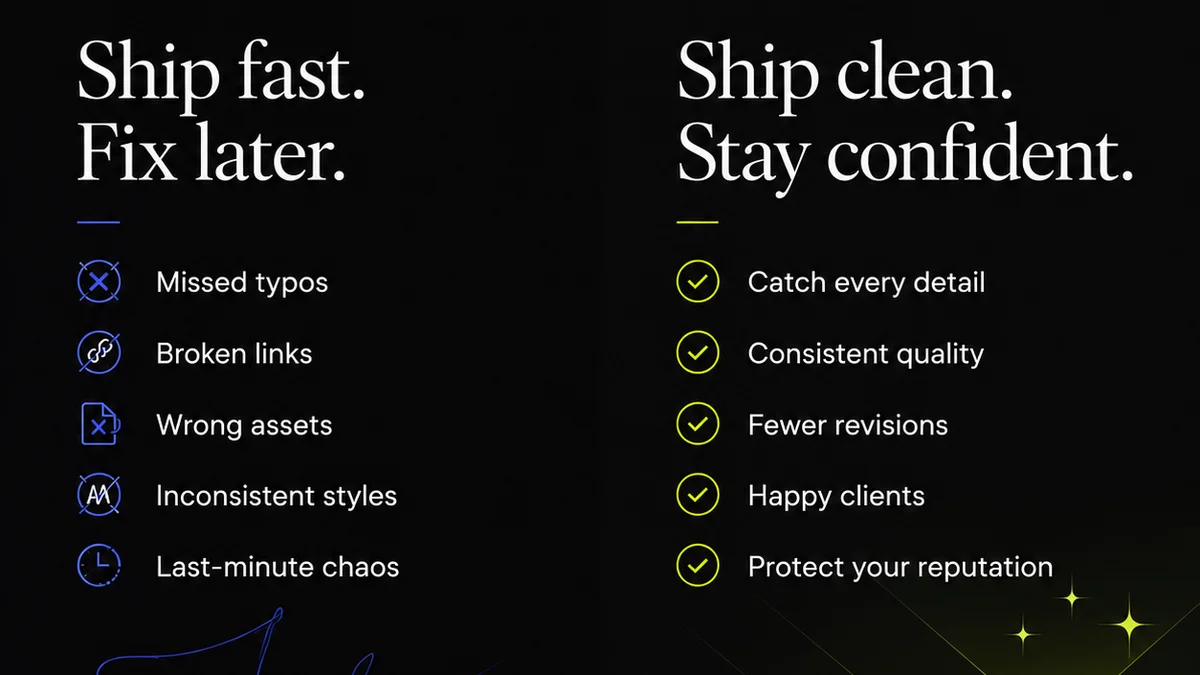
Everyone talks about marketing campaign checklists. You’ve seen them: lists of social media posts, ad creatives, email sends. They’re not wrong. But they’re incomplete.
The hard truth is that a modern marketing campaign checklist isn’t about *what* you do. It’s about *how* you do it, and *how well* you manage the process from start to finish. It’s about operational rigor, not just creative output.
1. Defining Success: Beyond Vanities
What does a successful campaign look like? Ask most teams, and you’ll get answers like 'more followers,' 'higher engagement rates,' or 'impressions.' These are vanity metrics. They feel good, but they rarely translate to real business impact.
The Real Metrics That Matter
A 2026 marketing campaign checklist forces you to define success by business outcomes. Think:
- Customer Acquisition Cost (CAC)
- Customer Lifetime Value (CLV)
- Conversion Rates (across the funnel)
- Return on Ad Spend (ROAS)
- Brand Sentiment (qualitative and quantitative)
- Market Share Growth
These are the numbers that make clients happy. These are the numbers that prove your value.
2. Strategic Alignment: The Foundation
Before a single ad is designed or an email is written, the campaign must be deeply aligned with overarching business goals. This isn't a 'nice-to-have'; it's non-negotiable.
Key Alignment Questions
Your checklist needs to start here:
- What specific business problem is this campaign designed to solve?
- Who is the *exact* target audience, and what are their pain points and motivations?
- What is the desired customer journey, and how does this campaign facilitate it?
- What is the budget, and how is it allocated across channels for maximum impact?
- What are the key performance indicators (KPIs) that directly tie to business objectives?
If you can't answer these clearly, the campaign is already on shaky ground.
3. Creative Briefing: Clarity is King
The creative brief is the bedrock of any campaign. A vague or incomplete brief is a recipe for wasted time, budget, and frustration.
Elements of a Bulletproof Brief
A truly effective brief, and thus a critical part of your marketing campaign checklist, includes:
- Clear objectives (SMART: Specific, Measurable, Achievable, Relevant, Time-bound)
- Detailed target audience profiles (demographics, psychographics, behaviors)
- Unique Selling Proposition (USP) and key messaging
- Mandatories and constraints (brand guidelines, legal requirements, technical specs)
- Deliverables and formats required
- Tone of voice and desired emotional response
- Examples of what works (and what doesn't)
This isn't just a document; it's a contract for creative execution. Get it right.
4. Asset Production Workflow: Efficiency Matters
This is where many campaigns falter. The creative process itself can become a bottleneck, riddled with miscommunication and inefficient review cycles.
Streamlining Asset Creation
Your checklist should address the workflow:
- Centralized asset storage and version control
- Clear roles and responsibilities for each stage (briefing, concepting, design, copy, development, QA)
- Defined review and approval stages, with limited stakeholders per stage
- Automated notifications for task completion and pending approvals
- Robust quality assurance (QA) process for all creative and technical elements
This is where operational friction kills creativity and deadlines.
5. Media Planning & Buying: Precision Targeting
The best creative will fall flat if it doesn't reach the right eyes and ears. Media planning in 2026 is about intelligent targeting and efficient spend.
Data-Driven Media Strategy
Consider these points for your marketing campaign checklist:
- Detailed audience segmentation based on first-party and third-party data
- Channel selection informed by audience behavior and campaign objectives
- Budget allocation based on performance data and projected ROI
- Clear KPIs for each channel and tactic
- Contingency planning for underperforming channels or unexpected market shifts
Guesswork here is expensive.
6. Execution & Monitoring: Real-Time Agility
Launching a campaign isn't the finish line; it's the starting pistol. Continuous monitoring and optimization are crucial.
Key Monitoring Activities
Your checklist must include:
- Daily or weekly performance tracking against KPIs
- A/B testing plan for creatives, copy, and targeting
- Budget pacing and reallocation based on performance
- Sentiment monitoring across social media and review sites
- Regular check-ins with the client to report progress and gather insights
Agility is the name of the game. Be ready to pivot.
7. Post-Campaign Analysis: Learning and Iteration
The campaign is over, but the work isn't. The data collected is gold, but only if you mine it effectively.
Essential Analysis Components
A thorough post-campaign review should cover:
- Comprehensive performance report against all defined KPIs
- Analysis of what worked and what didn't, with clear reasoning
- ROI calculation and overall business impact assessment
- Lessons learned for future campaigns
- Recommendations for ongoing optimization or follow-up initiatives
This is how you get smarter with every campaign.
Where Revue Fits In
Managing all these moving parts can feel chaotic. Especially when you’re juggling multiple clients, projects, and feedback loops. That’s where a centralized platform like Revue becomes invaluable for your marketing campaign checklist.
Revue streamlines the entire creative asset lifecycle. It consolidates client feedback, making it clear, actionable, and trackable. No more hunting through endless email threads or Slack messages for that one crucial comment.
Visibility into revision and approval stages means everyone knows where a project stands, reducing bottlenecks and speeding up delivery. Automated quality checks and clear audit trails ensure nothing falls through the cracks.
Essentially, Revue brings operational efficiency to the creative process, allowing your team to focus on strategy and execution, rather than administrative overhead. It helps ensure your marketing campaigns are not just creatively sound, but operationally flawless.
Final Thought
A marketing campaign checklist in 2026 is less about ticking boxes and more about building a robust, repeatable process. It's about embedding operational excellence into every step, from initial strategy to final analysis.
Are you building campaigns, or are you building predictable, measurable business growth?
Frequently asked questions
What are vanity metrics in marketing campaigns?
Vanity metrics are statistics that look good on paper but don't directly contribute to business goals. Examples include social media likes, follower counts, and website impressions. A 2026 marketing campaign checklist prioritizes metrics like Customer Acquisition Cost (CAC), Customer Lifetime Value (CLV), and Return on Ad Spend (ROAS) which directly impact business success.
How can I improve my creative briefing process?
A strong creative brief is crucial. Ensure it includes clear, SMART objectives, detailed target audience profiles, the Unique Selling Proposition (USP), key messaging, mandatories, desired tone, and required deliverables. Centralizing feedback and using a platform for review can also enhance clarity and efficiency.
What is the role of operational efficiency in marketing campaigns?
Operational efficiency ensures that the execution of a marketing campaign is smooth, timely, and cost-effective. This involves streamlined workflows, clear roles, efficient feedback and approval processes, and robust quality assurance. It prevents bottlenecks and allows teams to focus on strategic execution rather than administrative hurdles.
How often should marketing campaigns be monitored and optimized?
Continuous monitoring is key. Depending on the campaign's scale and channels, daily or weekly performance tracking is recommended. This allows for real-time adjustments, A/B testing of creatives and targeting, and budget reallocation to optimize for the best possible results.