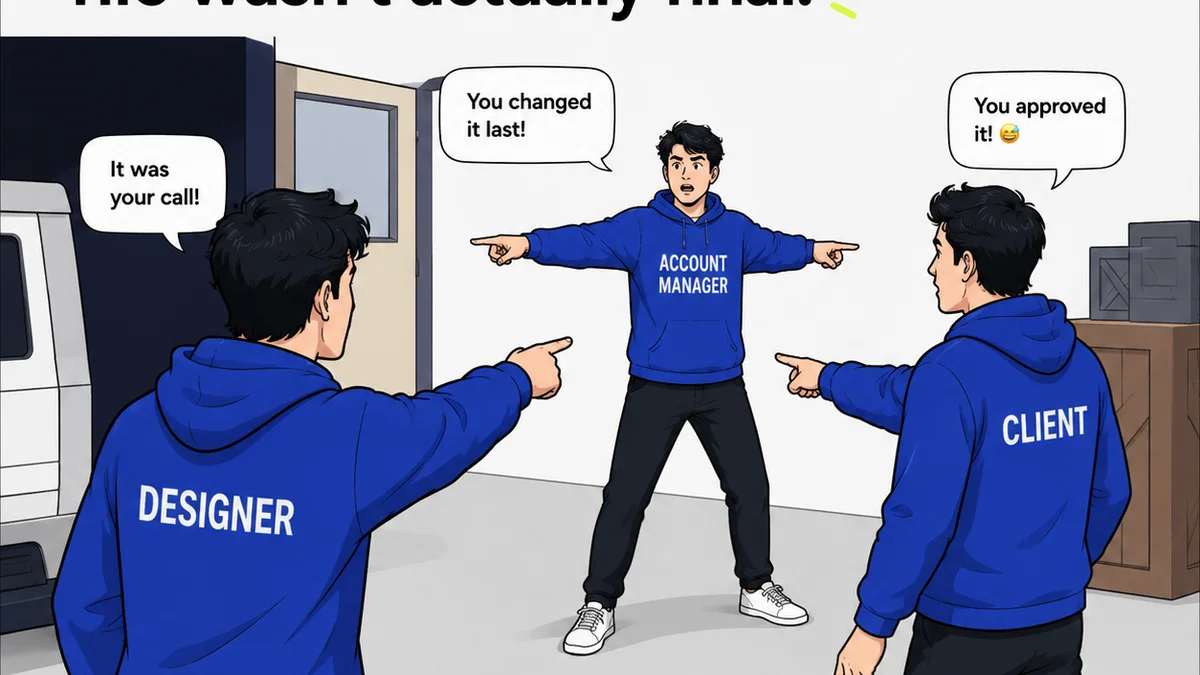
Everyone thinks legal review for marketing collateral is about lawyers saying "no." They’re the gatekeepers, the buzzkill, the ones who slow everything down.
None of that is wrong. But it’s incomplete.
The hard truth is that legal review isn't an external hurdle to be endured. It’s an integral part of the creative workflow that, when managed poorly, breaks collaboration, erodes trust, and ultimately weakens your client’s brand. It’s less about legal jargon and more about operational friction.
1. The Assumption: Legal is Separate
The biggest mistake agencies make is treating legal review as a final step, disconnected from the creative process. This leads to last-minute panic, rushed feedback, and a sense of adversarialism.
Legal teams aren't adversaries; they're risk managers. Their job is to protect the client's brand and business. When they're brought in too late, they're forced to make broad, sweeping changes because they haven't been part of the conversation from the start.
The Real Problem: Lack of Early Integration
Creative teams often operate in a vacuum, developing concepts without considering potential legal implications. This could be anything from trademarked imagery to unsubstantiated claims in ad copy.
- Misunderstanding brand guidelines.
- Overlooking competitor claims.
- Ignoring industry-specific regulations.
- Failing to secure necessary rights and permissions.
When legal gets the final deliverable, they’re reviewing a finished product. Their feedback, which might be perfectly valid from a risk perspective, can feel like a demolition to the creative team.
The Solution: Collaborative Drafting
The goal should be to integrate legal insight *before* the final creative is locked. This doesn't mean involving lawyers in every brainstorming session, but it does mean having a clear process for early, strategic input.
- Establish clear communication channels.
- Define what constitutes a
Frequently asked questions
How can agencies proactively involve legal in marketing projects?
Establish clear points in the workflow for legal input, starting with concept development. Brief legal teams on project goals and potential risks early on. Use shared platforms for feedback to ensure transparency.
What are the biggest risks of delaying legal review?
Significant rework, missed deadlines, increased costs, damage to client trust, and the potential for the marketing campaign to be pulled or heavily altered, impacting brand reputation.
How can technology help streamline legal review for marketing collateral?
Project management tools and dedicated feedback platforms can centralize all comments, track revisions, and provide an audit trail. This reduces miscommunication and ensures all feedback is addressed systematically.
Should legal be involved in the initial creative brief?
Not necessarily in the full creative brief, but key legal considerations or potential red flags should be identified and communicated to the creative team before concepts are developed. This sets guardrails early.