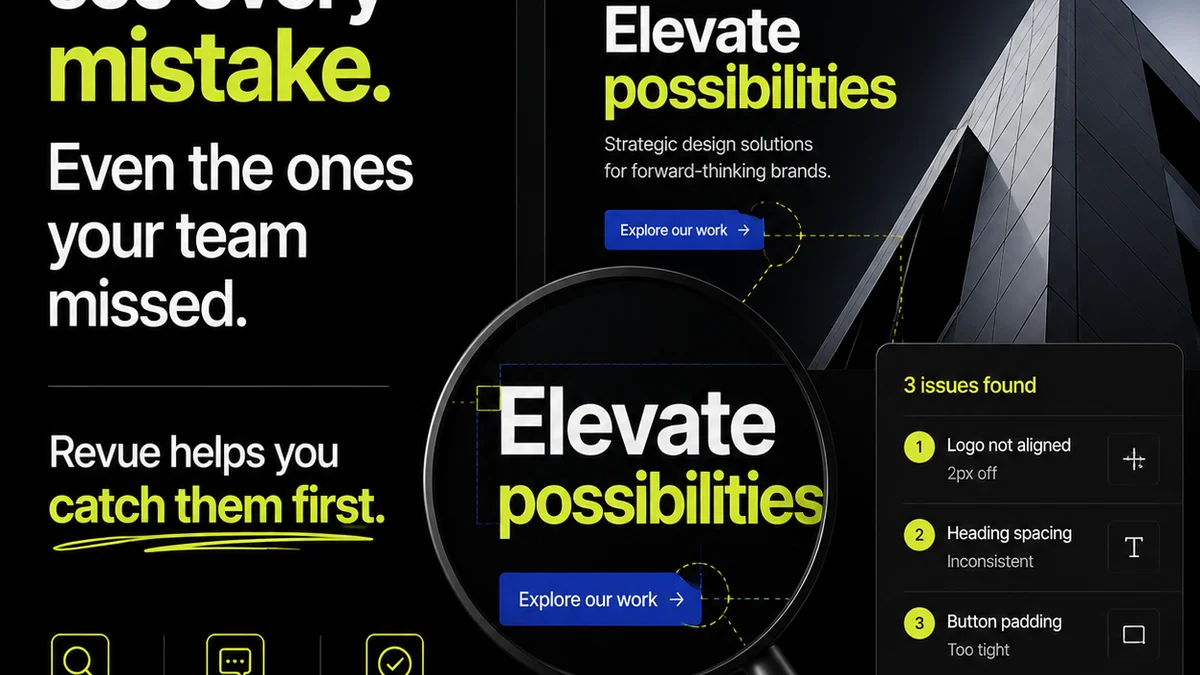
Everyone thinks marketing design is about aesthetics. About making things look good. And sure, a killer visual is important.
But that’s only half the story. Often, it’s the easy half.
The real magic, the stuff that moves the needle for clients and your agency, lives in the operational grind. The stuff that's hard to measure, harder to manage, and absolutely critical to success.
The Hard Truth: Marketing Design Is An Operational Challenge
Most agencies and in-house teams treat design as a creative sprint. A brainstorm, some mockups, a final polish. Then they hand it off and hope for the best.
This approach ignores the messy reality of marketing campaigns. It doesn’t account for the constant feedback loops, the inevitable revisions, the cross-functional handoffs, or the need for consistent quality across dozens of touchpoints.
The truth is, great marketing design isn’t just about talent. It’s about rigorous process. It’s about building systems that manage complexity and ensure your creative output actually serves the business goals.
It’s about operational excellence.
1. Beyond the Brief: Defining Success Metrics
You get a brief. You deliver a design. Job done, right?
Wrong. The brief is just the start. The real work is understanding what “done” even means in a marketing context.
A beautiful banner ad is useless if it doesn't drive clicks. A stunning landing page is a failure if conversion rates tank. A slick social campaign falls flat if engagement stays low.
This means design teams need to move beyond just fulfilling the creative request.
Aligning Design with Business Objectives
Every design decision should trace back to a measurable business outcome. Not just “brand awareness,” but specific KPIs like:
- Click-through rates (CTR)
- Conversion rates
- Cost per acquisition (CPA)
- Engagement rates (likes, shares, comments)
- Time on page
- Bounce rate
- Customer lifetime value (CLTV)
This requires a different kind of collaboration. Designers need to be in the room when these goals are set, not just when the creative is requested.
Measuring Design's Impact
You can’t manage what you don’t measure. This means setting up tracking mechanisms before the campaign launches.
- A/B testing different creative variations.
- Implementing UTM parameters to track traffic sources.
- Using heatmaps and user recordings to understand interaction.
- Setting up conversion tracking in analytics platforms.
This isn’t the client’s job. It’s yours. Your agency’s reputation, and your client’s success, depends on proving design’s ROI.
2. The Feedback Labyrinth: Taming Client Revisions
Client feedback. It’s the bane of every creative’s existence. And it’s often the biggest operational bottleneck in marketing design.
The assumption is that feedback is just about subjective opinions. “I don’t like the blue.” “Make it pop more.”
The deeper truth? Ineffective feedback processes lead to wasted time, scope creep, damaged client relationships, and ultimately, weaker creative.
Structured vs. Unstructured Feedback
Unstructured feedback is a disaster. It’s vague, contradictory, and impossible to act on efficiently.
Structured feedback, on the other hand, is actionable. It’s specific, tied to objectives, and comes from the right people.
- Who is authorized to give feedback? Not everyone in the client’s organization. Define key stakeholders early.
- What are the feedback criteria? Refer back to the brief and the success metrics. Is the feedback aligned with these?
- When is feedback due? Set clear deadlines for each revision round.
- How is feedback delivered? Centralized platforms beat endless email chains.
This requires educating your clients. You need to set expectations and establish clear protocols from day one.
The Revision Cycle as a Process, Not a Chore
Each revision round is an opportunity to refine. But it can quickly become a spiral of endless tweaks if not managed.
Key elements of a managed revision cycle:
- Consolidated feedback: All comments in one place.
- Clear version control: No confusion about which is the latest iteration.
- Time tracking: Understand the actual effort involved in revisions.
- Scope management: Easily identify when feedback is drifting beyond the original agreement.
This operational discipline turns a potential nightmare into a controlled, productive part of the workflow.
3. Handoff Hell: Bridging Design and Production
The handoff from design to development or production is another critical juncture.
Too often, this is where the beautiful pixels turn into something broken. Assumptions are made. Details are missed. The final output doesn’t match the design intent.
This isn’t just a technical problem. It’s an operational breakdown.
Design Systems as a Unifier
A well-defined design system is your secret weapon here. It provides a single source of truth for UI elements, typography, color palettes, spacing, and more.
This reduces ambiguity for developers and production teams.
- Component libraries
- Style guides
- Usage guidelines
When design and production work from the same system, handoffs become smoother and more reliable.
Clear Specifications and Collaboration Tools
Beyond the system itself, clear communication is paramount.
This means providing developers with:
- Accurate measurements and specs.
- Asset exports in the correct formats and resolutions.
- Access to interactive prototypes.
- A direct line to the designer for clarification.
Tools that facilitate design-to-development handoff, like Zeplin or Avocode, can be invaluable. They automate spec generation and provide a shared environment.
But even the best tools fail without a process that prioritizes collaboration and mutual understanding.
4. Quality Control: The Unsung Hero of Marketing Design
You’ve delivered the design. Feedback is incorporated. It’s gone into production. Now what?
The assumption is that the final output is a perfect reflection of the approved design. It’s not.
Without a dedicated quality control (QC) step, you risk launching flawed creative. This damages your agency’s credibility and undermines the campaign’s effectiveness.
The Scope of QC
Quality control for marketing design is multifaceted. It’s not just about checking for typos.
- Visual accuracy: Does the live asset match the approved design pixel-for-pixel?
- Functionality: Do all links, buttons, and interactive elements work as intended?
- Responsiveness: Does the design adapt correctly across different screen sizes and devices?
- Performance: Are images optimized? Does the page load quickly?
- Brand consistency: Is the tone, voice, and visual identity maintained?
- Compliance: Does it meet any legal or accessibility requirements?
This requires a checklist. A systematic approach. Not a quick glance before hitting publish.
Who Owns QC?
This often falls through the cracks because no one explicitly owns it. Is it the designer? The project manager? The client?
The most effective approach is to have a dedicated QC process, often managed by a project manager or a specialized QA team. This ensures an objective review.
Treat QC not as an afterthought, but as an integral part of the design and delivery process.
Where Revue Fits In
Managing all these operational aspects of marketing design can feel overwhelming. Especially when you’re juggling multiple clients, projects, and feedback loops.
This is where a centralized platform like Revue becomes essential.
Revue helps you bring order to the chaos by providing a single source of truth for your creative projects.
- Centralized Feedback: All client comments and stakeholder approvals live in one place, linked directly to the creative asset. This eliminates scattered email threads and ensures everyone is working from the same version.
- Revision Visibility: Track every iteration and understand the history of changes. This provides clarity on what was approved and why, making it easier to manage scope and justify timelines.
- Quality Assurance Workflow: Implement structured review and approval stages. Ensure that key stakeholders sign off at each critical point, reducing the risk of errors slipping through to final production.
By streamlining these operational workflows, Revue frees up your team to focus on what they do best: creating exceptional marketing design.
Final Thought
Marketing design is evolving. The days of simply being a pixel-pusher are over. The agencies and teams that thrive will be those that master the operational complexities.
Are you building a design process that drives results, or just a pretty portfolio?
Frequently asked questions
What is the difference between creative design and marketing design?
Creative design focuses on aesthetics and artistic expression. Marketing design, while visually appealing, is fundamentally driven by business objectives, aiming to achieve specific goals like lead generation, sales, or brand engagement through strategic visuals and messaging.
How can I improve client feedback on design projects?
Implement structured feedback processes. Define who provides feedback, establish clear criteria tied to project goals, set deadlines, and use a centralized platform to consolidate comments. Educate clients on providing actionable, objective input.
What are the key components of a design system?
A design system typically includes reusable UI components, style guides (typography, color palettes, iconography), brand guidelines, and usage documentation. It serves as a single source of truth for consistent design and development.
Why is quality control (QC) important in marketing design?
QC ensures the final creative output is accurate, functional, and aligned with the approved design and business objectives. It prevents errors, maintains brand consistency, and protects the agency's reputation by delivering polished, effective work.