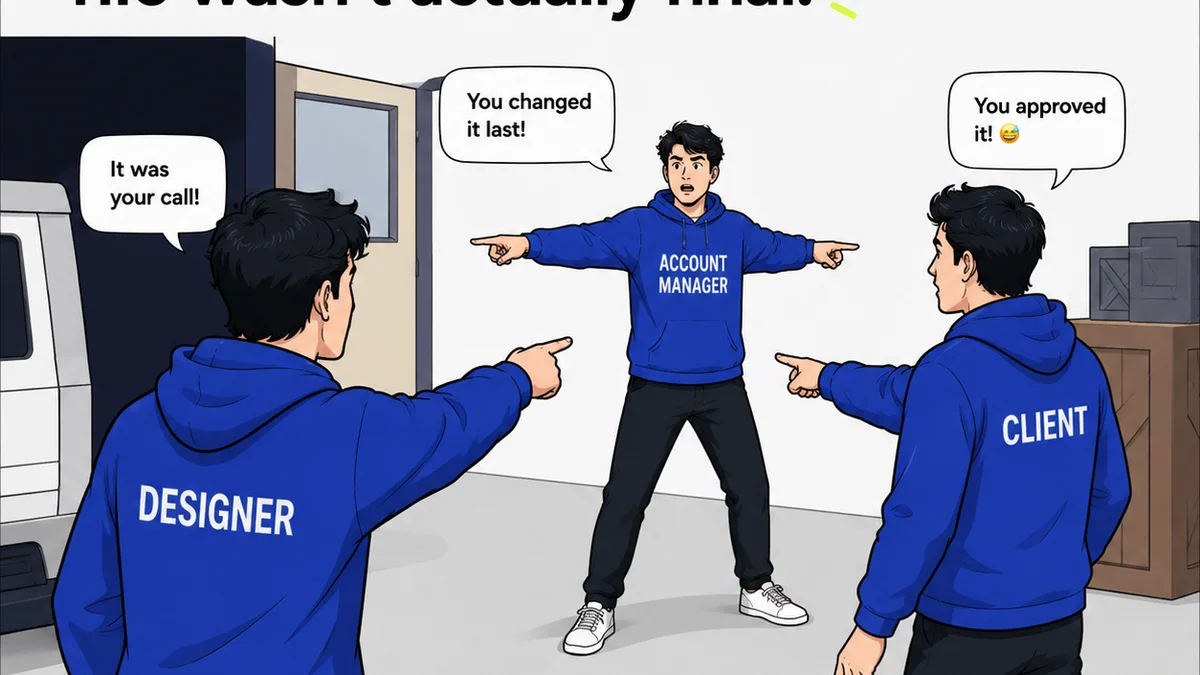
Everyone thinks marketing design is about making things look good. That clients love the final visuals. That the job is done when the client signs off on the pretty pictures.
None of that is wrong. But it’s incomplete.
The hard truth? The best agencies don't just deliver marketing design. They engineer it. They treat it not as a final output, but as a critical, iterative process that fuels everything else.
1. Design as a Strategic Discovery Tool
Most agencies see design briefs as instructions. The top performers see them as starting points for a conversation. They use the design process itself to uncover nuances the client might not even know they have.
This isn't about endless revisions. It's about structured exploration.
Unpacking Ambiguity
Clients rarely come with perfect clarity. They have a vague need, a desired outcome, and a budget. The initial design phase is where you help them crystallize that vision.
This means:
- Asking the *why* behind the *what*.
- Probing assumptions about their audience and competitors.
- Visualizing different strategic directions, not just aesthetic ones.
A mood board isn't just about colors. It’s about testing strategic hypotheses.
Testing the Waters
Early-stage design concepts are hypotheses. They’re designed to be challenged, refined, and sometimes, discarded. This isn't failure; it's efficient learning.
The goal isn't to present a single, perfect solution on day one. It's to explore a landscape of possibilities with the client, gathering feedback that informs the eventual direction.
2. The Feedback Loop: From Chore to Competitive Advantage
Client feedback. The dreaded phrase. For many, it’s a bottleneck, a source of frustration, and a drain on profitability. The best agencies turn it into their superpower.
They don't just collect feedback; they orchestrate it.
Structured Input, Not Random Opinions
Generic feedback like “I don’t like it” or “Make it pop more” is useless. Agencies that excel build frameworks to elicit specific, actionable input.
This involves:
- Defining clear review stages with specific objectives.
- Providing clients with clear annotation tools and guidelines.
- Educating clients on the difference between subjective preference and strategic alignment.
When feedback is structured, it’s efficient. It moves the project forward, rather than spinning wheels.
Visibility is Key
Clients need to see where their feedback fits in the grand scheme. They need to understand the implications of their requests.
This means showing:
- The evolution of a design from concept to completion.
- Which feedback has been actioned and why.
- The impact of changes on timelines and budget.
Transparency builds trust and manages expectations, turning feedback from a point of friction into a point of collaboration.
3. Design for Scalability and Iteration
Marketing design isn't a one-off. It's the start of a campaign, a product launch, a brand evolution. The best agencies design with the future in mind.
This means building flexible systems, not just pretty assets.
Component-Based Thinking
Instead of designing every ad or social post from scratch, leading agencies build design systems. They create reusable components, templates, and style guides.
This approach allows for:
- Rapid deployment of new marketing materials.
- Consistent brand application across all touchpoints.
- Easier adaptation for different platforms and formats.
It's the difference between crafting a single masterpiece and building a versatile toolkit.
Planning for the Long Game
What happens after the initial launch? A successful campaign requires ongoing assets, A/B testing variations, and adapting to new channels. Agencies that plan for this from the outset save immense time and resources.
This involves:
- Building in flexibility for future content needs.
- Creating clear documentation for how assets can be extended.
- Considering performance metrics that will inform future design iterations.
Marketing design is rarely static. Planning for change is paramount.
4. Quality Control: The Unsexy Foundation
The final polish. This is where many agencies stumble. They rush through the last mile, assuming that if it looks okay, it's good enough.
The best agencies have rigorous, non-negotiable quality control processes.
Beyond Spellcheck
Quality control isn't just about catching typos or misaligned elements. It’s about ensuring the design meets strategic objectives and brand standards.
This includes checks for:
- Brand guideline adherence.
- Accessibility standards (color contrast, font sizes).
- Technical specifications for various platforms (file formats, resolutions).
- Messaging accuracy and consistency.
A thorough QC process prevents costly errors and protects the client’s brand reputation.
The Final Sign-Off Authority
Who has the final say? In top agencies, it’s a defined role, not an afterthought. This person or team is empowered to reject work that doesn't meet the bar.
This ensures:
- Objective review, free from the biases of the creators.
- A consistent level of quality across all projects.
- Accountability for the final output.
A strong QC process is the bedrock of client trust.
Where Revue Fits In
Managing this intricate dance of strategy, feedback, iteration, and quality control requires more than just talented designers and clear processes. It demands the right tools.
Revue is built for this. It provides a centralized hub for all your creative assets and client feedback.
Imagine:
- All design versions, comments, and approvals in one place, creating a clear audit trail.
- Streamlined communication, eliminating endless email chains and scattered Slack messages.
- Project managers and clients having real-time visibility into progress and feedback status.
- Designers getting clear, contextual feedback directly on the assets, reducing misinterpretation.
- Ensuring every final asset has passed all necessary checks before delivery.
Revue transforms the often-chaotic feedback and revision process into a transparent, efficient workflow. It empowers agencies to focus on creating exceptional marketing design, not wrestling with inefficient systems.
Final Thought
Marketing design is a discipline. It’s about strategy, communication, and execution. The agencies that treat it as such – as a core engine of their client’s success, not just a pretty output – are the ones that thrive.
Is your agency simply delivering design, or is it engineering results?
Frequently asked questions
What's the difference between good marketing design and great marketing design?
Good marketing design looks appealing. Great marketing design is strategically aligned, solves a business problem, is built for iteration, and is delivered flawlessly. It’s about the process and impact, not just the final image.
How can agencies manage client feedback more effectively?
By structuring the feedback process. This includes defining clear review stages, using annotation tools, educating clients on providing actionable feedback, and maintaining transparency about how feedback impacts the project.
Why is a design system important for marketing design?
A design system allows for rapid deployment of consistent brand assets. It enables agencies to create reusable components and templates, making it easier and faster to produce new marketing materials and maintain brand integrity across all channels.
What are the key elements of a robust quality control process for design?
It involves checking for brand guideline adherence, accessibility standards, technical specifications for different platforms, and ensuring the design meets the original strategic objectives. It’s more than just proofreading; it’s validation.