Everyone thinks marketing design success hinges on a killer brief and a talented designer. That’s not wrong. But it’s incomplete.
The hard truth? Design success isn’t a singular event. It’s a process. A predictable, repeatable process that minimizes risk and maximizes client satisfaction. Without one, you’re just hoping for the best.
This checklist isn’t about creative genius. It’s about operational excellence. It’s the backbone of every successful marketing campaign’s visual output.
1. The Foundation: Briefing & Strategy
This is where most projects falter before they even begin. A fuzzy brief leads to fuzzy design. A disconnected strategy leads to off-brand visuals.
Understanding the 'Why'
Before a single pixel is considered, everyone must understand the core objective. What problem does this design solve? What action should it drive?
- What are the primary business goals?
- Who is the exact target audience?
- What is the key message or call to action?
- What does success look like, and how will it be measured?
This isn't just for the strategist. The designer needs this context too. It’s the compass for their creative direction.
Defining the 'Who'
Who are we talking to? Go deeper than demographics. Understand their psychographics, their pain points, their aspirations.
A design that resonates with a Gen Z TikTok user will likely fall flat with a Boomer LinkedIn user.
Setting the 'What'
What are the tangible deliverables? What formats are needed? What are the technical constraints?
- Specific asset requirements (e.g., social media banners, email headers, print ads).
- Platform specifications (e.g., Instagram Story dimensions, website banner sizes).
- Brand guidelines adherence (fonts, colors, logos, tone of voice).
Clarity here prevents endless, scope-creeping revisions later.
2. The Creative Process: Concept to Execution
This stage is about translating strategy into visual language. It requires structure, not just inspiration.
Concept Development
Don't jump straight to mockups. Explore multiple directions. This is where creative exploration happens, guided by the brief.
Think mood boards, sketches, and rough layouts. Not polished final art.
Design Iteration
This is where feedback loops are critical. Establish a clear process for presenting work and gathering input.
- Schedule regular internal reviews.
- Present polished concepts, not half-baked ideas.
- Use clear, constructive language for feedback.
Avoid subjective feedback like 'I don't like it.' Instead, ask 'How does this align with objective X?'
Asset Production
Once a direction is approved, focus on efficient production. This means organized file management and adherence to specs.
Use templates where possible. Ensure all required variations are created correctly.
3. The Quality Assurance Gauntlet
This is the gatekeeper. The final check before anything goes live. Too often skipped or rushed.
Brand Consistency Check
Does it look and feel like *us*? Every touchpoint reinforces the brand identity.
- Correct logo usage?
- Approved color palette?
- On-brand typography?
- Consistent tone of voice?
Technical Accuracy
Does it work? This is about functionality and adherence to platform standards.
- Correct file formats and sizes?
- Resolution appropriate for intended use?
- No broken links or incorrect URLs?
- Accessibility considerations (e.g., color contrast, legible fonts)?
For web design, this includes checking responsiveness across devices.
Content Verification
Is the message correct? Typos and factual errors kill credibility.
- Proofread all copy meticulously.
- Verify all claims, statistics, and contact information.
- Ensure all calls to action are clear and correct.
This step is non-negotiable. A single typo can undo hours of great design work.
4. The Deployment & Analysis Phase
Design doesn't end when it's published. Understanding performance is key to future success.
Streamlined Handoff
Ensure the final assets are delivered in a way that’s easy for marketing teams or developers to use.
Organized folders, clear naming conventions, and necessary documentation are crucial.
Performance Tracking
How did the design perform against the initial objectives?
- Track key metrics (e.g., click-through rates, conversion rates, engagement).
- Analyze user behavior if applicable.
Learnings & Optimization
What worked? What didn't? Use this data to inform the next campaign.
This feedback loop is vital for continuous improvement. It turns one-off successes into a predictable pattern.
Where Revue Fits In
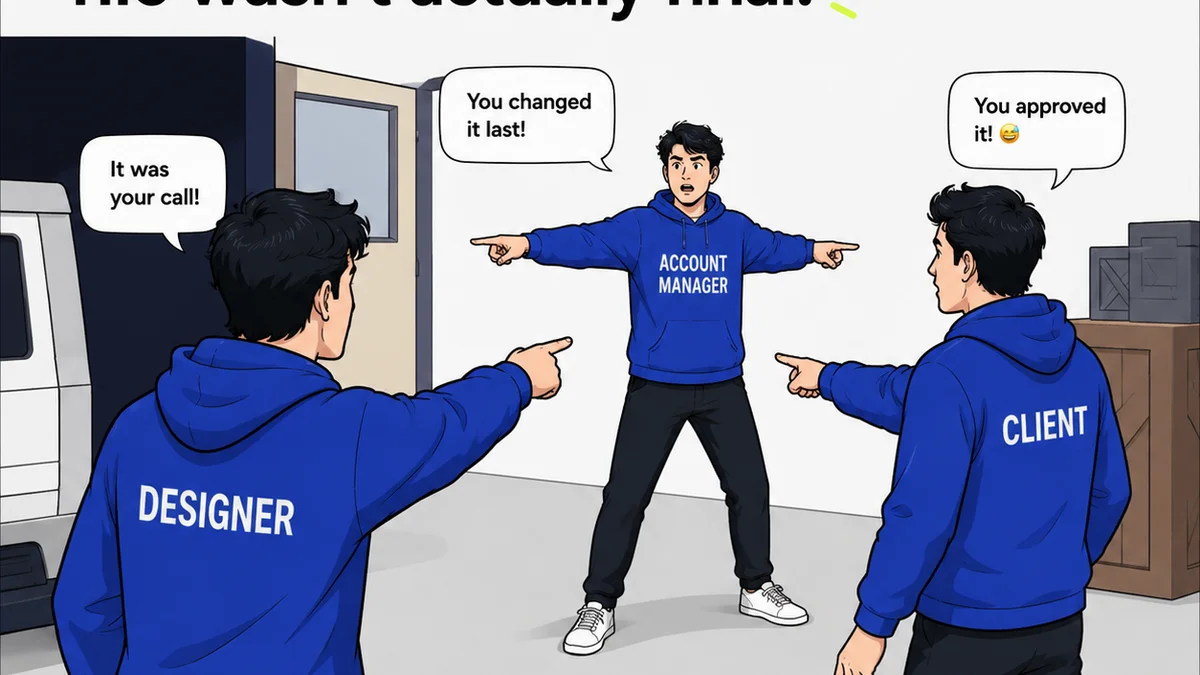
Managing the marketing design process involves juggling many moving parts: briefs, concepts, feedback, revisions, approvals, and final delivery. It’s easy for crucial details to get lost in email chains and scattered documents.
Revue centralizes this chaos. It provides a single source of truth for all creative assets and client communication.
- Centralized Feedback: Collect all client comments directly on the design. No more hunting through emails for that one crucial note.
- Revision Visibility: Track every version of a design, see what changed, and understand the evolution from concept to final.
- Clear Approvals: Get explicit sign-offs at each stage, reducing ambiguity and preventing last-minute surprises.
- Quality Control: Use Revue as your final checkpoint before deployment, ensuring all requirements are met.
This structured approach turns design from a reactive, often stressful task into a predictable, high-performing engine for your marketing efforts.
Final Thought
Marketing design success isn't a mystical gift bestowed upon a few. It's the result of a disciplined, well-defined process. Are you building a system for consistent wins, or just crossing your fingers?
Frequently asked questions
What's the most common mistake agencies make in the marketing design process?
The most common mistake is skipping or rushing the quality assurance phase. This leads to errors in branding, technical inaccuracies, or content mistakes that undermine the design's effectiveness and credibility.
How can I ensure my design brief leads to better outcomes?
A strong brief goes beyond aesthetics. It clearly defines the business objectives, target audience, key message, and measurable success metrics. Ensure designers understand the 'why' behind the design, not just the 'what'.
How important is client feedback in the design process?
Client feedback is crucial, but it needs to be managed effectively. Establish clear channels for feedback, encourage constructive input tied to objectives, and use tools to centralize comments to avoid confusion and scope creep.
What are the key elements of a design quality assurance check?
A thorough QA check includes verifying brand consistency (logo, colors, fonts), technical accuracy (file formats, specs, responsiveness), and content verification (proofreading, factual correctness, clear CTAs).