Everyone talks about creative operations. They talk about streamlining workflows, managing projects, and hitting deadlines. They talk about the big stuff: brand campaigns, website redesigns, product launches.
And that’s important, no doubt. But it’s incomplete.
The deeper truth is that the engine of creative operations is sputtering because it’s neglecting a massive chunk of creative output: marketing design.
Think about it. What’s the constant churn? What needs updating, refreshing, and adapting across a dozen channels every single week? It’s the ads, the social posts, the email banners, the landing page graphics, the sales enablement collateral.
This isn't just 'smaller' work. It's the lifeblood of ongoing campaigns. And it’s often the most complex part of creative operations to manage effectively.
1. The Myth of 'Simple' Marketing Assets
There’s a common assumption that marketing design is inherently simpler than, say, a full brand identity system or a complex website build. It’s seen as more templated, more repetitive, less strategic.
This is a dangerous oversight.
Marketing design is a beast of volume and variation. It requires constant adaptation to new platforms, new messaging, new performance data. A single campaign might generate hundreds of creative variations. Each needs to be on-brand, on-message, and optimized for its specific placement.
The Hidden Complexity
- Platform Fragmentation: Every social network, ad platform, and email service has its own specs, best practices, and evolving requirements. What works on Instagram Stories won’t fly on LinkedIn.
- Performance Iteration: Marketing design isn't static. It’s driven by data. A/B tests, conversion rates, engagement metrics – these all demand rapid creative tweaks and new variations.
- Brand Consistency at Scale: Maintaining a cohesive brand voice and visual identity across hundreds or thousands of individual marketing assets is a monumental task. One off-brand banner can undermine a campaign.
- Speed to Market: Marketing opportunities can emerge overnight. The ability to quickly generate and deploy new creative assets is a competitive advantage.
This isn't about slapping a logo on a stock photo. It's about high-volume, high-stakes creative production that directly impacts revenue.
2. The Operational Black Hole of Marketing Design
Because marketing design often lives in a different silo – sometimes with a separate team, sometimes with freelancers, sometimes just handed off without clear process – it becomes an operational black hole.
Here’s what that looks like in practice:
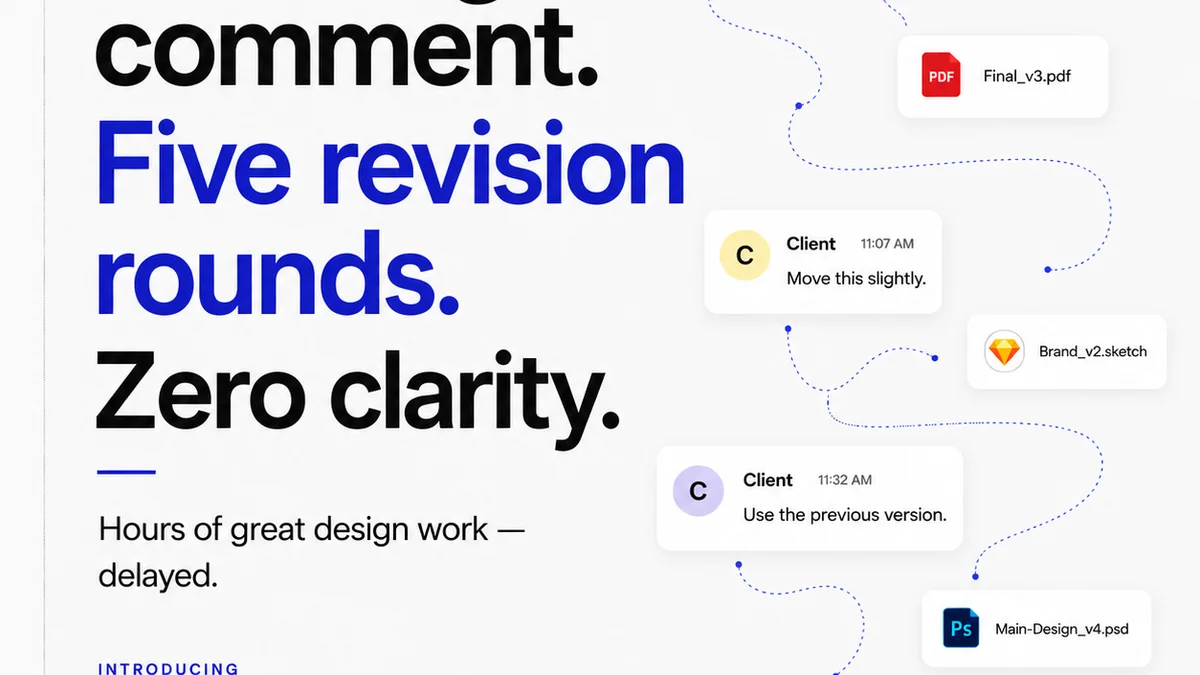
- Feedback Chaos: Client stakeholders, channel managers, and performance marketers all weigh in, often with conflicting feedback, through email, Slack, or even text messages.
- Revision Hell: Tracking which version is the latest, what changes were made, and who approved what becomes a nightmare. Multiple rounds of revisions spiral out of control.
- Approval Bottlenecks: Getting final sign-off can take days or weeks, especially if the key decision-makers are overloaded or out of the loop.
- Asset Management Issues: Where are the final files? Are they the right specs? Are they accessible to the teams who need them? Often, no one is entirely sure.
- Lack of Visibility: Without a centralized system, it's impossible to get a clear overview of what marketing creative is in production, what’s been approved, and what’s live.
This operational friction doesn't just slow things down; it kills creativity and costs money.
3. The Cost of Neglecting Marketing Design Ops
The impact of poor marketing design operations ripples far beyond the creative team.
Wasted Time and Resources: Designers spend more time chasing feedback, managing revisions, and searching for files than actually creating. Agency teams and client stakeholders get pulled into endless review cycles.
Missed Opportunities: Slow approval processes mean campaigns launch late, or promising creative variations never see the light of day. Competitors gain ground.
Brand Inconsistency: When assets are produced in silos without clear oversight, brand guidelines get bent or broken. This dilutes brand impact and erodes trust.
Suboptimal Performance: Without a streamlined way to iterate based on performance data, marketing campaigns underperform. Money is left on the table.
Client Frustration: Clients experience delays, unclear communication, and ultimately, less effective marketing. This strains relationships.
It’s a systemic issue that demands a systemic solution.
4. Integrating Marketing Design into Core Creative Operations
The solution isn't to treat marketing design as an afterthought. It needs to be integrated into the very fabric of your creative operations strategy.
This means bringing it under the same roof as your larger brand initiatives, your website projects, and your product marketing efforts. It requires a unified approach to:
- Centralized Briefing: Ensure every marketing design request starts with a clear, comprehensive brief, just like any other project.
- Standardized Workflows: Define clear stages for creation, feedback, revision, and approval for all marketing assets.
- Defined Roles and Responsibilities: Clarify who is responsible for providing feedback, who makes the final decision, and who manages asset delivery.
- Technology Enablement: Invest in tools that can handle the unique demands of high-volume marketing design, from asset customization to multi-stakeholder review.
This integration elevates marketing design from a tactical chore to a strategic imperative. It transforms a chaotic process into a predictable, scalable engine for growth.
Where Revue Fits In
This is precisely why Revue was built. We saw creative teams drowning in the complexity of managing feedback and approvals, especially for the high-volume, high-variation work that marketing design represents.
Revue provides a single source of truth for all your creative projects, including your marketing assets.
- Centralized Feedback: No more hunting through emails or Slack channels. All feedback, from all stakeholders, lives directly on the creative asset, with clear version history.
- Streamlined Revisions and Approvals: Visually track the progress of each asset, manage multiple rounds of revisions efficiently, and get clear, documented approvals.
- Quality Control: Ensure every asset meets brand standards and project requirements before it goes live, reducing costly errors and rework.
- Visibility and Reporting: Gain a clear overview of all creative work in progress, understand team capacity, and identify bottlenecks in your marketing design pipeline.
By bringing marketing design into a managed, visible workflow, you unlock its true potential, turning a source of operational friction into a powerful driver of business results.
Final Thought
Are you still treating marketing design as a separate, less important stream of work? Or are you recognizing it as the high-volume, high-impact engine it truly is?
The operational efficiency – and the creative effectiveness – of your entire agency or in-house team depends on the answer.
Frequently asked questions
What is marketing design in the context of creative operations?
Marketing design refers to the creation and management of all visual assets used in marketing campaigns, such as social media ads, email banners, website graphics, and promotional materials. In creative operations, it's about ensuring these assets are produced efficiently, consistently, and effectively at scale.
Why is marketing design often overlooked in creative operations?
It's often seen as simpler or more repetitive than larger brand initiatives, leading it to be managed in separate, less structured workflows. This results in fragmented feedback, chaotic revisions, and a lack of visibility, despite its significant impact on campaign performance.
How can integrating marketing design improve creative operations?
By bringing marketing design into a centralized, managed workflow, you gain better control over feedback, revisions, and approvals. This reduces wasted time, prevents brand inconsistencies, speeds up campaign launches, and ultimately leads to more effective marketing.
What are the key challenges of managing marketing design assets?
Key challenges include handling a high volume of variations, adapting to numerous platform specifications, managing conflicting feedback from multiple stakeholders, maintaining brand consistency across all assets, and ensuring timely delivery for fast-paced marketing campaigns.