You’ve heard it a million times: track your marketing design KPIs. Measure everything. A/B test relentlessly. Optimize conversion rates. None of that is wrong.
But it’s incomplete. It’s what everyone *says* you should do. It’s the surface-level advice that sounds good in a pitch deck.
The hard truth? Most marketing design KPIs are vanity metrics. They look good on a dashboard but don’t tell you if your design work is actually moving the needle for your clients or your business.
What if we focused on the metrics that *truly* reflect the impact of design on business goals? The ones that prove design isn’t just a cost center, but a strategic driver of revenue, efficiency, and client satisfaction.
1. Client Retention & Lifetime Value (CLV)
This is the ultimate KPI for any agency. If clients stick around and spend more over time, you’re doing something right. Design plays a massive role here, even if it’s not immediately obvious.
The Client Experience Connection
Think about it. A clunky, outdated website? Poorly designed proposals? Inconsistent branding across touchpoints? These create friction. Friction erodes trust. Clients leave.
Conversely, a seamless, professional, and on-brand client experience, from the initial pitch deck to ongoing campaign assets, builds confidence. It signals competence and attention to detail.
Measuring Design's Indirect Impact
You won't directly link a single banner ad design to a client renewing their retainer. But you *can* correlate design quality with:
- Reduced client churn rate.
- Increased average contract value over time.
- Higher client satisfaction scores (NPS, CSAT) where design is a significant touchpoint.
- More referral business, often driven by clients showcasing the quality of your work.
This requires looking beyond the immediate campaign. It’s about the holistic perception of your agency’s output.
2. Project Profitability & Efficiency
This is where the rubber meets the road for your agency’s bottom line. How much time and money are you *really* spending on design projects, and are you getting paid enough for it?
The Illusion of Billable Hours
Many agencies still rely heavily on billable hours. But this can incentivize inefficiency. If your design process is messy, full of scope creep, and riddled with endless revision rounds, you might *think* you’re making money because the hours are piling up. You’re not.
You’re just burning through resources and potentially burning out your team.
Key Metrics for Profitability
- Gross Profit Margin per Project: Revenue minus direct costs (including labor). This is fundamental.
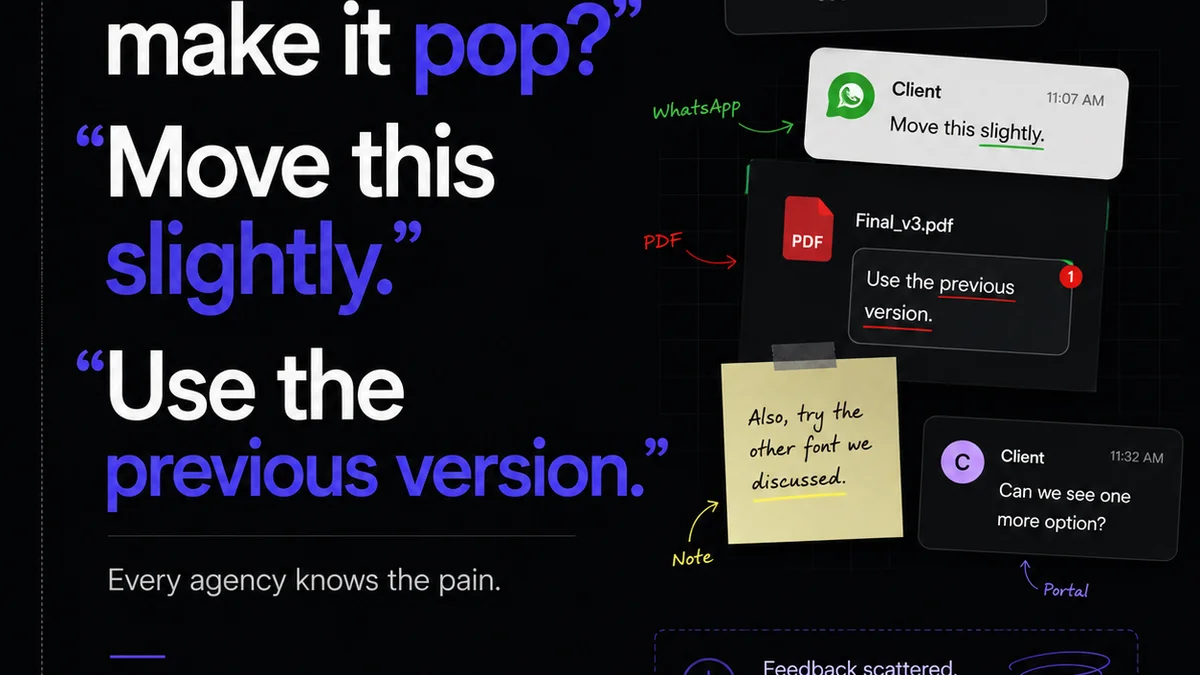
- Revision Cycle Efficiency: Track the number of revision rounds per project. Excessive rounds signal unclear briefs, scope creep, or poor internal review.
- Time-to-Completion: How long does a project *actually* take from kickoff to final approval? Delays cost money and client goodwill.
- Scope Creep Percentage: Quantify how often projects go beyond the original agreement and the associated cost.
Design operations are a direct lever on these numbers. Streamlining feedback, managing assets, and ensuring clarity upfront directly impacts profit.
3. Conversion Rate Optimization (CRO) & Lead Generation
This is where design’s impact is often most directly measured, especially for clients focused on direct response marketing.
Beyond
Frequently asked questions
What are vanity metrics in marketing design?
Vanity metrics are performance indicators that look good but don't necessarily contribute to business objectives. Examples include a high number of social media likes without corresponding engagement or sales, or focusing solely on website traffic without considering conversion rates or user experience.
How does design impact client retention?
Design impacts client retention by shaping the overall client experience. Professional, consistent, and high-quality design across all touchpoints builds trust and signals competence, reducing the likelihood of clients seeking other agencies.
What is the relationship between design efficiency and profitability?
Efficient design processes, characterized by clear communication, streamlined feedback loops, and minimal scope creep, directly reduce project costs and shorten timelines. This leads to higher profit margins per project and improved agency profitability.
How can I measure the ROI of design improvements?
You can measure the ROI of design improvements by tracking key business metrics before and after the changes. This includes conversion rates, lead generation, project profitability, client retention rates, and user engagement. Correlating design efforts with improvements in these areas demonstrates ROI.