Everyone agrees good design matters. It captures attention. It communicates value. It makes campaigns sing.
And most marketing teams think they’re already doing it right. They send files around. They get comments. They make changes. Done.
None of that is wrong. But it’s incomplete.
The hard truth? Winging it with design feedback is a fast track to missed deadlines, frustrated creatives, and clients who feel like they’re shouting into the void. A *real* design review process is about structured communication, clear ownership, and building trust—not just ticking boxes.
1. The Myth of 'Intuitive' Feedback
We often assume creative feedback should just flow. That good intentions and a few emails will sort everything out. That everyone on the team has the same eye for detail or understanding of the brand strategy.
This is where things break down.
The Feedback Black Hole
Without a defined process, feedback becomes a chaotic game of telephone.
- Emails get buried.
- Comments are vague (“Make it pop more!”).
- Different stakeholders give conflicting advice.
- No one is sure who has the final say.
- Revisions get lost in the shuffle.
This isn't just annoying; it's expensive. Time spent deciphering bad feedback or redoing work is time not spent on strategy or new campaigns.
The 'Just Send It Over' Trap
Many teams skip formal reviews, especially for smaller assets. They figure it's faster to just push it through. But even small assets carry brand weight. Inconsistent design across the board erodes trust.
It’s the death by a thousand cuts.
2. Building Blocks of a Bulletproof Review Process
A robust design review process isn't about stifling creativity. It's about channeling it effectively. It’s about clarity. It’s about accountability.
Clear Objectives, Clear Deliverables
Before any design work begins, define:
- What is this asset supposed to achieve? (e.g., drive sign-ups, increase brand awareness, educate users)
- Who is the target audience?
- What are the key messages?
- What are the technical specifications? (file type, dimensions, resolution)
When everyone agrees on the goals upfront, feedback becomes more targeted and less subjective.
Defined Roles and Responsibilities
Who is involved in the review? Who gives final approval?
- Stakeholders: Provide strategic input and ensure alignment with business goals.
- Reviewers: Offer feedback on design execution, usability, and brand consistency.
- Approvers: Have the final sign-off authority.
Make these roles explicit. Avoid having too many cooks in the kitchen, especially at the final stage.
Standardized Feedback Structure
Vague feedback is useless. Implement a system that requires specific, actionable comments.
Consider a checklist or template for reviewers:
- Does it meet the brief's objectives?
- Is the messaging clear and accurate?
- Is it on-brand (visuals, tone, voice)?
- Are there any technical issues (e.g., broken links, image quality)?
- Is the user experience intuitive?
This forces reviewers to think critically and provide constructive input.
Scheduled Review Cadence
Don't leave reviews to chance. Schedule them. Whether it's daily stand-ups for quick checks or weekly deep dives, a predictable cadence keeps projects moving.
This also sets expectations for when feedback will be given and revisions will be made.
3. The Cost of Ignoring Process
Think a formal process is too much overhead? Consider the alternative.
Scope Creep by Another Name
Uncontrolled feedback loops are a form of scope creep. Each round of revisions, especially when poorly defined, expands the project's requirements without a corresponding adjustment in time or budget.
Reputational Damage
Inconsistent or poorly executed creative work reflects badly on your entire team and brand. Clients notice.
It signals a lack of professionalism and attention to detail.
Burnout and Turnover
Creatives get demoralized when their work is constantly second-guessed with unclear direction. Long, frustrating revision cycles lead to burnout.
Good talent leaves teams that can't manage their workflow effectively.
4. Where Revue Fits In
Managing feedback, revisions, and approvals across multiple projects and stakeholders can feel like juggling chainsaws.
That’s where a tool built for creative workflow management becomes essential.
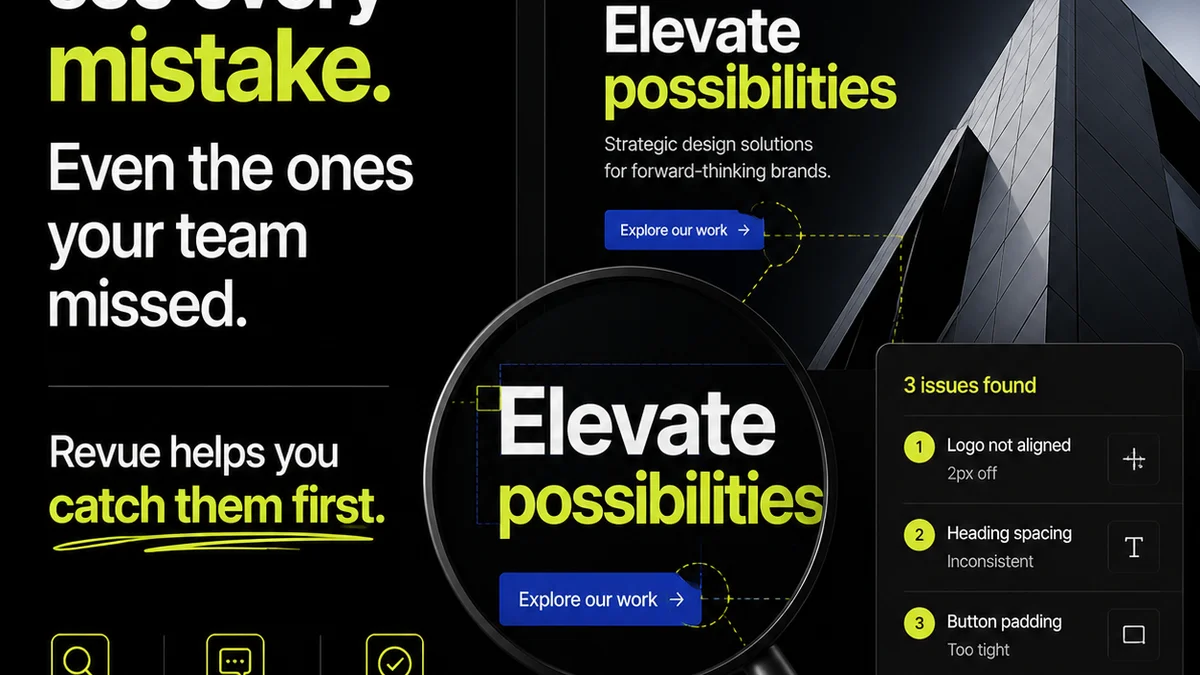
Revue helps centralize client feedback, making it clear, actionable, and organized. Instead of scattered email threads and endless Slack messages, all comments live directly on the asset.
This means:
- Visibility: Everyone sees the same feedback, in context. No more
Frequently asked questions
What is a design review process?
A design review process is a structured method for evaluating creative work before it's finalized. It involves defined steps for feedback, revision, and approval to ensure the design meets objectives, brand standards, and technical requirements.
Why is a design review process important for marketing teams?
It ensures consistency, catches errors early, aligns creative with strategy, improves collaboration, and ultimately leads to more effective marketing campaigns and happier clients by reducing misunderstandings and rework.
How can I make my design reviews more efficient?
Use clear, actionable feedback templates, define roles and responsibilities, set a consistent review cadence, and leverage tools that centralize feedback and track revisions. Avoid vague comments and too many decision-makers.
What are the common pitfalls of ad-hoc design feedback?
Common pitfalls include lost feedback, conflicting opinions, scope creep, missed deadlines, duplicated effort, and frustration among team members and clients due to a lack of clarity and structure.