Everyone talks about marketing strategy. About brilliant campaigns. About creative breakthroughs. And sure, that’s the shiny stuff. The stuff that gets headlines.
But what about the engine under the hood? The gears grinding away, making sure the wheels actually turn? That’s marketing operations. And most teams treat it like a back-office chore, not a strategic imperative.
Here’s the hard truth: Without robust marketing operations, your best ideas will sputter and die. Your big campaigns will miss their mark. Your team will drown in busywork.
1. Marketing Operations Isn't Just Tech Support
The common assumption is that marketing ops is just about managing the martech stack. Keeping the CRM clean. Ensuring the automation platform works. That’s part of it, sure. But it’s a tiny part.
Marketing operations is the discipline that ensures marketing runs like a well-oiled machine. It’s about process, alignment, data, and efficiency. It’s the operational backbone that supports every single marketing initiative.
Think of it this way:
- A brilliant campaign idea is useless if you can't execute it reliably.
- Great creative assets are wasted if they don't reach the right audience at the right time.
- Data is just noise if it's not organized, analyzed, and acted upon.
Marketing ops makes all of that possible. It’s not just about the tools; it’s about how you *use* the tools and the processes that surround them.
The Real Scope of Marketing Operations
Effective marketing operations encompasses:
- Process Optimization: Streamlining workflows from ideation to execution to analysis.
- Data Management & Analytics: Ensuring data integrity, reporting accuracy, and actionable insights.
- Technology Management: Selecting, integrating, and optimizing the marketing technology stack.
- Budget Management: Tracking spend, forecasting, and ensuring ROI.
- Team Alignment: Bridging gaps between marketing, sales, product, and finance.
- Performance Measurement: Defining KPIs, tracking progress, and identifying areas for improvement.
This isn't just keeping the lights on. This is building the power grid.
2. The Cost of Neglecting Marketing Operations
When marketing operations is an afterthought, the cracks start to show. Fast.
You see it in:
- Endless manual tasks that eat up valuable creative time.
- Conflicting data points from different systems.
- Campaigns that launch late or over budget.
- Missed opportunities because the right message didn't reach the right person.
- Team frustration and burnout from chaotic workflows.
- Lack of clear visibility into what’s actually working.
These aren't minor inconveniences. They are direct drains on your marketing ROI. They stifle innovation and prevent your team from achieving its full potential.
It’s like trying to build a skyscraper on a foundation of sand. It looks impressive for a while, but it’s destined to crumble.
3. Building a Scalable Marketing Operations Framework
So, how do you move from reactive firefighting to proactive operational excellence? It starts with a deliberate framework.
a. Define Your Core Processes
Map out your key marketing workflows. How does an idea become a campaign? How is content created, approved, and published? How are leads nurtured? Document everything.
Be ruthless about identifying bottlenecks and redundancies. Ask:
- Can this step be automated?
- Can this step be eliminated?
- Is this step adding real value?
Standardize where possible. This creates predictability and allows for easier measurement.
b. Establish Data Governance
Garbage in, garbage out. Your insights are only as good as your data. Implement clear rules for data entry, hygiene, and structure across all your platforms.
This includes:
- Standardized naming conventions.
- Consistent data fields.
- Regular data cleansing schedules.
- Clear ownership for data quality.
This isn't glamorous work. But it's foundational.
c. Optimize Your Martech Stack
Don't collect tools for the sake of it. Ensure each piece of technology serves a clear purpose and integrates effectively with others. Avoid redundancy.
Ask:
- Is this tool solving a real problem?
- Is it being fully utilized?
- How does it connect to our other critical systems?
The goal is a connected ecosystem, not a disconnected collection of point solutions.
d. Implement Measurement and Reporting
Define what success looks like for each initiative and for marketing overall. Establish clear KPIs and track them consistently. Automate reporting wherever possible.
Your dashboards should tell a clear story:
- What’s working?
- What’s not?
- Why?
- What should we do next?
This requires a partnership between marketing ops and the broader marketing team to ensure metrics are relevant and actionable.
e. Foster Cross-Functional Alignment
Marketing doesn't operate in a vacuum. Work closely with sales, product, and finance to ensure alignment on goals, processes, and data. This is crucial for lead handoffs, campaign planning, and budget allocation.
Regular syncs and shared documentation are key.
4. Where Revue Fits In
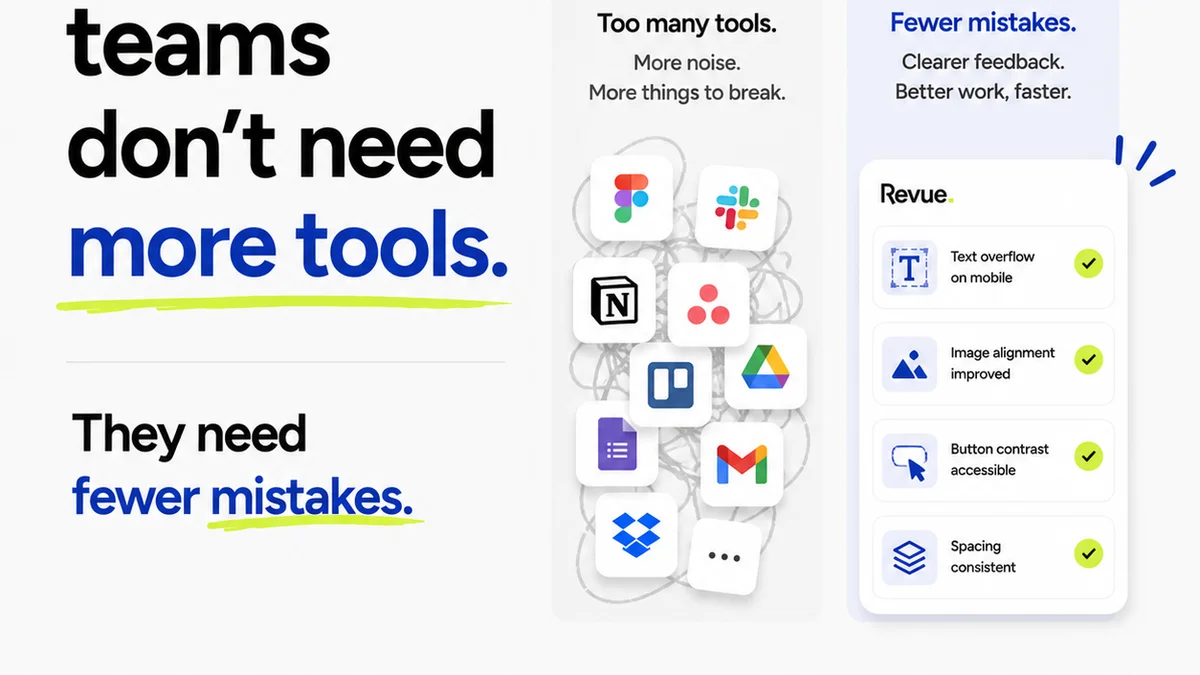
Managing feedback, revisions, and approvals can quickly become a chaotic, time-consuming process. This is a prime area where operational discipline is essential, and where tools like Revue can make a significant impact.
Imagine a world where:
- All client feedback lives in one place, clearly organized against specific assets.
- Stakeholders can easily see the revision history and understand the context of changes.
- Approvals are tracked transparently, removing guesswork and delays.
- Quality checks are built into the workflow, ensuring brand consistency and adherence to briefs.
Revue provides that centralized hub. It streamlines the often-messy final stages of creative production, ensuring that your brilliant ideas don't get lost in email chains or scattered documents. By bringing clarity and control to feedback and approvals, Revue directly supports the operational efficiency that marketing operations strives for.
It helps turn potential chaos into a predictable, manageable process.
5. The Future is Operational
The marketing landscape is only getting more complex. More data, more channels, more tools, more pressure to demonstrate ROI. Trying to navigate this with weak operational foundations is a losing strategy.
High-performing marketing teams aren't just creative; they are *operational*. They have the systems, processes, and discipline to execute flawlessly.
Marketing operations isn't a department. It's a mindset. It's the commitment to building and maintaining the infrastructure that allows brilliant marketing to happen consistently.
Final Thought
Is your marketing team built to create, or is it built to execute? What operational changes will unlock your team’s true potential?
Frequently asked questions
What is the primary role of marketing operations?
The primary role of marketing operations is to ensure marketing runs efficiently and effectively. This involves optimizing processes, managing technology, ensuring data integrity, and aligning teams to achieve marketing goals.
Is marketing operations just about managing software?
No, while managing the marketing technology stack is a component, marketing operations is much broader. It focuses on the processes, data, people, and strategy that enable marketing execution and performance measurement.
How does marketing operations improve campaign performance?
By streamlining workflows, ensuring accurate data for targeting and analysis, optimizing technology, and fostering alignment, marketing operations removes bottlenecks and inefficiencies. This allows campaigns to be executed more effectively, reach the right audience, and deliver better results.
What are the signs that a marketing team needs better marketing operations?
Common signs include chaotic workflows, manual tasks consuming too much time, inconsistent data, missed deadlines, budget overruns, and a general lack of clarity on campaign performance and ROI.
How can a tool like Revue help marketing operations?
Revue helps by centralizing and streamlining the feedback, revision, and approval process for creative assets. This brings operational clarity and efficiency to a critical, often-chaotic part of the marketing workflow, reducing delays and ensuring quality.