The common wisdom about marketing operations is that it’s all about the tech stack. Get the right marketing automation, CRM, analytics, and project management tools in place, and you’re golden. Right?
None of that is wrong. But it’s incomplete.
The hard truth is that even the most sophisticated tech stack is useless if your team’s workflow is broken. Marketing ops isn’t just about software; it’s about the human element. It’s about how people actually work, how they collaborate, and how they get things done.
This is where most agencies and in-house teams trip up. They invest heavily in tools, but neglect the processes and communication that make those tools sing. The result? Frustration, missed deadlines, and wasted budget.
Let’s dig into the common mistakes and, more importantly, how to steer clear of them.
1. The 'Tool-First' Fallacy
Many marketing teams fall into the trap of believing that buying a new piece of software will magically fix their problems. They see a shiny new platform and think, “This will solve our client feedback chaos!” or “This will streamline our campaign approvals!”
This approach is backward.
The real problem usually isn’t a lack of tools, but a lack of clear processes and defined roles. You might have the best project management software in the world, but if no one knows who’s responsible for what, or if the feedback loop is a tangled mess, the software won’t help.
It often leads to:
- Underutilization of expensive software.
- More complexity, not less.
- Team members reverting to old, inefficient habits.
- A constant cycle of buying and abandoning tools.
The Real Fix: Process Before Platform
Before you even look at a new tool, map out your current workflow. Identify the bottlenecks, the points of friction, and the areas where communication breaks down. Ask yourself:
- What are the exact steps in our campaign approval process?
- Who is responsible at each stage?
- Where does feedback typically get lost or misinterpreted?
- How do we currently track revisions?
Once you understand your process, you can then identify what *type* of tool, if any, will actually help. A tool should support and enhance a defined process, not try to invent one.
2. Unclear Ownership and Accountability
Who owns the marketing operations function? Is it a single person? A department? Is it just an assumed responsibility of the marketing director?
When ownership is unclear, things fall through the cracks. No one feels personally responsible for optimizing processes, managing the tech stack, or ensuring data integrity. It becomes everyone’s job, which means it’s no one’s job.
This lack of clear accountability leads to:
- Inconsistent application of processes.
- Missed opportunities for efficiency gains.
- Difficulty in troubleshooting issues.
- Blame games when things go wrong.
Define the Role, Define Success
Marketing operations needs a champion. This person or team should be responsible for:
- Evaluating and managing the marketing technology stack.
- Defining and documenting core marketing processes.
- Ensuring data accuracy and hygiene.
- Training the team on tools and processes.
- Identifying and implementing efficiency improvements.
This doesn’t necessarily mean hiring a dedicated “Marketing Operations Manager” right away, especially for smaller agencies. It could be a senior marketer who takes on this responsibility. The key is that *someone* owns it, and their success is measured by operational efficiency and effectiveness.
3. Treating Feedback as an Afterthought
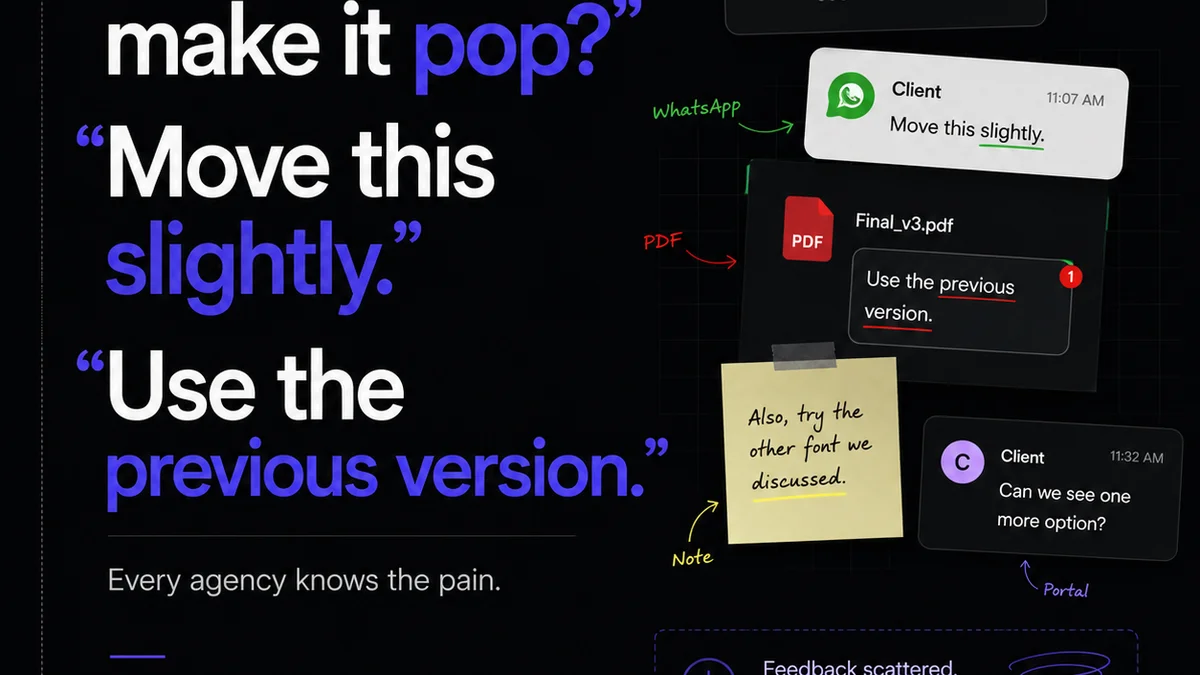
Client feedback is the lifeblood of creative work. Yet, for many agencies, managing it is a chaotic, manual process. Emails get lost, comments are made in disparate platforms, and crucial context disappears.
This isn’t just annoying; it’s a massive operational drag.
When feedback isn’t managed systematically, you get:
- Endless revision cycles.
- Misinterpretation of client intent.
- Scope creep disguised as “minor tweaks.”
- Demoralized creative teams stuck doing rework based on unclear direction.
- Clients who feel ignored or misunderstood.
Centralize and Clarify
Effective marketing operations means building a robust system for handling client feedback. This involves:
- Establishing clear channels for feedback submission.
- Consolidating all feedback in one place.
- Ensuring feedback is actionable and specific.
- Tracking who provided what feedback and when.
- Making sure feedback is visible to the entire project team.
This isn’t about making clients jump through hoops. It’s about creating a transparent, efficient system that benefits everyone and ensures the final deliverable truly meets client expectations.
4. Ignoring the Data Trail
Marketing operations is fundamentally about data. It’s about understanding what’s working, what’s not, and why.
Many teams collect vast amounts of data but fail to leverage it for operational improvement. They might track campaign performance, but they don’t track the efficiency of their own internal processes. How long does an average approval take? Where are the biggest bottlenecks in the content creation pipeline?
When data isn’t used operationally, you miss out on:
- Identifying hidden inefficiencies.
- Predicting future resource needs.
- Measuring the ROI of process improvements.
- Making data-driven decisions about team structure and workflows.
Measure What Matters Internally
Start tracking key operational metrics. This could include:
- Average time to complete a project phase.
- Number of revisions per project.
- Client feedback turnaround time.
- Adoption rates of new tools or processes.
- Error rates in campaign setup or reporting.
This data provides the insights needed to refine your processes, justify investments in new tools, and demonstrate the value of your marketing operations function.
5. Lack of Cross-Functional Alignment
Marketing operations doesn't exist in a vacuum. It impacts and is impacted by sales, creative, account management, and even finance.
A common mistake is to optimize marketing operations solely from the marketing department's perspective, without considering how these changes affect other teams. This can lead to solutions that create new problems elsewhere.
For example, implementing a super-strict lead qualification process in marketing might starve the sales team of potential opportunities, even if it looks good on paper for marketing metrics.
Integrate and Collaborate
Marketing ops needs to be a bridge, not a barrier.
- Involve stakeholders from other departments in process design.
- Ensure that marketing technology integrates smoothly with other business systems (e.g., CRM, finance software).
- Regularly communicate operational changes and their impact across the organization.
- Seek feedback from all affected teams to ensure solutions are holistic.
True operational excellence comes from a unified approach, where systems and processes work harmoniously across the entire business.
Where Revue Fits In
This is precisely why platforms like Revue exist. We understand that effective marketing operations isn't just about software features; it’s about enabling smoother workflows and clearer communication.
Revue provides a centralized hub for managing creative projects. Instead of feedback scattered across emails, Slack messages, and random documents, it’s all in one place, tied directly to the creative asset.
This clarity means:
- Centralized Feedback: All stakeholder comments and approvals are logged in a single, accessible location. No more hunting for that one crucial email.
- Revision Visibility: Track every iteration of a design or piece of copy. Understand exactly what changed, why, and who signed off on it. This prevents endless back-and-forth and clarifies scope.
- Quality Assurance: With clear requirements and consolidated feedback, teams can perform better quality checks before final delivery, reducing errors and client dissatisfaction.
By providing this structure, Revue helps operationalize the feedback and approval process, reducing friction and improving efficiency – directly addressing the human-element challenges that plague so many marketing operations.
Final Thought
Are you investing in tools, or are you investing in your team’s ability to execute? The most successful marketing operations teams understand that technology is an enabler, but process, people, and clear accountability are the true drivers of efficiency and effectiveness. Take a hard look at your workflows. Where are the real bottlenecks? And are your operations supporting your team, or hindering them?
Frequently asked questions
What is the most common mistake in marketing operations?
The most common mistake is a 'tool-first' approach, where teams believe buying new software will solve workflow problems without first defining and optimizing their internal processes. This often leads to underutilized tools and continued inefficiency.
How important is clear ownership in marketing operations?
Clear ownership is critical. Without a designated person or team responsible for marketing operations, processes can become inconsistent, issues may go unaddressed, and opportunities for improvement are missed. Accountability drives efficiency.
How can I improve client feedback management?
Improve client feedback by centralizing all comments in one platform, establishing clear channels for submission, ensuring feedback is actionable, and tracking who provided what feedback. This reduces misinterpretation and speeds up revisions.
Should marketing operations focus on data?
Absolutely. Marketing operations should leverage data not just for campaign performance, but also for internal process improvement. Tracking metrics like project completion time, revision counts, and feedback turnaround helps identify bottlenecks and measure success.