Everyone talks about measuring creative operations success through speed and output. More projects completed. Faster turnaround times. Higher volume of assets pushed out the door.
None of that is wrong. But it’s incomplete.
The hard truth? Focusing solely on speed and volume misses the forest for the trees. It ignores the downstream effects on quality, client satisfaction, and ultimately, profitability.
Real success in creative operations isn't just about doing more. It's about doing it *better*, more predictably, and in a way that delights your clients and empowers your team.
1. Beyond Billable Hours: True Profitability Metrics
Many agencies still cling to billable hours as the primary measure of success. This is a relic of a bygone era.
It incentivizes inefficiency and penalizes streamlined processes. It also creates a disconnect between what the client values and what the agency is paid for.
True profitability in creative ops comes from understanding and optimizing your *internal* costs and margins.
Understanding Your True Costs
This means tracking:
- Labor costs per project phase (briefing, concepting, design, revisions, QA, delivery).
- Tooling and software expenses allocated to specific projects.
- Overhead allocation (rent, utilities, admin) as it relates to creative output.
When you know the true cost of delivering a project, you can price more accurately and identify where process improvements yield the biggest financial gains.
Margin Analysis by Project Type
Are certain types of projects consistently less profitable? Why?
It's rarely the client. It's usually a symptom of an underlying operational bottleneck or scope creep that wasn't managed effectively.
Success here is improving the margin on those historically low-profit projects, not just avoiding them.
2. Predictability: The Foundation of Trust
Clients don't just want great creative. They want creative delivered on time, on budget, and with minimal drama.
Unpredictability breeds anxiety. It forces clients to constantly chase updates, second-guess timelines, and worry about the final outcome.
Predictability in creative operations is the bedrock of client trust and long-term relationships.
Consistent Delivery Timelines
Can you reliably estimate how long each phase of a project will take, given a certain scope?
If your timelines are always estimates that shift, you have an operational problem, not a creative one.
Success means hitting your internal and external deadlines consistently. Not just most of the time, but *reliably*.
Managing Scope Creep Effectively
Scope creep isn't just about adding features. It's about uncontrolled scope expansion without corresponding adjustments to time or budget.
Your operational success is measured by how well you identify, flag, and manage scope changes *before* they derail your project plan.
This requires clear communication, defined approval gates, and a process for evaluating the impact of every change request.
3. Quality Assurance: Preventing Rework
Rework is the silent killer of creative operations efficiency.
It’s not just the time spent fixing errors; it’s the delay it causes, the frustration it generates, and the potential damage to client perception.
Measuring and improving your quality assurance process is paramount.
Error Tracking and Root Cause Analysis
What types of errors are most common? Are they typos, brand guideline violations, technical glitches, or missed requirements?
Log every error, no matter how small. Then, analyze the root cause.
Is it a lack of clear briefs? Insufficient training? Rushed timelines leading to oversight? Poor communication?
Reduction in Rework Cycles
The ultimate measure of QA success is a reduction in the number of revision rounds needed to get to final approval.
Fewer revisions mean faster delivery, happier clients, and more capacity for your team.
This isn't about discouraging feedback; it's about ensuring feedback is addressed efficiently and that the initial delivery is as close to perfect as possible.
4. Client Satisfaction: The Ultimate Outcome
All the efficiency in the world means nothing if your clients aren't happy.
But client satisfaction isn't just a feeling; it's a direct result of your operational performance.
Smooth processes, clear communication, predictable delivery, and high-quality output all contribute to a positive client experience.
Feedback Loop Efficiency
How quickly and effectively are you incorporating client feedback?
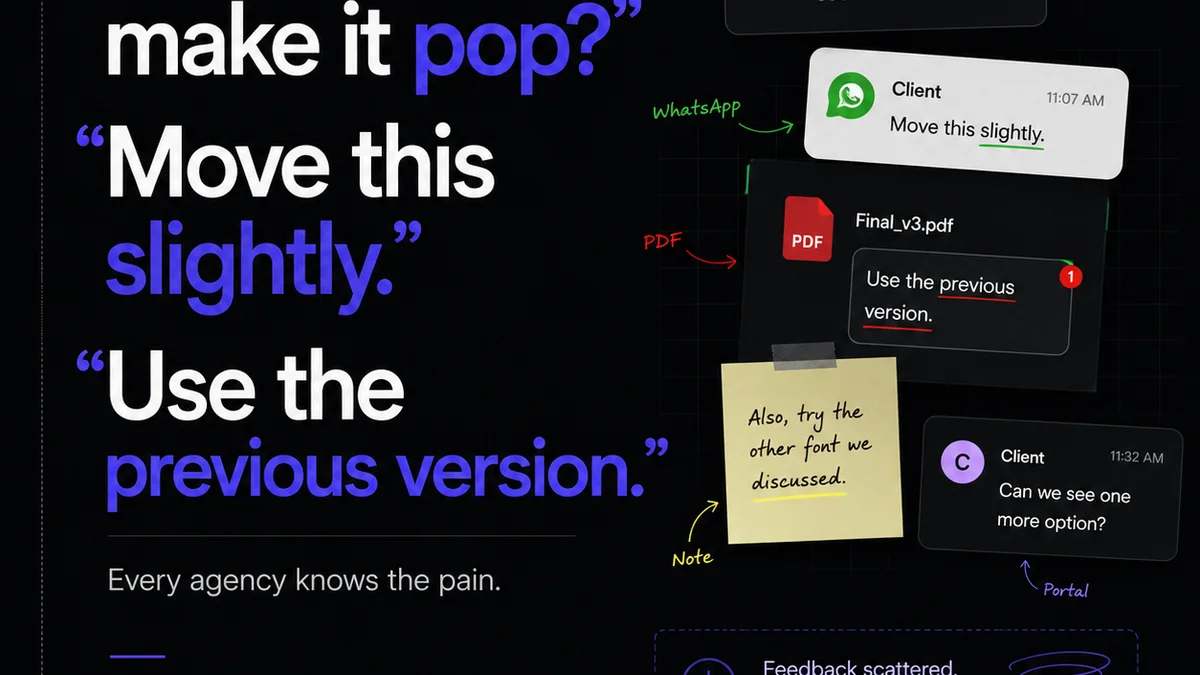
Are feedback sessions productive, or do they devolve into confusion and conflicting requests?
Success means a streamlined, documented feedback process that minimizes misinterpretation and accelerates decision-making.
Repeat Business and Referrals
The most telling metrics of client satisfaction are repeat business and referrals.
These are organic indicators that clients value your partnership and the results you deliver.
They are the downstream effects of well-oiled creative operations.
Where Revue Fits In
Managing these metrics requires visibility and control over your entire creative workflow.
This is where a centralized platform like Revue becomes indispensable.
Centralized Feedback: No more hunting through endless email threads or Slack messages for client comments. Revue brings all feedback into one place, linked directly to the asset being reviewed.
Revision & Approval Visibility: Track every iteration, every stakeholder's input, and the final approval status. This eliminates confusion and provides a clear audit trail.
Quality Checks: By ensuring feedback is consolidated and approvals are clear, you reduce the likelihood of errors slipping through. This directly impacts your rework rates and the quality of your final deliverables.
Revue helps transform subjective client interactions into objective, manageable operational data. It provides the structure needed to drive predictability, improve quality, and ultimately, boost client satisfaction.
Final Thought
Are you measuring what truly matters in your creative operations?
Or are you just counting keystrokes and delivery dockets?
The shift from output-based metrics to outcome-based ones is not just a change in reporting; it's a fundamental change in how you manage your business, your team, and your client relationships.
Frequently asked questions
What are the most important metrics for creative operations?
The most important metrics go beyond speed and volume. Focus on profitability (true costs, margins), predictability (consistent timelines, scope management), quality (error reduction, rework cycles), and client satisfaction (feedback efficiency, repeat business).
How does rework impact creative operations?
Rework is a major drain on efficiency, profitability, and client relationships. It causes delays, increases costs, frustrates teams, and can damage client perception. Reducing rework through better QA and clear processes is key to operational success.
Is billable hours a good metric for creative operations?
No, billable hours is an outdated metric that incentivizes inefficiency. True success is measured by internal efficiency, profitability, and client outcomes, not just the hours logged.
How can I improve client satisfaction through operations?
Improve client satisfaction by ensuring predictable delivery timelines, managing scope effectively, incorporating feedback efficiently, and delivering high-quality creative work consistently. Streamlined operations directly lead to a better client experience.