Everyone talks about creative productivity. They point to dashboards, output numbers, and billable hours. They think more output equals more success.
None of that is wrong. But it’s incomplete.
The hard truth? Focusing solely on output is like measuring a chef by how many dishes they can plate, not by how many customers rave about the meal. Creative productivity isn't just about doing more; it's about achieving more meaningful results. It’s about making clients happy, driving business goals, and building a sustainable creative practice.
1. Beyond the Stopwatch: What 'Productivity' Really Means for Creatives
The traditional view of productivity is stuck in an industrial-era mindset. Clock in, clock out. Produce widgets. For creatives, this model breaks down fast.
Creative work is inherently non-linear. It involves thinking, iterating, collaborating, and sometimes, staring at a blank screen until inspiration strikes. Measuring this by sheer volume misses the magic that happens in the messy middle.
Success in creative productivity is about:
- Delivering work that solves client problems.
- Meeting and exceeding client expectations.
- Achieving measurable business outcomes for clients.
- Maintaining a healthy, sustainable creative process.
- Fostering a culture of continuous improvement and learning.
It’s about impact, not just activity.
The Illusion of Busyness
An agency can be churning out assets at a furious pace, but if those assets aren't resonating, aren't on brand, or aren't driving conversions, what’s the point?
Busyness can easily mask inefficiency. It can hide bottlenecks, rework, and miscommunication. It’s the enemy of deep, focused creative thought.
The Real Value is in the Outcome
Think about the last project you were truly proud of. Was it the sheer number of mockups you produced, or was it the fact that the campaign exceeded its KPIs, the client was thrilled, and your team felt a genuine sense of accomplishment?
The latter. That’s where true creative productivity lies.
2. Identifying the Right Metrics for Creative Impact
If output isn't the whole story, what should you measure? You need metrics that reflect the actual value your creative work delivers.
Client Satisfaction & Retention
This is perhaps the most direct measure of success. Are your clients happy? Do they come back?
Look beyond a simple NPS score. Dig deeper:
- Are clients providing positive testimonials?
- Are they referring new business?
- What’s your client retention rate over 1, 2, and 5 years?
- Are clients consistently approving work with minimal rounds of revision?
High client satisfaction is a powerful indicator that your creative process is effective and your output is valuable.
Project Success & Goal Achievement
Every project has objectives. Did the creative work help achieve them?
This requires clear goal setting *before* the project begins. Work with clients to define:
- Key Performance Indicators (KPIs) – e.g., conversion rates, click-through rates, engagement metrics, brand awareness lift.
- Project milestones and deadlines.
- Budget adherence.
Tracking whether your creative output directly contributed to these goals is crucial. Did the website redesign increase conversions? Did the social campaign boost engagement?
Team Health & Sustainability
Burnout is the silent killer of creative productivity. A team consistently overworked and stressed can't produce their best work, no matter the volume.
Measure:
- Team morale and engagement (through regular check-ins, surveys).
- Employee retention rates.
- Instances of overtime and its necessity.
- The perceived workload and stress levels of your team members.
A productive team is a healthy team. Sustainability ensures long-term success, not just short-term sprints.
Revision & Approval Cycles
While not a primary outcome, the efficiency of your revision and approval process is a strong *indicator* of overall productivity and client alignment.
Long, drawn-out revision cycles often signal:
- Misunderstood briefs.
- Lack of clear feedback.
- Ineffective internal review processes.
- Scope creep.
Streamlined cycles mean less wasted time and faster delivery of impactful work.
3. The Hidden Costs of Inefficiency
Every moment spent on unnecessary revisions, chasing down feedback, or redoing work is a moment stolen from actual creative output or strategic thinking.
What are these costs?
- Financial Drain: Wasted hours translate directly to increased project costs and reduced profitability.
- Client Frustration: Delays and rework erode client trust and satisfaction.
- Team Demoralization: Constantly fighting fires or redoing work is demotivating and leads to burnout.
- Missed Opportunities: Time spent on rework is time not spent on new business, strategic planning, or developing innovative solutions.
These aren't just minor inconveniences; they are significant drags on your agency's potential.
The Ripple Effect of Bad Feedback
Vague, contradictory, or late feedback is a productivity killer. It forces creatives to guess, backtrack, and spend hours deciphering intentions rather than executing designs.
This isn't just about the individual task. It creates a culture where clarity is optional, and effort is rewarded over effectiveness.
When Rework Becomes the Norm
If rework is a regular occurrence, it’s a sign of systemic issues. It could be in your brief-taking process, your internal QA, or your client communication protocols.
Treating each instance of rework as an isolated incident means you’ll never fix the root cause. It’s like patching a leaky roof instead of fixing the plumbing.
4. Where Revue Fits In
Measuring creative productivity effectively requires visibility. You need to see the workflow, understand the feedback loop, and track progress without getting bogged down in the minutiae.
This is where a tool like Revue can make a tangible difference.
Centralized Client Feedback
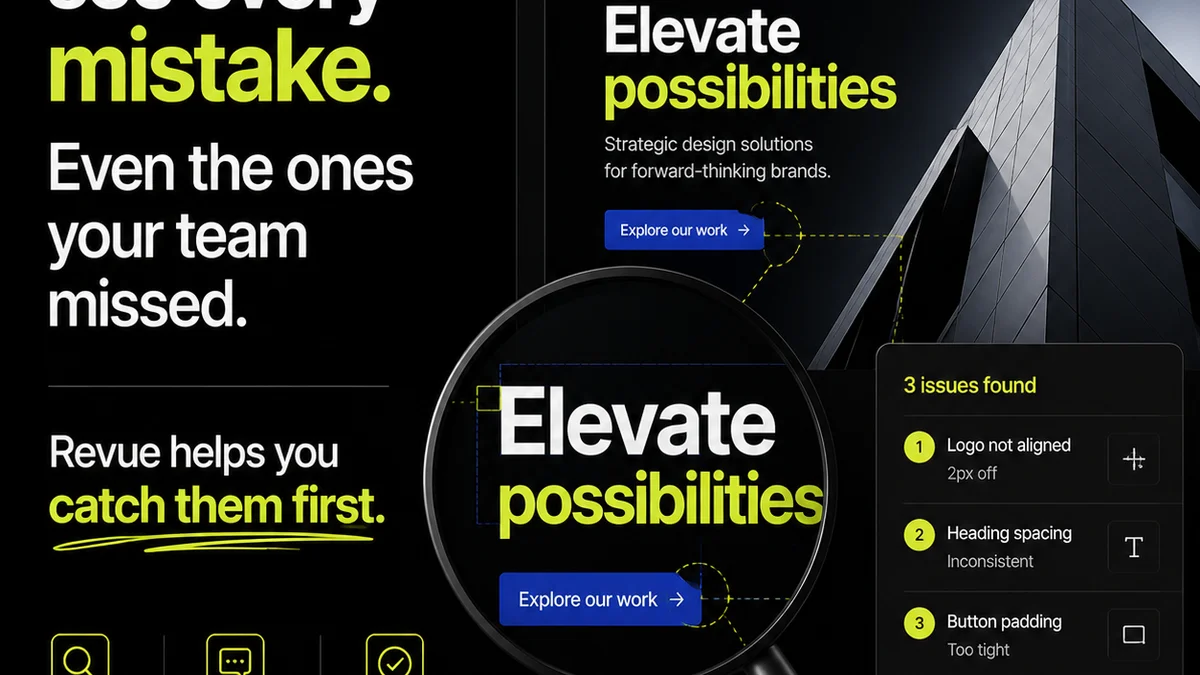
No more sifting through endless email chains or Slack messages to find that one crucial piece of feedback. Revue brings all client comments, annotations, and approvals into one central, organized location, directly on the creative asset.
This clarity:
- Reduces misinterpretation of feedback.
- Minimizes time spent searching for information.
- Ensures everyone is working from the same, up-to-date version.
This directly impacts the efficiency of revision cycles, a key indicator of productivity.
Streamlined Revisions and Approvals
Revue provides a clear, visual audit trail of every change and every approval. Creatives can see exactly what needs to be done, and clients can easily give their sign-off. This structured process cuts down on ambiguity and speeds up the path to final delivery.
When approvals are clear and revisions are tracked, you:
- Reduce the chances of scope creep.
- Accelerate project timelines.
- Improve client confidence.
Enhanced Quality Control
Before a project goes live or to the client, a thorough quality check is essential. Revue allows for systematic review processes, ensuring that all feedback has been addressed, all requirements met, and the final output is polished and error-free.
This proactive approach to quality:
- Minimizes post-launch issues.
- Protects your agency's reputation.
- Ensures the creative work truly meets its objectives.
By providing a single source of truth for feedback and approvals, Revue helps your team focus on creating great work, rather than managing the chaos around it.
5. Building a Culture of Impactful Productivity
Ultimately, measuring creative productivity isn't just about numbers; it's about fostering an environment where great work can thrive.
This means:
- Setting Clear Expectations: Define what success looks like for each project and for the agency as a whole.
- Prioritizing Deep Work: Protect your team's time for focused creative thinking and execution.
- Encouraging Collaboration: Foster an environment where ideas can be shared and built upon.
- Learning from Every Project: Conduct retrospectives to understand what worked, what didn't, and how to improve.
- Celebrating Outcomes: Recognize and reward the impact of the work, not just the effort involved.
This shift in focus—from activity to impact—is what separates agencies that merely survive from those that truly lead.
Final Thought
Are you measuring the right things? Are your efforts truly driving client success and sustainable growth, or are you just busy?
Frequently asked questions
What's the difference between output and impact in creative work?
Output refers to the sheer volume of work produced (e.g., number of designs, assets created). Impact refers to the results and value that work delivers (e.g., client satisfaction, campaign success, business goals achieved).
How can I measure client satisfaction effectively?
Beyond basic scores, look at client retention rates, testimonials, referrals, and the number of revision rounds required. Consistently happy clients who return and recommend are a strong indicator of success.
Why is team health important for creative productivity?
Burnout and low morale kill creativity and efficiency. A healthy, engaged team is more innovative, produces higher quality work, and is more sustainable long-term. Measuring team morale and retention is crucial.
How does clear feedback improve productivity?
Clear, concise, and timely feedback reduces misinterpretation, minimizes rework, and eliminates wasted time spent deciphering vague instructions. This allows creatives to focus on execution rather than clarification.
Can tools like Revue directly improve productivity metrics?
Yes, tools like Revue centralize feedback, streamline approvals, and provide a clear audit trail. This reduces time spent on communication overhead and rework, directly improving efficiency and client satisfaction metrics.