Everyone talks about reach. Likes, shares, impressions, circulation numbers. That’s the easy stuff. The vanity metrics.
None of that is wrong. But it’s incomplete.
For creative agencies and in-house teams churning out print collateral, books, magazines, and packaging, focusing solely on top-line distribution numbers is a mistake. It misses the real drivers of profitability and client satisfaction.
The hard truth? True success in print and publishing isn't just about how many eyeballs see your work. It's about how efficiently you got it there, how accurately it reflected the client's vision, and how smoothly the entire process ran.
1. Beyond Circulation: The Real Reach Metrics
Circulation numbers are a starting point, not an endpoint. They tell you how many copies went out, but not how many were *read*, how many led to a desired action, or how much they cost to produce and distribute.
Consider these deeper metrics:
- Engagement Rate (for digital tie-ins): If your print piece drives traffic to a website or landing page, track conversion rates. Did the flyer actually get someone to buy?
- Reader Retention: For publications, how long do people keep the issue? How many subscribe for the next one? This shows sustained value, not just initial pickup.
- Brand Recall & Sentiment: Post-campaign surveys can reveal if the print material improved brand perception or memorability. This is harder to quantify but invaluable.
- Cost Per Acquisition (CPA): If the print piece is a lead-generation tool, what’s the actual cost to acquire each new customer or lead from that campaign?
These metrics connect the physical output to tangible business outcomes.
2. The Efficiency Equation: Time, Cost, and Quality
The slickest design and the biggest print run mean nothing if the project bled money and missed deadlines. Operational efficiency is a silent killer or a powerful enabler of success.
Ask yourself:
a. Production Timelines
Were milestones hit? Was the project delivered on time, every time? Delays in print mean missed market opportunities, frustrated clients, and escalating costs.
Think about:
- Pre-press turnaround: How long did it take to get files print-ready?
- Printing and finishing times: Were these estimates accurate?
- Shipping and distribution logistics: Were there bottlenecks?
Efficiency here isn't just about speed; it's about predictability.
b. Budget Adherence
Did the project come in on budget? This isn't just about the final invoice.
It’s about tracking:
- Material costs: Paper, ink, special finishes.
- Printing costs: Setup, runs, overruns.
- Distribution and mailing costs.
- Agency/internal labor costs tied to the project.
Unexpected costs are a hallmark of poor planning, not a sign of a great outcome.
c. Revision Cycles and Error Rates
How many rounds of revisions were *actually* necessary? Were there costly errors caught late in the process (or worse, after printing)?
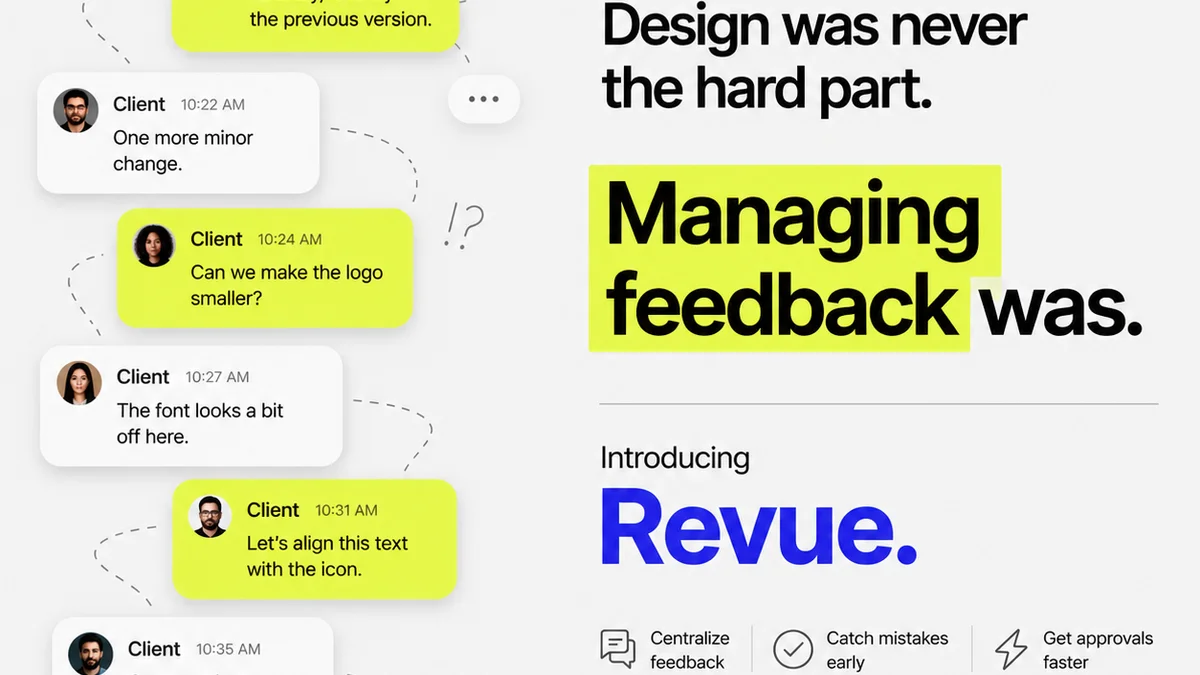
This is where feedback management becomes critical. Unclear feedback, endless back-and-forth, and missed corrections inflate timelines and budgets.
- Number of revision rounds: More than 2-3 often signals a problem.
- Error logs: Track typos, color issues, layout mistakes caught pre- or post-print.
- Client satisfaction with the feedback process itself.
A smooth, well-managed feedback loop is a direct contributor to project success.
3. Client Collaboration: The Feedback Loop Factor
Print projects often involve multiple stakeholders, complex approvals, and subjective tastes. Managing this collaboration effectively is paramount.
It's not just about getting a signature; it's about the quality of the input and the clarity of the output.
a. Clarity of Brief and Feedback
Was the initial brief comprehensive? Was feedback specific, actionable, and consolidated?
Vague comments like “make it pop” or “I don’t like it” are project killers. Successful projects have clients who can articulate *why* something needs to change.
b. Approval Workflow Efficiency
How long did approvals take? Were there bottlenecks waiting for a specific person or department?
A streamlined approval process prevents costly delays and ensures the project maintains momentum.
- Time from deliverable to approval.
- Number of touchpoints required for sign-off.
- Centralization of feedback: Was it gathered in one place, or scattered across emails, calls, and Slack messages?
The latter leads to chaos. The former leads to efficiency.
c. Relationship Health
Did the process strengthen or strain the client relationship? Did they feel heard and understood?
A print project that runs smoothly, delivers on time, and meets objectives leaves a client feeling confident and valued. A chaotic one erodes trust, regardless of the final printed piece.
4. Where Revue Fits In
Managing the complexities of print and publishing workflows requires tools that bring order to the creative chaos. This is where a centralized feedback and approval platform like Revue becomes essential.
Instead of chasing down feedback across disparate email threads and Slack channels, Revue provides a single source of truth for all creative assets and client communications.
Imagine:
- Clear, contextual feedback directly on the design files, proofs, or mockups.
- Visible revision history, so everyone understands what’s changed and why.
- Streamlined approval workflows with automated notifications, ensuring no sign-off gets lost.
- Centralized project assets, making it easy to track versions and access final files.
This level of control and visibility directly impacts the efficiency and quality metrics we’ve discussed. It reduces ambiguity, minimizes errors, and accelerates turnaround times. It transforms the often-messy collaboration process into a predictable, manageable flow.
5. Final Thought
The final printed product is the tangible output, but the true measure of success lies in the operational excellence that brought it to life. Were you efficient? Was the collaboration smooth? Did you achieve the *actual* business goals, not just the distribution ones?
When you shift your focus from vanity metrics to the operational realities of production, feedback, and delivery, you unlock a more sustainable, profitable, and satisfying way to work.
So, next time you're evaluating a print or publishing project, ask yourself: Did we just print a lot of paper, or did we build something successful?
Frequently asked questions
What are vanity metrics in print and publishing?
Vanity metrics are superficial numbers that look good but don't necessarily reflect true success or business impact. For print and publishing, this often includes raw circulation numbers, high impression counts, or social media likes without a clear connection to business goals.
How can I improve efficiency in print production?
Improve efficiency by streamlining your pre-press process, establishing clear communication channels with printers, optimizing file preparation, and implementing a robust feedback and approval system to minimize late-stage errors and revisions.
What's the best way to manage client feedback on print projects?
The best way is to centralize feedback in one platform, ensuring it's contextual, actionable, and consolidated. This avoids confusion, reduces the number of revision cycles, and keeps the project moving forward efficiently.
How does client collaboration impact project success?
Effective client collaboration is crucial. Clear briefs, specific feedback, and streamlined approval processes lead to fewer errors, faster turnaround times, and a stronger client relationship, all contributing directly to project success.