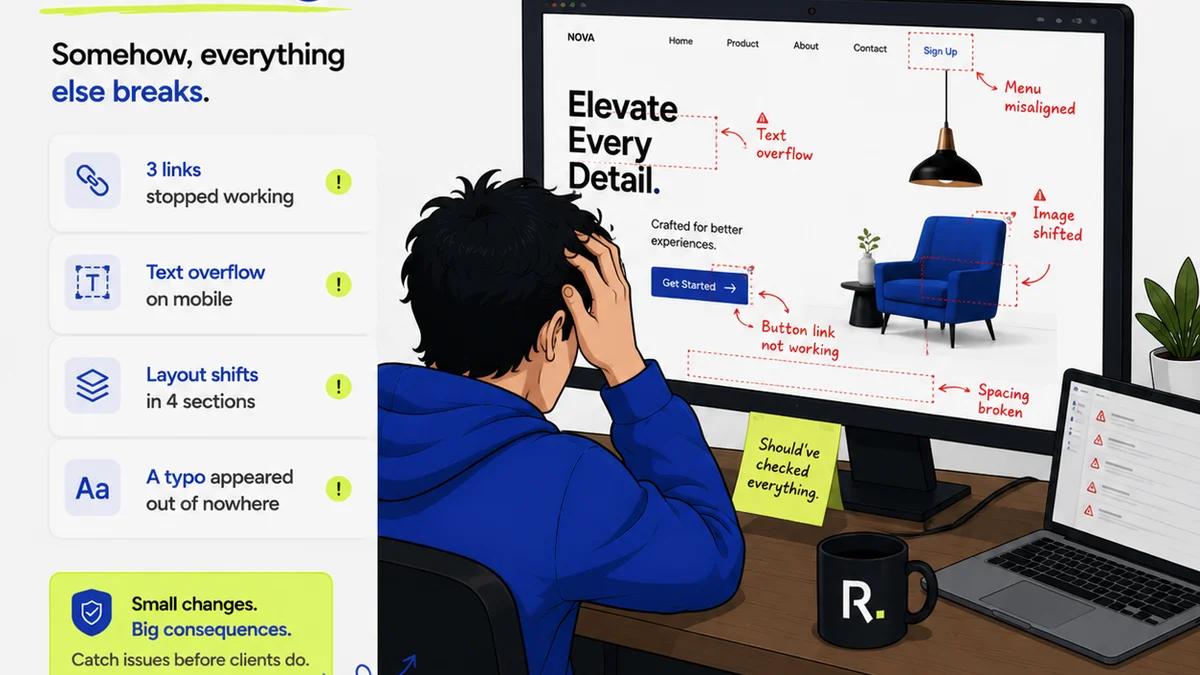
Everyone wants to scale their creative output. More capacity, faster turnaround, bigger clients. It’s the siren song of agency growth. You might think scaling automatically means better ROI. More projects, more revenue, right?
None of that is wrong. But it’s incomplete.
The hard truth is that scaling creative operations without measuring its actual return on investment is a gamble. You’re not just spending more on people, tools, and processes; you’re betting on those investments paying off. Without clear metrics, you’re flying blind. You might be scaling inefficiently, burning cash, and delivering diminishing returns. That’s not growth; that’s just expensive chaos.
1. The Illusion of 'More is More'
The most common mistake when scaling creative is assuming that simply increasing output volume will naturally boost profitability. This is a dangerous oversimplification.
Scaling isn't just about hiring more designers or buying more software licenses. It's about fundamentally improving your capacity to deliver high-quality creative work profitably. If your processes are leaky, your communication is broken, and your approval cycles are glacial, adding more volume will only amplify those problems.
The Hidden Costs of Unchecked Scaling
- Increased overhead without proportional revenue growth.
- Burnout among team members due to unmanageable workloads.
- A decline in creative quality as speed is prioritized over craft.
- Wasted resources on redundant tools or underutilized talent.
- Client dissatisfaction stemming from missed deadlines or subpar work.
These aren't minor inconveniences; they are profit killers. They erode your margins and damage your reputation.
2. Defining 'Creative Scaling' Beyond Volume
True creative scaling means enhancing your agency's ability to deliver value, not just more deliverables. This involves strategic improvements across your entire workflow. It’s about doing *better* with more, not just doing *more*.
Consider what 'scaling' really means for your agency:
- Expanding into new service offerings.
- Increasing the complexity or scope of projects you can handle.
- Improving efficiency to take on more clients without proportionally increasing headcount.
- Shortening project timelines while maintaining or improving quality.
- Reducing the cost of goods sold (COGS) per project.
Each of these requires a different approach and, crucially, different metrics to track success.
Metrics That Matter for Scaling
Forget vanity metrics. Focus on what impacts your bottom line and client satisfaction.
- Profit Margin per Project/Client: Are you making more money on each piece of work, or is your margin shrinking as you scale?
- Utilisation Rate vs. Realisation Rate: How much of your team's time is billable (utilisation), and how much of that billable time are you actually able to charge clients for (realisation)? A gap here indicates scope creep or inefficient time tracking.
- Client Lifetime Value (CLV): Are your scaled operations attracting and retaining clients for longer, generating more predictable revenue?
- Average Project Completion Time: Has this decreased, increased, or stayed the same as you've scaled?
- Cost Per Project Component: Track the cost of specific elements (e.g., design hours, revision rounds, asset production) to identify inefficiencies.
Measuring these helps you understand if your scaling efforts are actually making you more profitable or just busier.
3. The ROI Calculation: Beyond Simple Revenue
Calculating the ROI of creative scaling isn't as simple as (New Revenue - Old Revenue) / Investment. You need a more nuanced approach.
Your investment isn't just the cost of new hires. It includes:
- Salaries and benefits for new staff.
- New software licenses and subscriptions.
- Training and onboarding costs.
- Potential office space expansion.
- Costs associated with process implementation and refinement.
Your return isn't just increased revenue. It also includes:
- Improved profit margins.
- Reduced project turnaround times (leading to faster cash flow).
- Increased client retention and satisfaction.
- Enhanced team morale and reduced burnout.
- Ability to bid on larger, more profitable projects.
A Practical ROI Framework
A simplified framework for calculating ROI on a scaling initiative could look like this:
ROI = (Net Profit Gained from Scaling - Cost of Scaling Investment) / Cost of Scaling Investment * 100%
Where:
- Net Profit Gained from Scaling = (Total Revenue from Scaled Operations - COGS for Scaled Operations) - (Total Revenue from Pre-Scaled Operations - COGS for Pre-Scaled Operations)
- Cost of Scaling Investment = Sum of all direct and indirect costs incurred to achieve scaling (e.g., new hires, tools, training).
This formula forces you to look at the *net profit* improvement, not just top-line revenue. It also demands you account for all associated costs.
The 'Soft' ROI: Intangible Benefits
Don't discount the intangible benefits. While harder to quantify, they significantly impact long-term success.
- Improved Team Morale: When scaling is managed well, teams feel empowered, not overwhelmed.
- Enhanced Brand Reputation: Consistently delivering high-quality work at scale builds trust.
- Greater Agility: A well-scaled operation can pivot more easily to meet market demands.
- Innovation Capacity: Freeing up creative minds from operational drudgery allows for more strategic thinking and innovation.
These 'soft' returns often translate into hard financial gains over time through better client relationships and a stronger competitive position.
4. Where Revue Fits In
Scaling creative output introduces complexity. Managing feedback, revisions, and approvals across more projects and clients can quickly become a bottleneck. This is where a centralized platform like Revue becomes critical for measuring and ensuring the ROI of your scaling efforts.
Revue helps by:
- Centralizing Feedback: All client comments and stakeholder input are in one place, linked to specific creative assets. This drastically reduces time spent hunting for feedback and minimizes misinterpretations.
- Streamlining Revisions: Version control and clear annotation tools mean fewer back-and-forth emails and a clearer audit trail of changes. You can see exactly what was changed, when, and by whom.
- Providing Approval Visibility: Track the status of approvals in real-time. This prevents projects from stalling due to lost communication or unclear sign-offs, directly impacting project timelines and revenue recognition.
- Enhancing Quality Control: By having a clear record of feedback and revisions, you can more effectively ensure that the final output meets both client expectations and your agency's quality standards. This reduces costly rework post-delivery.
When you scale, the volume of communication and decision-making explodes. Without a system to manage it, this noise drowns out any potential gains. Revue brings order, making your scaled operations more efficient and measurable. It provides the data and clarity needed to accurately assess the ROI of your expanded capacity.
5. The Dangers of Misjudging Scale
Scaling without data is like driving blindfolded. You might be moving, but you have no idea if you’re heading towards your destination or off a cliff.
Consider these common missteps:
- Over-investing in Tools: Buying the latest software without understanding how it integrates or if your team will actually use it.
- Hiring Too Quickly: Bringing on staff without a clear role or sufficient onboarding, leading to inefficiency and high turnover.
- Ignoring Process: Believing that talented individuals can overcome any process breakdown. Talent is crucial, but processes provide the framework for consistent success at scale.
- Failing to Iterate: Launching a scaling initiative and assuming it's done. Continuous monitoring and adjustment are key.
Each of these can turn a well-intentioned growth strategy into a financial drain. The ROI becomes negative, and the agency suffers.
6. Measuring Success: The Ongoing Audit
Measuring the ROI of creative scaling isn't a one-time calculation. It's an ongoing process. Regularly audit your metrics and compare them against your initial investment and goals.
Ask yourself:
- Are our profit margins improving or declining with increased volume?
- Is our team capacity being utilized effectively, or are we seeing significant downtime?
- Are clients staying with us longer, and are they satisfied with the quality of our scaled output?
- Are we able to take on more complex or higher-value projects as a result of our scaling?
- What are the biggest bottlenecks in our current scaled workflow, and how can we address them?
This continuous feedback loop allows you to course-correct, optimize your investments, and ensure that your scaling efforts are truly driving sustainable, profitable growth.
Final Thought
Scaling your creative agency is about building a more robust, efficient, and profitable business. It’s not merely about getting bigger. It’s about getting better, smarter, and more capable. Are you measuring the true return on your growth investments, or are you just hoping for the best?
Frequently asked questions
What is the biggest mistake agencies make when scaling creative output?
The most common mistake is assuming that simply increasing volume automatically leads to better ROI. Agencies often fail to account for the increased overhead, potential quality dips, and process inefficiencies that come with scaling if not managed strategically. They focus on 'more' without ensuring 'better' or 'more profitable'.
How can I calculate the ROI of my creative scaling efforts?
A practical ROI calculation involves comparing the net profit gained from your scaled operations against the total cost of the scaling investment. The formula is: ROI = (Net Profit Gained - Cost of Scaling Investment) / Cost of Scaling Investment * 100%. Ensure you account for all direct and indirect costs and focus on net profit improvement, not just revenue increases.
What are key metrics to track for creative scaling ROI?
Beyond revenue, track profit margin per project/client, utilization rate vs. realization rate, client lifetime value (CLV), average project completion time, and cost per project component. These metrics provide a clearer picture of efficiency, profitability, and client satisfaction.
How does a platform like Revue help measure the ROI of scaling?
Revue centralizes feedback, streamlines revisions, and provides clear approval visibility. This reduces wasted time, minimizes errors, prevents project delays, and improves the quality of deliverables. By bringing order to the increased communication complexity of scaling, Revue enables more accurate tracking of project timelines, costs, and client satisfaction, all crucial for ROI assessment.