Everyone talks about creative workflow optimization. They point to faster turnaround times, fewer revisions, and happier clients. None of that is wrong. But it’s incomplete.
The hard truth is, you can’t effectively measure the ROI of your creative workflow if you’re only looking at output. Real ROI is about predictable profit, reduced risk, and consistent client satisfaction. It’s about the operational health of your agency.
1. The Vanity Metrics Trap
It’s easy to get seduced by surface-level wins. Faster delivery? Great. Fewer client comments? Fantastic. But these are often symptoms of a healthy system, not the system itself.
Think about it:
- A project delivered in half the time might have been rushed, leading to errors down the line.
- Fewer revisions could mean the client was too intimidated to speak up, leading to dissatisfaction later.
- Happy clients are good, but are they *profitable* clients?
This focus on easily observable, often qualitative, metrics misses the underlying operational dynamics that *drive* profitability and client loyalty.
2. The Real Cost of Inefficiency
Creative work is inherently messy. But that doesn’t mean the *process* has to be. Disorganized workflows bleed money in ways that are hard to see on a per-project basis.
Wasted Hours
Where do those hours go?
- Searching for files scattered across shared drives and email inboxes.
- Chasing down feedback from multiple stakeholders who all have different versions.
- Re-doing work because the original brief was misinterpreted or lost.
- Internal debates about what the client *actually* said.
These aren’t billable hours. They’re overhead. They erode profit margins faster than you can imagine.
Scope Creep and Unbilled Time
This is the killer. Unclear feedback loops, mismanaged expectations, and a lack of clear approval stages inevitably lead to scope creep. What starts as a small tweak balloons into significant extra work.
Without a system to track feedback, revisions, and approvals, it’s almost impossible to push back effectively. You end up doing free work, which kills profitability and sets a dangerous precedent.
Burnout and Turnover
A chaotic workflow isn't just bad for business; it’s bad for your people. Constant firefighting, unclear direction, and endless revisions lead to stress, frustration, and burnout.
High turnover is incredibly expensive. Replacing experienced staff means recruitment costs, onboarding time, and lost productivity. The cost of a bad workflow shows up directly in your HR budget.
3. Quantifying Workflow ROI: Beyond the Obvious
Measuring workflow ROI isn’t about tracking how many files were moved. It’s about tracking the operational factors that impact your bottom line and client relationships.
Predictability
Can you reliably forecast project timelines and costs? A well-defined workflow creates predictability. This allows for better resource allocation, more accurate quoting, and more confident client commitments.
Key metrics to consider:
- On-time delivery rate: Not just for the final deliverable, but for key milestones.
- Budget adherence: Percentage of projects completed within or under budget.
- Resource utilization: Are your teams consistently busy with billable work, or are they waiting for input?
Risk Mitigation
Every project carries risk. A robust workflow minimizes these risks by ensuring clarity, accountability, and proper documentation.
Key metrics to consider:
- Number of disputes or escalations: Fewer client disputes mean less time spent on damage control and more time on productive work.
- Number of formal complaints: A direct indicator of client dissatisfaction.
- Rework percentage: The amount of time spent redoing work due to errors or miscommunication.
Client Lifetime Value (CLV)
Ultimately, happy, profitable clients stick around. A smooth, transparent workflow fosters trust and leads to repeat business and referrals.
Key metrics to consider:
- Client retention rate: How many clients do you keep year over year?
- Average client tenure: How long do clients typically work with you?
- Referral rate: How many new clients come from existing ones?
4. The Components of a Measurable Workflow
What does a workflow look like when you can actually measure its impact? It's built on a few core pillars.
Centralized Information
All project assets, briefs, feedback, and communication live in one place. No more hunting through emails, Slack threads, or random cloud folders.
This isn’t just about convenience; it’s about creating a single source of truth. It reduces errors, speeds up decision-making, and ensures everyone is working from the most current information.
Clear Feedback Loops
Clients need to provide feedback. Your team needs to receive it clearly. The process must be structured.
This means defining *how* feedback is given (e.g., annotations, comments), *who* provides it, and *when*. It also means having a mechanism to track that feedback and ensure it’s addressed.
Defined Revision and Approval Stages
Scope creep often starts with undefined revision rounds. If you don’t clearly define what’s included and what’s not, you’re setting yourself up for trouble.
Establish clear stages: initial concept, draft revisions, final review, final approval. Make these stages visible to both your team and the client. Track progress through these stages.
Quality Assurance (QA) Gates
Before anything goes to the client, it should go through a rigorous QA process. This catches errors that might otherwise lead to extensive client revisions or post-launch issues.
QA isn't just about spell-checking. It’s about ensuring the creative meets the brief, adheres to brand guidelines, and functions as intended (e.g., website links work, image resolution is correct).
Where Revue Fits In
This is precisely why Revue was built. We saw agencies and in-house teams drowning in disjointed feedback and opaque revision processes.
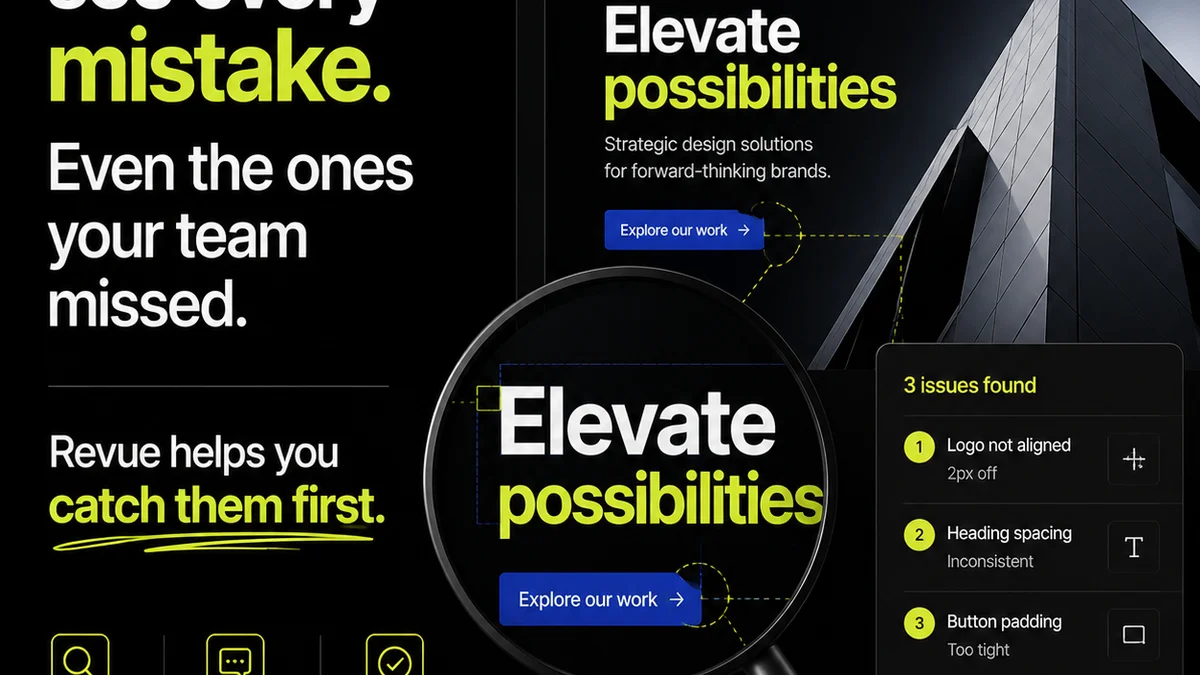
Revue provides a centralized platform for all your creative assets. Clients can leave precise, contextual feedback directly on the work.
You get clear visibility into every revision round and approval stage. This eliminates ambiguity, speeds up sign-offs, and provides an auditable trail for every decision.
By structuring your feedback and approvals, you inherently manage scope and reduce unbilled time. This directly impacts your project profitability.
Furthermore, our quality assurance tools help ensure that only polished, approved work moves forward, reducing costly mistakes and client frustration.
Revue helps you move from chaotic guesswork to predictable, profitable creative production.
Final Thought
Are you measuring the true cost of your creative workflow, or just its perceived speed? The difference between simply doing good work and running a highly profitable, sustainable agency often comes down to operational clarity and the discipline to measure what truly matters.
Frequently asked questions
What are the common pitfalls when measuring creative workflow ROI?
The most common pitfall is focusing only on vanity metrics like speed or perceived client happiness, instead of tangible business outcomes like profitability, predictability, and client retention. Wasted hours due to disorganization and unbilled scope creep are often overlooked.
How does clear feedback improve workflow ROI?
Clear, structured feedback reduces misinterpretation, minimizes unnecessary revisions, and prevents scope creep. It ensures that the team is working on the client's actual needs, saving time and resources that would otherwise be spent on rework or chasing clarification.
Can a disorganized workflow lead to employee burnout?
Absolutely. Chaotic workflows, constant firefighting, unclear direction, and endless, unproductive revisions create high levels of stress and frustration. This can lead to burnout, decreased morale, and ultimately, higher employee turnover, which is very costly for an agency.
What are key metrics for measuring workflow ROI beyond just project completion time?
Key metrics include on-time delivery rates for milestones, budget adherence percentage, resource utilization, number of client disputes or escalations, rework percentage, client retention rate, and referral rate. These provide a more holistic view of operational efficiency and business health.