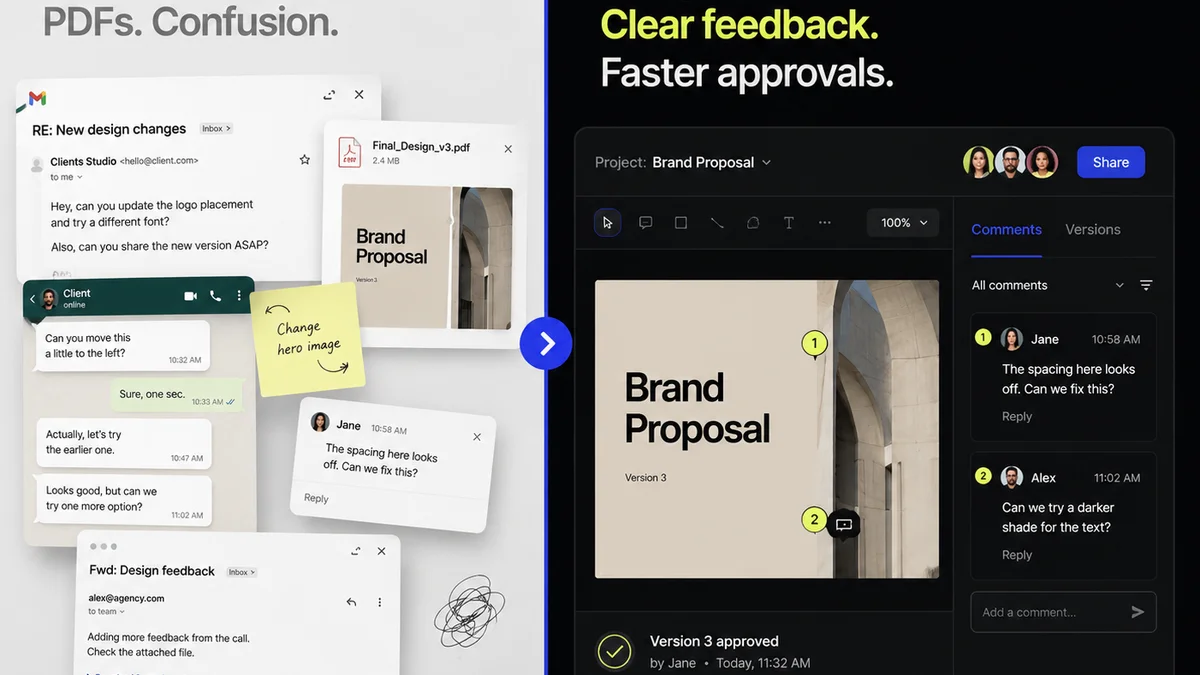
Everyone agrees design handoff needs to be smooth. It’s the bridge between creative brilliance and technical execution. Too often, though, it’s treated as an afterthought. A simple file transfer. A quick email. That’s the common assumption: a smooth handoff is just about getting the files from A to B without major drama.
None of that is wrong. But it’s incomplete.
The deeper truth? Design handoff is a critical business process. And like any business process, its effectiveness can, and should, be measured. Specifically, its Return on Investment (ROI).
1. The Hidden Costs of a Bad Handoff
When we talk about design handoff, we usually focus on the immediate problems: developers complaining about missing assets, engineers struggling with unclear specs, QA finding discrepancies. These are symptoms of a larger issue: a costly process.
What does a bad handoff really cost an agency or a creative team?
- Endless back-and-forth emails and Slack messages.
- Developers guessing at intended behavior or visual details.
- Re-work that eats into billable hours.
- Missed deadlines and frustrated clients.
- Damaged relationships between design and development.
- A dip in team morale.
These aren't just minor annoyances. They are direct drains on resources and profitability. Think about the time spent by both designers and developers just trying to clarify what should have been obvious. That's billable time being wasted. Every hour spent fixing a handoff issue is an hour not spent on new client work or strategic development.
The Domino Effect on Project Timelines
A single point of friction in the handoff can derail an entire project schedule. A missed asset might delay a crucial feature launch. Unclear interaction specs can lead to a build that needs significant rework, pushing back release dates. This ripple effect impacts client satisfaction and future project opportunities.
2. Defining Your Design Handoff Metrics
To measure ROI, you first need to define what you’re measuring. What are the key performance indicators (KPIs) for your design handoff process? This isn't about vanity metrics; it’s about quantifiable improvements that impact the bottom line.
Time-Based Metrics
How long does the handoff process *actually* take? Not just the final transfer, but the entire cycle from design completion to development readiness.
- Time to Handoff Completion: From when a design is marked 'ready for handoff' to when all necessary assets and specifications are successfully transferred and understood by the development team.
- Time Spent Clarifying Specs: Track the hours spent by designers and developers in meetings, emails, or chats specifically to clarify handoff details.
- Development Cycle Time Post-Handoff: Compare development time for features that had a clear, well-documented handoff versus those that didn't.
Quality-Based Metrics
How accurate and complete is the handoff? This ties directly into the amount of rework required.
- Number of Handoff-Related Bugs: Track bugs identified by QA or users that are directly attributable to unclear or missing design specifications.
- Rework Hours: Quantify the hours spent by designers and developers fixing issues stemming from the handoff.
- Asset Accuracy Rate: Percentage of design assets (icons, images, etc.) that are correctly implemented as per the design specifications.
Resource Allocation Metrics
How much effort is the handoff process consuming?
- Percentage of Designer/Developer Time on Handoff: What portion of their work week is dedicated to handoff activities versus core project work?
- Cost of Rework: Calculate the dollar amount associated with the rework hours identified above.
Be specific. A vague goal like 'improve handoff' is impossible to measure. A goal like 'reduce handoff-related bugs by 20% in Q3' is actionable and measurable.
3. Calculating the ROI
Once you have your metrics, you can start calculating the ROI. The basic formula is: ROI = (Gain from Investment - Cost of Investment) / Cost of Investment.
In the context of design handoff, the
Frequently asked questions
What is design handoff?
Design handoff is the process of transferring design assets, specifications, and documentation from the design team to the development team for implementation. It's the critical bridge ensuring designs are translated accurately into functional products.
Why is measuring design handoff ROI important?
Measuring ROI helps justify investments in better handoff tools and processes. It quantifies the impact of inefficiencies, highlights areas for improvement, and demonstrates the value of a streamlined workflow to stakeholders.
What are common KPIs for design handoff?
Common KPIs include time to handoff completion, number of handoff-related bugs, rework hours, and the percentage of designer/developer time spent on handoff activities.
How can I improve my design handoff process?
Improve your process by using dedicated handoff tools, creating clear style guides, automating asset generation, establishing clear communication channels, and regularly reviewing and refining your workflow based on feedback and metrics.