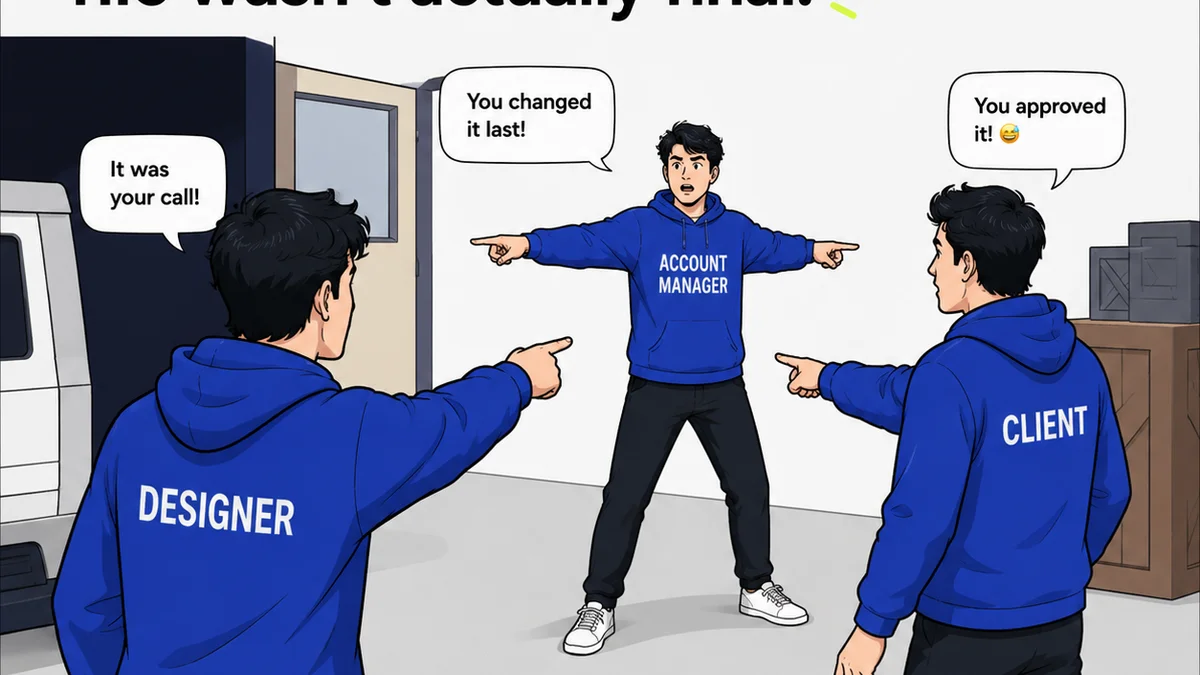
Everyone agrees that design Quality Assurance (QA) is crucial. It’s the final gate before a client sees anything. The assumption is that if you’re doing QA, you’re doing it right. And if you’re doing it right, it’s working.
None of that is wrong. But it’s incomplete.
The hard truth? Most agencies are flying blind when it comes to measuring the *effectiveness* of their design QA process. They’re checking boxes, sure, but they don’t know if those checks are actually preventing problems, saving time, or improving client satisfaction. They confuse activity with impact.
This isn’t about adding more steps to an already busy workflow. It’s about shifting your focus from *doing* QA to *measuring* QA. It’s about understanding what success looks like, and how to track it.
1. Defining "Success" Beyond "No Obvious Errors"
What does a successful QA process actually achieve? Most teams would say: "Catching all the mistakes." That’s a baseline, not a victory.
True success in design QA means:
- Reducing costly revisions post-launch.
- Minimizing client frustration and churn.
- Improving the speed and efficiency of your feedback loops.
- Ensuring brand consistency across all touchpoints.
- Boosting team morale by reducing rework and blame.
These are tangible business outcomes. They directly impact your bottom line and your agency’s reputation.
The Cost of Ineffective QA
Think about it. A missed typo, a misaligned element, a broken link – these seem small. But when they slip through to the client, they erode trust.
Each of these small errors can trigger:
- A lengthy email chain.
- A hurried design sprint to fix it.
- A client questioning your attention to detail.
- The perception that your agency is sloppy or unreliable.
These aren’t just minor inconveniences. They are drains on your resources – time, money, and goodwill. And they all point back to a QA process that’s not sharp enough.
2. Key Metrics for Design QA Effectiveness
To measure success, you need metrics. Not vanity metrics, but operational indicators that tell you if your QA is actually improving things. These fall into a few key areas.
Revision Cycles and Scope Creep
How many rounds of revisions does a project typically go through *after* the initial client review? If your QA is robust, this number should be low.
- Metric: Average Revision Cycles Post-Client Approval. Track the number of significant revision requests that come in *after* the client has signed off on a deliverable, based on issues that should have been caught in QA.
- Metric: Scope Creep Related to Uncaught Errors. Quantify the time and cost associated with fixing issues that were missed during QA and only discovered later, often by the client.
If these numbers are high, your QA is likely a bottleneck, not a safeguard.
Client Satisfaction and Feedback
Are clients happy with the *process* as well as the final product? Are they consistently surprised by minor errors?
- Metric: Client Feedback on Deliverables. Include specific questions in your client surveys about the quality and polish of delivered assets. Look for comments about
Frequently asked questions
What's the difference between design QA and client review?
Design QA is an internal process to catch errors before they reach the client. Client review is the client's opportunity to provide feedback on the work, ideally after it has passed internal QA.
Can I measure the ROI of design QA?
Yes, by tracking the reduction in costly revisions, client churn, and time spent on rework. A strong QA process saves money and protects your agency's reputation.
What if my team thinks QA is a bottleneck?
This often indicates a lack of clarity or efficiency in the QA process itself. Implementing clear checklists, using specialized tools, and measuring the *benefits* of QA can help shift perception.
How often should design QA be performed?
Ideally, QA should be performed at multiple stages of the design process, not just at the very end. This includes checking wireframes, mockups, and final assets before client delivery.