Most creative directors assume their job is about managing talent, nurturing ideas, and pushing creative boundaries. None of that is wrong. But it’s incomplete.
The hard truth is that effective creative leadership hinges on mastering workflow. Specifically, a workflow so robust it can handle the relentless pressure and complex, multi-stakeholder demands of a major publication. We’re talking about the newspaper workflow.
It’s a system forged in the fire of daily deadlines, where errors have immediate, public consequences. It’s a masterclass in clarity, accountability, and rapid iteration. And it holds the keys to solving many of the feedback and revision headaches that plague modern creative agencies and in-house teams.
1. The Deadline is King
In a newsroom, the deadline isn’t a suggestion; it’s the absolute, non-negotiable law. Everything else bends to it. This isn’t about being rushed; it’s about the inherent value of timeliness. Creative work that misses its window of relevance is creative work that fails.
This discipline has direct implications for how we manage projects. It forces ruthless prioritization.
The Myth of Infinite Polish
Many creative teams operate under the illusion that more time equals better work. This is a dangerous fallacy. It often leads to feature creep, analysis paralysis, and a loss of the initial spark.
The newspaper workflow teaches us to define “good enough” for a given deadline. It’s about shipping value, not chasing unattainable perfection. Perfection is the enemy of done, especially when “done” needs to happen by 5 PM today.
Accountability Under Pressure
When the clock is ticking, there’s no room for blame-shifting. Every person, every role, has a clear responsibility. This creates a culture of ownership.
- Editors know their story is ready for layout.
- Layout artists know their pages are finalized.
- The print plant knows what to expect.
This chain of accountability is critical for keeping complex projects moving. It’s not about finger-pointing; it’s about clear handoffs and defined responsibilities.
2. Clarity of Roles and Handoffs
A newspaper has many departments, each with a specialized function. These aren’t silos; they are specialized nodes in a highly efficient information-processing network.
Think about the journey of a single story: reporter -> editor -> copy editor -> layout artist -> proofreader. Each step is a defined handoff with clear expectations.
The Editor’s Red Pen
The editor is the gatekeeper of quality and narrative coherence. They don’t just fix grammar; they ensure the story makes sense, flows logically, and meets editorial standards. This is a critical layer of quality control.
In a creative agency context, this is akin to the Creative Director’s role in ensuring a project meets the brief and brand guidelines before it goes to the client. It’s a crucial choke point for quality.
Layout and Design Integration
The layout artist doesn’t just place text and images. They work within strict constraints – column widths, image placement, headline hierarchy – to make the content digestible and visually appealing. They understand the technical limitations of print.
This parallels how designers must work within technical specifications for web, app, or print deliverables. Understanding the medium’s constraints isn’t a limitation; it’s a framework for effective design.
The Proofreader’s Vigilance
The final proofread is the last line of defense against errors. This role requires meticulous attention to detail, a fresh perspective, and the authority to halt the process for critical mistakes.
This highlights the need for dedicated QA processes in creative work, especially for client-facing deliverables. A fresh pair of eyes spotting a misplaced comma or a broken link can save immense embarrassment and rework.
3. Iteration Within Constraints
The newspaper workflow isn’t static. Stories are rewritten, headlines are changed, and layouts are adjusted – often at the last minute. The key is that this iteration happens within a defined structure and time limit.
A major change to a front-page story might require a complete layout shift. This isn’t a free-for-all; it’s a controlled, albeit rapid, problem-solving exercise.
Managing Feedback Loops
Feedback in a newsroom is often direct and immediate. An editor might tell a reporter, “This paragraph is unclear, rewrite it.” The expectation is a swift, targeted revision.
This contrasts sharply with the often vague, meandering feedback that plagues creative projects. The newspaper model encourages specific, actionable feedback tied to clear objectives.
The Cost of Delays
Every minute a story is held up impacts the entire production schedule. A delay on one page can cascade, potentially pushing back the entire print run. The cost of indecision or excessive revision is tangible and immediate.
This is a lesson every agency owner and creative director should internalize: indecision and unclear feedback are not just frustrating; they are actively costing you money and goodwill.
4. Visual Hierarchy and Information Design
Newspapers are masters of information design. They have to present a vast amount of diverse content in a scannable, digestible format. This is achieved through a clear visual hierarchy.
Headlines, subheads, bylines, captions, pull quotes, and body copy all serve distinct purposes and are visually differentiated.
The Power of the Headline
The headline is the primary hook. It must grab attention and accurately summarize the core message. If the headline fails, the story often goes unread.
In digital design, this translates to the importance of clear calls to action, compelling titles, and scannable content structures. What’s the user’s “headline” for your product or service?
Scannability and Readability
Newspapers use layout, typography, and spacing to guide the reader’s eye. Short paragraphs, ample white space, and well-chosen fonts make dense information accessible.
This principle is fundamental to user experience (UX) design. Users scan, they don’t read every word. Designing for scannability, as outlined by the Nielsen Norman Group, is crucial for engagement.
Visual Storytelling
Photography and graphics aren’t afterthoughts; they are integral to the narrative. A powerful image can convey emotion and context that words alone cannot.
This emphasizes the importance of visual assets in all creative work, from ad campaigns to website design. How can visuals enhance the message and emotional impact?
5. The Role of Technology and Tools
While the principles are timeless, newspapers have always leveraged technology to meet their deadlines. From early typesetting machines to modern digital publishing platforms, technology is an enabler.
The core workflow, however, remains the same: gather, edit, design, produce, distribute.
Adapting to Digital
The transition from print to digital has been profound, but the underlying need for structured workflows persists. Websites and apps require similar levels of coordination, feedback, and quality control, albeit at a faster pace.
Tools like Adobe InDesign for layout or content management systems (CMS) for publishing are essential. Yet, the human element of clear communication and defined processes remains paramount.
The Need for Centralization
Managing multiple content streams, contributors, and feedback cycles requires a central hub. Trying to coordinate through scattered emails and chat messages is a recipe for disaster.
This is where modern tools become indispensable. They provide the structure that traditional newsrooms relied on, adapted for the digital age.
Where Revue Fits In
The newspaper workflow offers a powerful blueprint for managing creative projects. But its implementation in a modern agency or in-house team presents unique challenges, especially around client feedback and internal revisions.
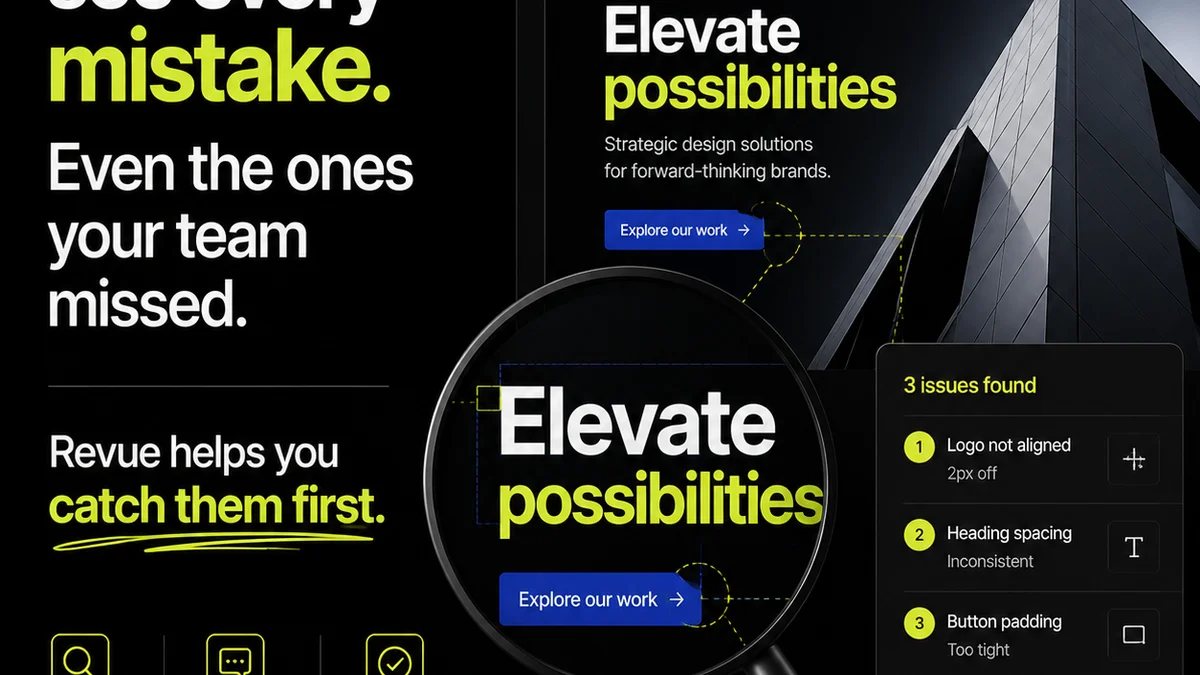
This is where a platform like Revue becomes invaluable. It’s designed to bring the clarity and accountability of a structured workflow to creative collaboration.
- Centralized Feedback: Instead of chasing down feedback across emails, Slack messages, and random documents, all client comments live in one place, linked to the specific version of the creative asset. This mirrors the editor’s clear directive.
- Revision and Approval Visibility: Track every iteration, every approval, and every revision request. This provides an audit trail and ensures everyone is working from the latest approved version, eliminating the “which version is this?” chaos.
- Quality Checks: By standardizing the feedback and approval process, you build in crucial quality checks at every stage, reducing the likelihood of errors slipping through to the final deliverable.
Revue helps enforce the discipline of the newspaper workflow, ensuring that even with external clients and remote teams, your project moves forward with clarity and purpose, much like a story heading to print.
Final Thought
The newspaper workflow is a testament to the power of structured process in driving creative output under pressure. It teaches us that efficiency, clarity, and accountability aren’t buzzwords; they are the bedrock of successful project delivery.
Are you treating your creative projects like a daily deadline, with defined roles and clear feedback loops? Or are you letting chaos reign, hoping for the best?
Frequently asked questions
What is the core principle of the newspaper workflow?
The core principle is that the deadline is paramount. Every decision, role, and process is structured to meet a strict, non-negotiable deadline, ensuring timely delivery of content.
How does the newspaper workflow improve creative feedback?
It enforces clear roles and direct, actionable feedback. Editors provide specific guidance, and revisions are expected to be swift and targeted, rather than vague and open-ended.
Why is understanding the newspaper workflow relevant for digital creative teams?
The newspaper workflow's emphasis on structured process, clear roles, defined handoffs, and accountability under pressure is directly applicable to managing complex digital projects, client feedback, and revision cycles, even in a faster-paced environment.
Can a newspaper workflow prevent scope creep?
Yes, by prioritizing the deadline and defining 'good enough' for that specific timeframe, it naturally resists endless polishing and feature additions that go beyond the immediate requirement. Iteration happens within strict constraints.