Everyone thinks packaging design is about making a box look good. A splash of color here, a cool font there. It’s the final flourish, the last step before it hits the shelf.
None of that is wrong. But it’s incomplete.
The hard truth? Packaging design is a complex, multi-faceted process that directly impacts sales, brand perception, and operational efficiency. Get it wrong, and you’re not just leaving money on the table; you’re actively sabotaging your client’s business.
1. Beyond Aesthetics: The Strategic Imperative
A beautiful package might catch the eye, but it’s the strategic thinking behind it that makes it sell. This isn't about personal taste; it's about understanding the market, the consumer, and the client's business goals.
Effective packaging design is a science as much as an art. It needs to:
- Communicate brand identity instantly.
- Highlight key product benefits.
- Differentiate from competitors.
- Justify the price point.
- Appeal to the target demographic.
- Consider the entire customer journey.
Too often, designers get caught up in the visual execution without grounding it in these fundamental strategic pillars. This leads to beautiful but ineffective packaging.
The Target Consumer is King
Who are you trying to reach? A luxury skincare brand targeting affluent millennials will have vastly different packaging needs than a budget-friendly snack targeting busy parents.
Consider:
- Demographics (age, gender, income, location).
- Psychographics (lifestyle, values, interests).
- Purchasing habits (where they shop, what influences them).
Your design choices—color, typography, imagery, material—must resonate with this specific audience. What works for one group can alienate another.
Competitive Landscape Analysis
Walk down any aisle in a supermarket or browse online, and you'll see a sea of products. Your client's packaging needs to stand out. This requires a deep dive into what competitors are doing.
Look at:
- Color palettes
- Shape and form
- Messaging and claims
- Material choices
- Overall tone and style
The goal isn’t to copy, but to identify opportunities for differentiation. Where are competitors falling short? What visual language is missing? How can your client’s packaging carve out its own unique space?
2. The Unseen Operational Realities
Beyond the creative brief lies a world of practical constraints and requirements that can make or break a packaging project. Ignoring these is a recipe for disaster.
This is where many creative teams stumble. They focus on the 'what it looks like' and forget 'how it gets made and used'.
Structural Design and Engineering
The form of the package is as critical as its surface graphics. Is it easy to open? Does it protect the product during transit? Is it stackable on a pallet? Does it fit on retail shelves?
These questions require input from structural designers and, sometimes, engineers. Factors to consider:
- Material strength and durability
- Ease of assembly and filling
- Shipping and logistics optimization
- Retail display requirements
- Sustainability and recyclability of materials
- Cost of materials and manufacturing
A package that looks great but is a nightmare to produce or transport is a failure. It adds cost and complexity that eats into margins.
Manufacturing and Production Constraints
Your stunning design needs to be manufacturable at scale, on budget, and with consistent quality. This means understanding the capabilities and limitations of the chosen printing and converting processes.
Key considerations include:
- Printing methods (flexography, offset, digital, gravure)
- Die-cutting and folding
- Special finishes (foiling, embossing, spot UV)
- Color matching and ink capabilities
- Minimum order quantities (MOQs)
- Lead times for production
A design that relies on a printing technique the manufacturer can't execute, or requires a level of detail that will get lost in production, is doomed before it begins. Close collaboration with the print vendor is non-negotiable.
Regulatory Compliance and Legal Requirements
This is the unglamorous but absolutely critical part. Depending on the product and market, packaging must adhere to a host of regulations.
This can include:
- Nutritional information and ingredient lists (food & beverage)
- Warning labels and safety instructions (toys, chemicals)
- Country of origin markings
- Recycling symbols and disposal instructions
- Claims substantiation (e.g., 'organic', 'natural')
- Allergen declarations
Failure to comply can result in fines, product recalls, and severe damage to brand reputation. Legal and regulatory review is not an afterthought; it must be integrated from the initial design stages.
3. The Consumer Experience Journey
Think about the last product you bought. How did you interact with its packaging? From the moment you saw it to the moment you disposed of it, the packaging played a role.
Good packaging design anticipates and enhances this entire journey.
The 'Unboxing' Experience
For many products, especially in e-commerce, the unboxing is the first physical interaction a customer has with the brand. It’s a moment of truth.
A well-designed unboxing experience can:
- Create excitement and delight.
- Reinforce brand values (e.g., sustainability, luxury).
- Protect the product during transit.
- Include helpful inserts or thank-you notes.
Even for everyday items, a package that’s easy to open without tools and doesn’t create a mess is a win. Think about the frustration of wrestling with clamshell packaging or tearing open a bag that explodes.
Shelf Presence and In-Store Navigation
On a crowded retail shelf, your packaging is your salesperson. It needs to grab attention, communicate its purpose, and make it easy for the shopper to find and select.
Consider:
- Visibility from a distance
- Clear product identification
- Key benefit call-outs
- Brand recognition
The design must work from multiple viewing angles and in various lighting conditions. A matte finish might look sophisticated online but disappear on a brightly lit shelf.
End-of-Life and Sustainability
Consumers are increasingly aware of the environmental impact of packaging. How the package is disposed of is part of the overall brand experience.
Designers must consider:
- Recyclability of materials
- Use of recycled content
- Minimization of material usage (lightweighting)
- Clear disposal instructions
A brand that uses excessive, non-recyclable packaging can face backlash, even if the product inside is excellent. Sustainability is no longer a niche concern; it's a mainstream expectation.
4. Where Revue Fits In
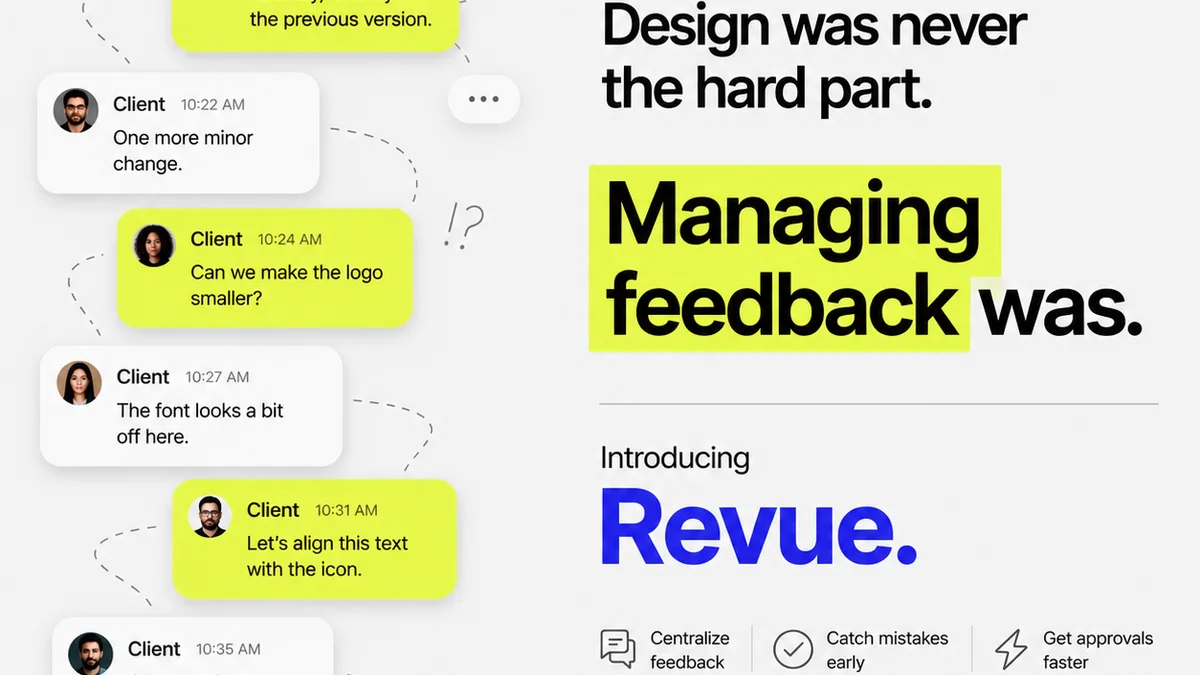
Managing a packaging design project involves multiple stakeholders, complex iterations, and critical review stages. This is precisely where a centralized platform like Revue becomes invaluable.
Think about the typical workflow:
- Initial concepting and mood boards.
- Structural design mockups.
- Graphic design iterations.
- Printer proofs and samples.
- Legal and regulatory reviews.
- Final production approvals.
Each stage requires clear feedback, version control, and documented sign-offs. Trying to manage this via endless email chains and scattered files is a recipe for errors, delays, and missed details.
Revue provides a single source of truth for all creative assets and feedback related to packaging projects. It allows:
- Centralized Feedback: All stakeholders can comment directly on specific design elements, proofs, or 3D mockups, eliminating confusion and ensuring no feedback gets lost.
- Revision Visibility: Track every iteration of the design, see who approved what, and understand the history of changes. This is crucial for accountability and dispute resolution.
- Quality Control: Ensure that final proofs and samples meet all specified requirements before going into mass production. Catching errors here saves immense cost and hassle.
- Streamlined Approvals: Formalize the approval process with clear deadlines and digital sign-offs, providing an auditable trail for every project.
By bringing order to the chaos of creative feedback and approvals, Revue helps ensure that stunning packaging designs not only look good but are also strategically sound, operationally feasible, and legally compliant.
5. Final Thought
Packaging design is far more than just a pretty facade. It’s a critical intersection of art, science, strategy, and operations.
Are you treating it as such?
Frequently asked questions
What is the most important aspect of packaging design?
While aesthetics are important, the most critical aspect is strategic alignment. Packaging must effectively communicate brand value, appeal to the target consumer, differentiate from competitors, and support business goals. Operational feasibility and regulatory compliance are also non-negotiable.
How does packaging design impact sales?
Packaging is often the first physical interaction a consumer has with a product. Effective design captures attention on the shelf, communicates key benefits quickly, builds brand trust, and can justify a premium price point, all of which directly influence purchasing decisions.
What are the key operational considerations in packaging design?
Key operational considerations include structural design (form and function), manufacturing constraints (printing methods, materials, cost), logistics (shipping, storage, shelf-fit), and regulatory compliance (labeling, safety, legal requirements). Ignoring these can lead to costly production issues and market failures.
Why is the 'unboxing experience' important?
The unboxing experience is the customer's first tactile interaction with the product and brand, especially for e-commerce. A well-designed unboxing can create excitement, reinforce brand values, protect the product, and leave a lasting positive impression, contributing to customer loyalty.
How can a creative team manage feedback on packaging projects effectively?
Managing feedback effectively requires a centralized system. Tools like Revue allow all stakeholders to provide specific comments on design proofs and mockups, track revisions, and formalize approvals in one place, reducing miscommunication and ensuring accuracy before production.