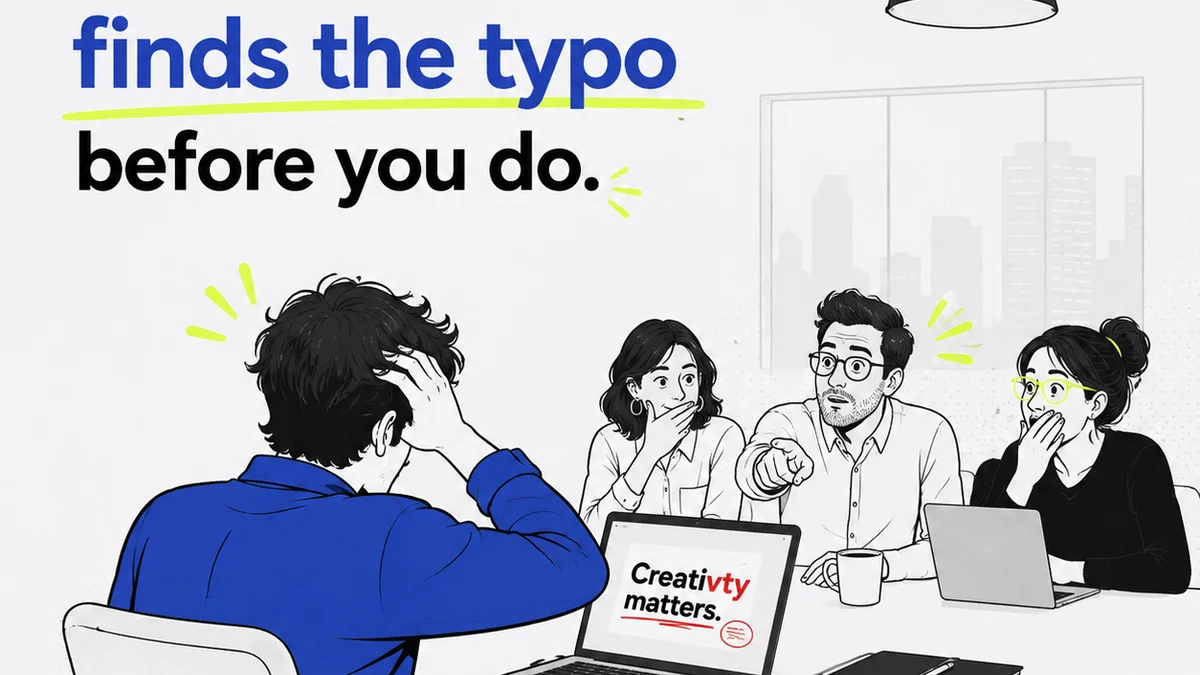
Everyone talks about quality assurance (QA) for creative work. They talk about checklists, proofreading, and making sure the client’s logo is the right color. That’s not wrong.
But it’s incomplete.
The hard truth is that world-class agencies don’t just *do* QA. They engineer it into their entire workflow. It’s not a final step; it’s a foundational principle. This is how they consistently deliver flawless creative, manage client expectations, and avoid costly last-minute fires.
1. QA Isn’t a Department. It’s a Mindset.
Most agencies treat QA as a gatekeeper at the end of the process. Someone — often a junior designer or a project manager — is tasked with a final once-over. They’re looking for obvious errors: typos, broken links, incorrect dimensions.
This is a reactive approach. It catches mistakes, but it doesn't prevent them.
Top agencies embed a quality mindset from the very beginning. It starts with the brief.
The Brief as the First QA Gate
A poorly defined brief is a breeding ground for errors and revisions. World-class agencies invest heavily in the intake process. Their briefs aren’t just documents; they are blueprints for success.
- Clear, measurable objectives.
- Specific target audience profiles.
- Defined brand guidelines and usage rules.
- Unambiguous deliverables and formats.
- Explicit success metrics.
If the brief is shaky, the creative will be too. And the QA team will be playing catch-up before a single pixel is designed.
Role Clarity Beyond the Designer
QA isn't just about the final output. It's about ensuring every step leading to that output is sound.
- Does the strategist understand the core problem?
- Does the copywriter adhere to the brand voice?
- Does the designer follow the established style guide?
- Does the developer implement the design accurately?
Each role has a quality responsibility. When these are clear, the final QA check becomes a confirmation, not a frantic search for what went wrong.
2. Process is Your First Line of Defense
Checklists are good. Standardized processes are better. Agencies that excel at QA don’t rely on individual vigilance; they rely on robust, repeatable workflows.
This means defining exactly how work moves from one stage to the next, and what needs to happen at each handover.
Standardizing Creative Deliverables
Consistency in file naming, folder structures, and output formats is crucial. Imagine trying to QA a project where assets are scattered across desktops, named inconsistently (e.g., `logo_final_final_v2.ai` vs. `ClientLogo_Approved.eps`).
World-class agencies have clear standards:
- File Naming Conventions: ProjectName_Asset_Version_Date.ext
- Folder Structures: A predictable hierarchy for all projects.
- Output Specifications: DPI, color profiles, file types defined by deliverable.
This isn’t about rigidity; it’s about reducing cognitive load and eliminating sources of error. When everyone follows the same system, fewer things fall through the cracks.
Structured Feedback Loops
Client feedback is often the biggest source of QA challenges. Unclear, conflicting, or subjective feedback can derail a project and introduce errors.
Agencies that nail QA have structured ways to handle feedback:
- Centralized Feedback: All comments in one place, not scattered across emails and Slack.
- Actionable Feedback: A process to clarify subjective comments and ensure they align with the brief.
- Version Control: Clear tracking of revisions and approvals.
This prevents misinterpretations and ensures that revisions are addressed correctly, not just haphazardly.
3. The Human Element: Skill, Training, and Culture
Even with perfect processes, human error is inevitable. The difference lies in how agencies manage it.
Investing in Skill and Training
Are your team members equipped to spot potential issues? This goes beyond technical skills.
- Brand Guardians: Design leads who deeply understand and can articulate brand nuances.
- Technical Acumen: Developers who understand design principles and accessibility standards.
- Communication Skills: Everyone who interacts with clients needs to be able to translate feedback accurately.
Continuous training on new tools, best practices, and even soft skills like critical thinking is essential. A team that knows what to look for is far more effective.
Fostering a Culture of Accountability
This isn't about blame. It's about shared responsibility for quality.
When mistakes happen, the focus should be on understanding *why* and improving the process, not just pointing fingers.
- Psychological Safety: Team members should feel safe to raise concerns without fear of reprisal.
- Learning from Errors: Post-mortems on projects with significant issues should be constructive.
- Celebrating Quality: Recognize and reward teams and individuals who uphold high standards.
A culture where quality is valued by everyone, from the intern to the CEO, is the strongest defense against errors.
4. Leveraging Technology for Scalable QA
Manual checks are time-consuming and prone to oversight, especially as agencies scale. Technology can automate many repetitive QA tasks.
Automating Repetitive Checks
Tools can catch things humans might miss or get tired of looking for:
- Grammar and Spell Checkers: Beyond basic word processing.
- Accessibility Scanners: Identifying contrast issues, missing alt text.
- Link Checkers: Ensuring all internal and external links are functional.
- Cross-Browser/Device Testing Tools: Verifying responsive design.
These tools don’t replace human judgment, but they free up human time for more complex, subjective quality assessments.
Centralized Platforms for Oversight
The real game-changer is a platform that brings everything together. This is where feedback, revisions, approvals, and final checks converge.
Where Revue Fits In
Revue is built to address these operational realities head-on. It’s not just another project management tool; it’s a system designed to embed quality assurance into the fabric of your creative workflow.
By centralizing client feedback, you eliminate the ambiguity and miscommunication that plague email chains and endless Slack threads. Every comment is logged, visible, and tied directly to the creative asset. This ensures feedback is actionable and doesn’t get lost.
Revue provides clear visibility into the revision and approval process. You can track exactly who approved what, and when. This accountability is critical for preventing scope creep and ensuring that changes align with the original brief and quality standards.
Furthermore, Revue facilitates structured quality checks. Instead of a final, frantic scramble, you can build quality checkpoints into your workflow. This allows your team to systematically review work against predefined criteria, ensuring that the final deliverable meets all technical, brand, and client requirements before it ever reaches the client for final sign-off.
This isn't about adding more steps; it's about making the steps you already have more effective and less prone to error. It’s about building a system where quality is a natural outcome, not an afterthought.
5. The Cost of Poor QA
Let’s be blunt: cutting corners on QA is a false economy.
The cost of fixing errors post-launch is exponentially higher than catching them during the design and development phases.
- Rework: Billable hours spent correcting mistakes.
- Client Dissatisfaction: Damaged trust and potential loss of future business.
- Reputational Damage: A string of sloppy work erodes your agency’s standing.
- Missed Deadlines: Last-minute fixes often push back delivery dates.
Investing in a robust QA process isn't an expense; it's an investment in efficiency, client satisfaction, and long-term profitability.
Final Thought
Is your agency's QA process a frantic last-minute scramble, or a seamless integration into your workflow? The difference isn't just about catching typos. It's about building a reputation for excellence, streamlining operations, and ensuring every project delivered is a testament to your agency's commitment to quality.
Frequently asked questions
What is the difference between basic QA and a quality mindset in an agency?
Basic QA typically involves a final check for obvious errors like typos or broken links. A quality mindset, however, integrates quality considerations into every stage of the workflow, from the initial brief to final delivery, fostering a proactive approach to preventing errors rather than just catching them.
How can agencies improve their client feedback process for better QA?
Agencies can improve client feedback by centralizing all comments in one platform, ensuring feedback is actionable and clarified against the brief, and maintaining clear version control for all revisions and approvals. This minimizes misinterpretation and rework.
What are the biggest costs associated with poor QA in creative agencies?
The biggest costs include significant rework hours, diminished client satisfaction and trust, reputational damage from consistently subpar work, and missed project deadlines due to last-minute error corrections.
Can technology fully automate creative QA?
Technology can automate repetitive QA tasks like grammar checks, accessibility scans, and link testing. However, it cannot replace human judgment for subjective creative quality, brand consistency nuances, or strategic alignment with the brief. Technology should augment, not replace, human oversight.