Everyone agrees that packaging QA is critical. You catch typos, misaligned logos, wrong dimensions. You tick boxes. You ship it. Seems straightforward.
None of that is wrong. But it’s incomplete.
For enterprise teams, packaging QA is less about spotting individual errors and more about managing complex systems of risk. It’s about protecting brand consistency across hundreds of SKUs, ensuring regulatory compliance in dozens of markets, and preventing costly recalls or brand damage. The checklist is just the tip of the iceberg.
1. The Real Cost of Packaging Errors
A simple typo on a label might seem minor. For a global enterprise, it can trigger a cascade of expensive problems.
Think beyond the immediate fix:
- Market Recalls: Incorrect ingredients, allergen warnings, or country-specific regulations can force a full product recall. The logistics, destruction, and re-manufacturing costs are astronomical.
- Brand Erosion: Inconsistent branding, poor print quality, or off-spec colors across different product lines or regions chip away at consumer trust. It looks unprofessional and signals a lack of care.
- Supply Chain Disruptions: Packaging that doesn't meet shipping or storage requirements can lead to damaged goods, delayed shipments, and strained supplier relationships.
- Legal & Regulatory Fines: Non-compliance with labeling laws (e.g., FDA, EU regulations, local customs) can result in hefty fines, import bans, and legal battles.
This isn't about a single mistake. It's about systemic vulnerabilities in your creative and production workflow.
2. Scaling QA: The Enterprise Challenge
What works for a small agency or a single product line breaks down fast when you’re dealing with enterprise-level complexity.
The core challenge is scale and variation:
- Volume of SKUs: Global brands have hundreds, sometimes thousands, of product variations. Each needs unique labeling, regional compliance, and consistent branding.
- Geographic Dispersion: Teams, suppliers, and markets are spread across time zones and continents. This complicates communication, review cycles, and quality control.
- Multiple Stakeholders: Legal, regulatory, marketing, product development, and regional teams all have input. Managing their feedback and approvals is a labyrinth.
- Supplier Network: You rely on multiple print vendors, often in different countries, each with their own capabilities and quality standards.
A manual, email-and-spreadsheet approach to packaging QA simply cannot cope. It’s slow, error-prone, and lacks visibility.
3. Building a Robust Packaging QA Framework
Moving beyond basic checks requires a structured, process-driven approach. It’s about building safeguards at every stage.
3.1. Centralized Asset Management
Your packaging artwork and specifications must live in one, accessible place. Not scattered across shared drives or individual hard drives.
- Single Source of Truth: A dedicated DAM (Digital Asset Management) system or a robust project management tool is essential.
- Version Control: Always know which is the *approved* master file. Prevent outdated versions from entering production.
- Metadata & Searchability: Tag assets by SKU, region, language, and compliance requirements for quick retrieval.
3.2. Standardized Templates & Guidelines
Reduce variation by enforcing consistency from the start.
- Master Templates: Create official templates for different packaging types and regions.
- Brand Guidelines: Embed brand standards (logos, colors, typography, tone of voice) directly into design tools or provide clear, accessible documentation.
- Regulatory Checklists: Develop region-specific checklists for legal and regulatory requirements. Make them part of the design brief.
3.3. Multi-Stage Review & Approval Workflows
Don't wait until the final artwork is done to start QA. Integrate checks throughout the process.
- Design Brief Review: Ensure all necessary information (SKU details, target market, compliance needs) is captured upfront.
- Concept/Draft Review: Check for adherence to brand guidelines and initial compliance requirements.
- Pre-Production Artwork Review: A thorough check of final artwork against all briefs, guidelines, and regional requirements. This is where most *critical* errors are caught.
- Printer Proof Review: Verify the physical or digital proof from the printer matches the approved artwork *exactly*. Pay attention to color shifts, trap, and bleed.
- First Production Run Sample: Inspect the very first items off the production line to confirm the print run matches the approved proof.
Each stage needs clear ownership, defined criteria, and a formal sign-off process.
3.4. Leveraging Technology for Efficiency
Manual processes are a bottleneck. Technology can automate and streamline.
- Automated Checks: Tools can flag inconsistencies in color profiles, font sizes, or barcode readability.
- Collaboration Platforms: Centralized platforms for feedback and approvals eliminate email chains and version confusion.
- Online Proofing Tools: Specialized software for high-fidelity proofing with annotation and version comparison features.
3.5. Supplier Quality Agreements (SQAs)
Your printer is an extension of your QA process. Formalize expectations.
- Clear Specifications: Define exact color targets (e.g., Pantone, CMYK values), tolerances, materials, and finishing.
- Auditing Rights: Reserve the right to audit their quality control processes.
- Performance Metrics: Establish KPIs for on-time delivery, defect rates, and color accuracy.
- Consequences: Outline penalties for consistent failure to meet standards.
Where Revue Fits In
Managing this complex web of feedback, approvals, and quality checks for packaging is where a tool like Revue becomes invaluable for enterprise teams.
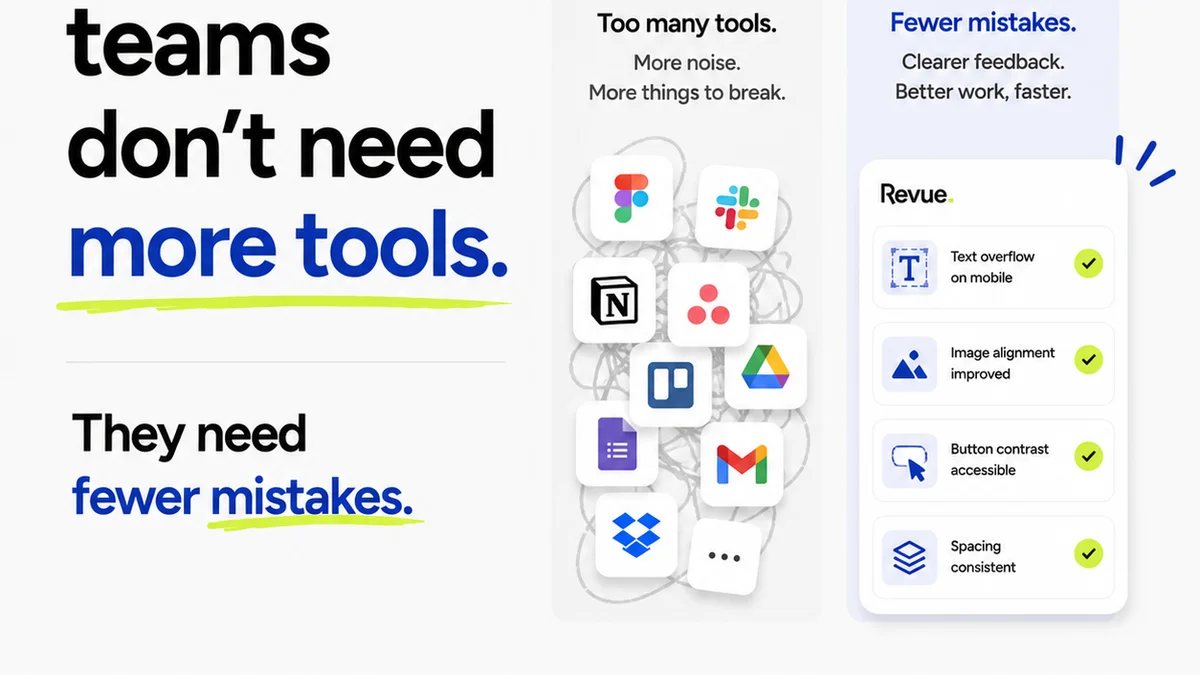
Think about your current process. Are feedback threads buried in emails? Are approvals tracked on spreadsheets? Is it impossible to see the history of a change or who signed off on what? That’s a recipe for disaster at scale.
Revue provides a centralized hub for creative workflows. For packaging QA, this means:
- Centralized Feedback: All comments, revisions, and stakeholder input on packaging artwork live in one place, linked directly to the specific asset. No more hunting through inboxes.
- Streamlined Approvals: Define clear approval stages and assign stakeholders. Track who has reviewed, approved, or rejected, and when. This provides an auditable trail.
- Revision Visibility: Easily compare versions of packaging artwork to see exactly what changed, who made the change, and why. This is crucial for identifying potential issues introduced during revisions.
- Integrated Quality Checks: While Revue isn't a print-specific QA tool, it acts as the command center for the *process* of QA. It ensures that the right people are reviewing the right assets at the right time, with all necessary context and documentation. It bridges the gap between the design team, the brand guardians, and the production floor.
By bringing order to the chaos of creative collaboration and approval, Revue helps enterprise teams build more robust, transparent, and efficient packaging QA processes, ultimately reducing risk and protecting brand integrity.
Final Thought
Is your packaging QA process merely a series of individual error checks, or is it a strategic system designed to mitigate enterprise-level risk and safeguard your brand's reputation? The answer dictates whether you're truly prepared for the complexities of the global market.
Frequently asked questions
What are the biggest risks of poor packaging QA for enterprises?
The biggest risks include costly product recalls, severe brand damage due to inconsistency or errors, supply chain disruptions, and significant legal or regulatory fines for non-compliance.
How does packaging QA differ for enterprise teams compared to smaller businesses?
For enterprises, packaging QA is about managing systemic risk across a high volume of SKUs, multiple regions, and numerous stakeholders. It requires robust processes and technology to ensure consistency and compliance at scale, rather than just catching individual errors.
What is the role of technology in enterprise packaging QA?
Technology automates checks, centralizes feedback and approvals, provides version control, and streamlines communication. Tools like DAM systems, specialized proofing software, and workflow platforms are essential for efficiency and accuracy.
How can supplier quality agreements improve packaging QA?
SQAs formalize expectations with print vendors regarding specifications, tolerances, color accuracy, and delivery. They establish clear performance metrics and consequences, making suppliers accountable for quality and reducing the burden on internal QA teams.