Everyone thinks packaging QA is about ticking boxes. Checking artwork against a brief. Making sure the barcode scans. That the colors match the Pantone spec. None of that is wrong. But it’s incomplete.
The hard truth is, packaging QA is a complex operational challenge that touches everything from client communication to production workflow. It’s not just a final step; it’s an integrated part of the entire creative and production lifecycle. Get it wrong, and you’re facing costly reprints, brand damage, and unhappy clients. Get it right, and you’re building trust and efficiency.
1. The Assumption: QA is Just a Checklist
The common assumption is that Quality Assurance for packaging is a simple process of verification. You have a checklist, you go through it, you sign off. It’s a procedural hurdle, not a strategic imperative.
This view is a relic of simpler times, or perhaps a misunderstanding of what ‘quality’ truly means in a high-stakes environment like packaging.
Real QA is proactive, not just reactive. It’s about anticipating problems before they happen, not just catching them at the end.
The Deeper Truth: QA is Risk Management
Packaging QA is fundamentally about mitigating risk. Every piece of packaging that goes to market is a brand ambassador. Any error reflects directly on the client’s brand, and by extension, on your agency’s reputation.
The risks are significant:
- Financial Loss: Incorrect packaging means entire production runs can be scrapped. This isn’t a small cost; it can run into tens or hundreds of thousands of dollars for a single mistake.
- Brand Damage: Misspellings, incorrect logos, inaccurate ingredient lists, or off-brand colors can erode consumer trust and create a perception of carelessness.
- Legal Repercussions: For regulated industries (food, pharmaceuticals, cosmetics), incorrect information can lead to fines, product recalls, and lawsuits.
- Production Delays: Discovering an error late in the process can halt production lines, causing significant delays and impacting go-to-market strategies.
- Client Dissatisfaction: A botched packaging launch is a surefire way to lose a client, regardless of the quality of the creative work that preceded it.
Effective QA isn't just about finding flaws; it's about building a system that prevents them, or at least catches them at the earliest, cheapest possible point in the workflow.
2. The Myth: It's Just About the Artwork
Many agencies assume packaging QA is solely the responsibility of the design or artwork team. They believe that once the final design files are approved, the job is done. The printer or production house handles the rest.
This is a dangerous oversimplification.
Artwork is only one piece of a much larger puzzle. The technical specifications, the substrate, the printing process, the regulatory environment – these all play critical roles.
The Deeper Truth: It's About the Entire Production Chain
Packaging QA must encompass the entire journey from concept to shelf. This means integrating checks and balances at multiple stages, involving various stakeholders.
Consider these critical touchpoints:
- Briefing and Concept: Is the initial brief clear about regulatory requirements, target markets, and material constraints? Misunderstandings here cascade into errors later.
- Creative Development: Does the design consider print limitations, color profiles, and material interactions from the outset? Designing for print is different from designing for screen.
- Technical Specifications: Are die-lines accurate? Are bleeds and trims correctly defined? Is the correct color mode (CMYK, spot colors) specified?
- Copy and Legal Review: This is often a separate, specialized review. Ingredients, nutritional information, allergen warnings, legal disclaimers, and claims must be meticulously checked against source documents and regulations.
- Pre-Press and Proofing: This is where digital and physical proofs come into play. A digital proof is a starting point, but a physical press proof under production conditions is often essential for critical jobs.
- Production Monitoring: Even with perfect files, issues can arise during printing or finishing (e.g., color shifts, registration problems, coating inconsistencies).
- Logistics and Fulfillment: Are the right SKUs being packed into the right cartons? Is the packaging robust enough for shipping?
Each of these stages presents opportunities for error. Each requires a specific type of check, often by different people with different expertise.
3. The Oversight: Who Owns Packaging QA?
A common failing is the lack of clear ownership. In many agencies, packaging QA falls into a grey area. The creative team thinks they’re done once the design is approved. The account manager assumes the production team or the client is handling it. The production team might be focused on timelines and budgets, assuming the client’s internal teams have the final say.
This diffusion of responsibility is a recipe for disaster.
Without a designated owner or a robust, documented process, critical checks get missed. The assumption is always that someone else is doing it.
The Deeper Truth: It Requires a Cross-Functional, Accountable Process
Effective packaging QA demands a clear, documented process with defined roles and responsibilities. It’s not a single person’s job, but a collective effort coordinated by a clear owner.
Defining Roles and Responsibilities
- Account Manager: Owns the overall client relationship and ensures the process is followed. Acts as the central point of communication.
- Creative Director: Ensures the creative vision is maintained and that design considerations are integrated early.
- Design/Artwork Team: Responsible for creating technically accurate artwork files based on approved specs.
- Copywriter/Legal Reviewer: Specializes in ensuring accuracy and compliance of all text and claims.
- Production Manager: Manages the relationship with printers and suppliers, oversees technical specifications, and coordinates proofing.
- Project Manager: Tracks progress, ensures deadlines are met, and facilitates communication between teams.
The key is that someone – often the Account Manager or a dedicated Project Manager – must be accountable for ensuring all necessary QA steps are completed and documented.
Implementing a Structured Process
A structured process prevents ad-hoc checks and ensures consistency. This might include:
- Mandatory Briefing Checklists: To capture all critical requirements upfront.
- Design Spec Sheets: Clearly outlining technical requirements for artwork.
- Formal Copy Review Sign-off: Requiring explicit approval from legal/regulatory stakeholders.
- Multi-Stage Proofing Protocol: Defining when digital proofs, color-accurate proofs, and physical press proofs are required.
- Final Sign-off Authority: Clearly designating who has the final authority to approve production-ready files.
This isn't about creating bureaucracy; it's about building safeguards into the workflow.
4. The Misconception: Digital Proofs Are Enough
In today's digital-first world, it’s tempting to rely solely on digital proofs – PDFs, JPEGs, or even 3D mockups. They’re fast, cheap, and easy to share.
But digital proofs can be incredibly misleading, especially when it comes to color and material appearance.
This assumption is particularly dangerous for packaging.
The Deeper Truth: Physical Proofs Are Non-Negotiable for Critical Elements
While digital proofs are excellent for layout, copy, and general design checks, they cannot accurately represent final print output. Color shifts, ink trapping, finish effects (like varnishes or foils), and the interaction of ink with different substrates are best evaluated physically.
Why Digital Proofs Fall Short
- Color Gamut Differences: Your monitor’s color (RGB) is different from printing inks (CMYK or spot colors). What looks good on screen might print dull or with an unexpected hue.
- Screen Calibration: Monitors vary wildly in calibration. What you see isn't necessarily what anyone else sees, or what will print.
- Material and Finish: Digital files can’t show how ink will look on a matte vs. glossy substrate, or how a metallic foil will catch the light.
- Print Artifacts: Subtle issues like registration errors, ghosting, or banding are often invisible on a low-resolution PDF.
When to Demand Physical Proofs
For packaging, especially for major brand launches or complex designs, physical proofs are essential. This includes:
- Contract Proofs: These are high-quality, calibrated proofs designed to simulate the final printing conditions as closely as possible. They are crucial for approving color.
- Press Proofs: If the budget and timeline allow, running a short test on the actual production press with the actual stock is the gold standard. This catches issues that even contract proofs can miss.
- Die-line and structural proofs: Ensuring the physical structure is correct before committing to a full print run.
Investing in physical proofs upfront saves exponentially more in avoided reprints and brand damage down the line.
5. The Challenge: Integrating Client Feedback Seamlessly
Clients often have multiple stakeholders with differing opinions. Getting consolidated, clear feedback on packaging designs and proofs can be a nightmare. Emails fly back and forth, versions get confused, and crucial comments get lost in the noise.
This feedback chaos directly impacts QA.
If feedback isn't captured accurately, it can’t be implemented correctly. And if it’s not approved properly, you might be making changes based on a single, unvetted opinion.
The Deeper Truth: Centralized Feedback & Version Control is Key
Effective packaging QA relies on a clear, centralized system for managing feedback and approvals. This eliminates ambiguity and ensures everyone is working from the same, latest version.
The Problem with Scattered Feedback
- Version Control Nightmares: Which PDF is the latest? Which email contains the final approval? This confusion leads to outdated files being sent for production.
- Lost Comments: Important feedback buried in long email threads or Slack channels can be overlooked.
- Ambiguous Approvals: A casual “Looks good” in an email isn't a formal sign-off. It lacks the weight and clarity needed for critical production decisions.
- Scope Creep: Unmanaged feedback can lead to endless rounds of revisions, pushing timelines and budgets.
The Solution: A Single Source of Truth
A platform designed for creative workflow management can transform this chaos into clarity.
- Centralized Proofing: Upload all versions of artwork and proofs to a single project.
- Annotated Feedback: Allow stakeholders to leave comments directly on the artwork, eliminating guesswork about what needs changing.
- Clear Approval Workflows: Define who needs to approve at each stage, and require explicit, documented sign-offs.
- Revision History: Automatically track all changes and feedback, providing a clear audit trail.
When feedback is managed in one place, QA becomes more efficient. You’re not hunting for comments; you’re addressing them systematically.
Where Revue Fits In
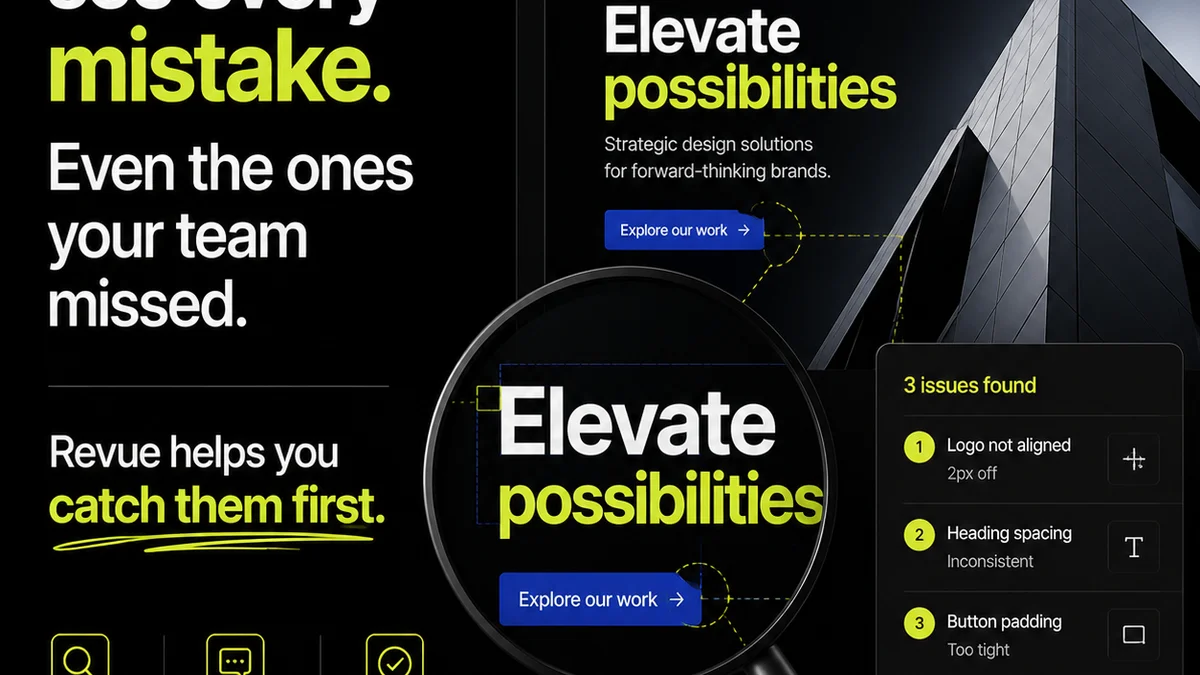
Revue is built to tackle these exact operational challenges. For packaging projects, it acts as the central hub that brings clarity and accountability to the entire QA process.
Instead of juggling endless email threads and confusing file versions, you can:
- Centralize Feedback: Upload all packaging artwork and proofs directly into Revue. Stakeholders can provide precise, annotated feedback directly on the visuals, ensuring no comment gets lost.
- Manage Revisions Visibly: Track every iteration of the artwork. See exactly what changed between versions and who approved each stage. This provides an invaluable audit trail for QA.
- Streamline Approvals: Set up clear approval workflows. Require explicit sign-offs from designated individuals at critical QA checkpoints. This removes ambiguity and ensures proper sign-off before files move to print.
- Enhance Quality Checks: By having all project history, feedback, and approvals in one place, your QA team (or whoever is responsible) has the complete context needed to perform thorough checks. They can easily reference the original brief, client comments, and designer responses.
Revue doesn’t replace the need for expert review or physical proofs, but it provides the foundational workflow management that makes those critical checks more effective and less prone to error.
Final Thought
Packaging QA isn't a task to be rushed or delegated to a junior. It's a critical operational function that requires foresight, process, and the right tools. Are you treating it as a mere formality, or as the high-stakes risk management it truly is?
Frequently asked questions
What is the most common mistake in packaging QA?
The most common mistake is treating packaging QA as a final checklist item rather than an integrated process. This often leads to overlooking critical elements like regulatory compliance, print-specific color accuracy, and structural integrity, which are best addressed earlier in the workflow.
When should I get a physical proof for packaging?
You should strongly consider a physical proof for any packaging project where color accuracy, material appearance, and finish are critical. This includes contract proofs for color approval and, for high-stakes projects, press proofs on the actual production press.
Who is ultimately responsible for packaging QA in an agency?
Ultimately, accountability for packaging QA often falls to the Account Manager or Project Manager, who must ensure a robust process is followed. However, effective QA requires cross-functional collaboration, with clear roles defined for design, copy, legal, and production teams.
How can digital tools help with packaging QA?
Digital tools like Revue can centralize feedback, manage version control, and streamline approval workflows. This provides a clear audit trail and ensures all stakeholders are working from the latest information, significantly reducing errors that can occur with scattered communication.