Everyone talks about Standard Operating Procedures (SOPs) for packaging quality assurance. They picture checklists, sign-offs, and maybe a few forms. It’s all about catching errors before the print run, right?
None of that is wrong. But it’s incomplete.
The hard truth is that SOPs for packaging QA aren't just about preventing mistakes. They're about embedding a culture of quality, streamlining communication, and ultimately, de-risking your entire operation. A good SOP system turns reactive firefighting into proactive, predictable excellence.
1. Defining the Scope: What Exactly Are We Checking?
Beyond the Obvious
Most teams start with the obvious: color accuracy, text legibility, correct dimensions. But a truly effective QA SOP goes deeper. It considers the entire lifecycle of the packaging artwork and its physical manifestation.
Think about:
- Brand consistency across all packaging elements.
- Compliance with regulatory requirements (FDA, FCC, regional specifics).
- Printability and material suitability – will it actually print well on the chosen stock?
- Structural integrity and dieline accuracy for die-cut packaging.
- Finishing effects – foil stamping, embossing, spot UV – and their intended execution.
- Sustainability claims and certifications.
- Supply chain considerations – how does this design impact production speed and cost?
The 'Why' Behind the 'What'
Each check in your SOP needs a clear 'why'. Simply listing 'Check Pantone 123 C' isn't enough. The SOP should explain why that specific color is critical (e.g., 'Pantone 123 C is the brand's primary blue, critical for brand recognition. Deviation of >2 Delta E is unacceptable.').
This context empowers your QA team and anyone else involved. It shifts the mindset from rote checking to informed verification.
2. Documenting the Process: From Brief to Approval
The Artwork Lifecycle
Your SOP needs to map out the entire journey of packaging artwork. This isn't just about the final proof.
Start with the brief. What information must be present for the artwork to even begin?
- Clear project objectives.
- Target audience and market.
- Mandatory copy, legal disclaimers, nutritional info, ingredient lists.
- Brand guidelines and approved assets.
- Structural dieline specifications.
- Print requirements (colors, finishes, substrates).
Next, detail the design and copy development stages. Who is responsible for what? What are the review and feedback loops?
The Proofing Gauntlet
This is where most QA SOPs focus, but often miss the mark. Your SOP needs to define:
- Types of proofs: Digital (PDF), hard proofs (G7 calibrated), press proofs.
- Proofing criteria: What constitutes an acceptable proof? This links back to your 'why'.
- Reviewer roles and responsibilities: Who reviews for copy? Who reviews for design? Who signs off on print specs?
- Feedback protocols: How should feedback be given? (e.g., using annotation tools, clear written comments, avoiding subjective language).
- Revision tracking: How are changes logged and verified?
- Final approval process: What is the definitive sign-off, and who has the authority?
Don't forget to include procedures for handling last-minute changes. These are often the most critical and error-prone.
3. Establishing Checklists and Standards
Granularity is Key
Checklists are the backbone of any QA SOP. But they need to be specific, actionable, and tied to the previously defined 'whys'.
A good checklist might include:
- Copy Verification: All mandatory text present and correct? Legal disclaimers accurate? Typos? Grammatical errors?
- Visual Accuracy: Colors within tolerance? Logos correct and positioned properly? Imagery sharp and free of artifacts? Die-cut lines clean and accurate?
- Technical Specifications: Correct Pantone codes listed? Print finishes specified? Material codes accurate? Barcode quality and placement correct?
- Regulatory Compliance: All required fields filled (e.g., nutritional facts, ingredients, warnings)? Certifications (e.g., organic, cruelty-free) correctly displayed?
Defining Tolerance Levels
What's 'close enough'? This is a crucial, often overlooked, part of SOPs. Define acceptable tolerances for:
- Color shifts (Delta E values).
- Font sizes and weights.
- Image resolution and sharpness.
- Die-cut accuracy.
- Bleed and trim margins.
These standards should be documented, ideally with visual examples, and agreed upon by all stakeholders.
4. Training and Implementation
Beyond the Document
An SOP document sitting on a server is useless. Your QA SOP needs an implementation plan.
- Training: Ensure everyone involved understands the SOP, their role, and the reasoning behind it. This isn't a one-time event; refreshers are essential.
- Tools: Provide the right tools for the job. This includes software for digital proofing, color management tools, and ideally, a centralized platform for feedback and approvals.
- Accountability: Clearly define who is accountable for executing the SOP and for any deviations.
- Feedback Loop: Encourage team members to provide feedback on the SOP itself. Is it clear? Is it practical? Does it need updates?
Continuous Improvement
Packaging and regulations change. Print technologies evolve. Your SOPs need to be living documents.
Schedule regular reviews (e.g., quarterly or annually) to update the SOPs. Analyze any errors that slipped through. Was it an SOP failure, a training gap, or a procedural breakdown? Use these insights to refine your process.
Where Revue Fits In
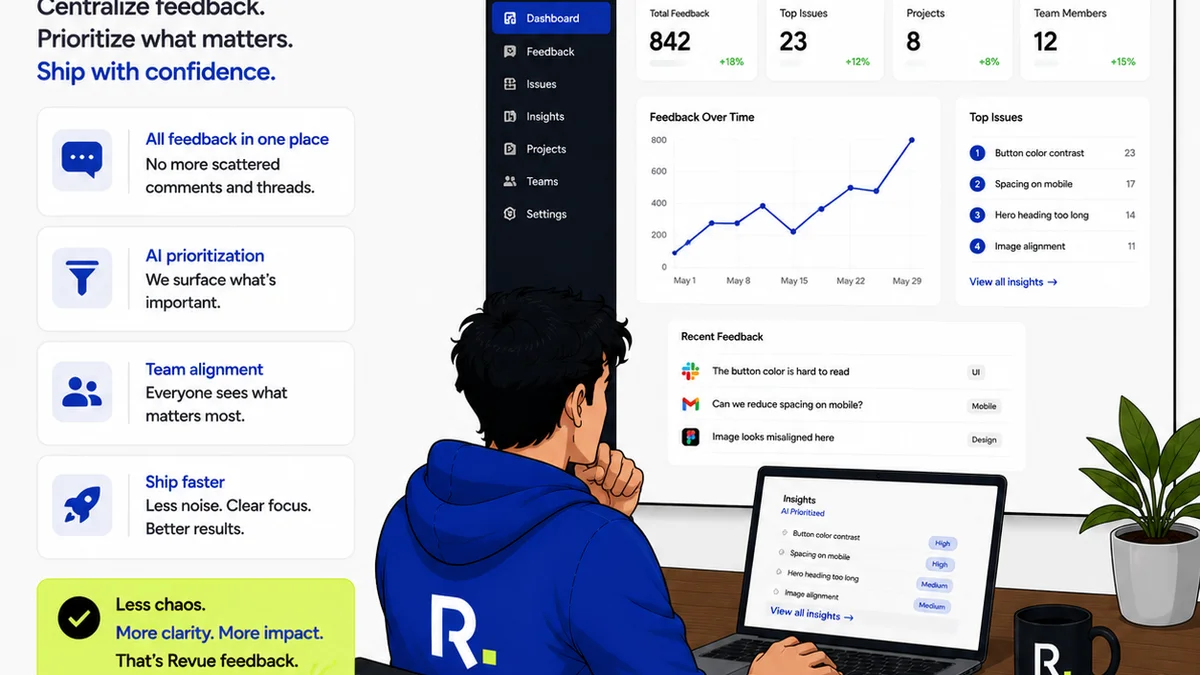
Managing the complex feedback and approval cycles for packaging artwork is where a tool like Revue shines. Instead of scattered emails, endless spreadsheets, and confusing annotation layers, you get a single source of truth.
Revue helps centralize client feedback, making it clear, actionable, and trackable. You can manage multiple versions of artwork, ensuring everyone is reviewing the latest iteration. Revision history is automatically logged, providing an audit trail that’s invaluable for QA.
This visibility is critical for building robust QA processes. When feedback is organized and approvals are clearly documented, it’s easier to execute and verify your SOPs. You reduce ambiguity, minimize miscommunication, and ensure that quality checks are performed on the most up-to-date, approved artwork.
Final Thought
Are your packaging QA processes robust enough to catch every critical error, or are they just a formality? The difference lies not just in the checklists, but in the clarity, context, and continuous refinement embedded within your Standard Operating Procedures.
Frequently asked questions
What is the primary goal of packaging QA SOPs?
The primary goal is to ensure consistent, high-quality packaging artwork by standardizing checks, defining clear criteria, and embedding a culture of quality throughout the process, thereby reducing errors and de-risking production.
How detailed should a packaging QA checklist be?
Checklists should be highly detailed and specific, covering every critical element from copy accuracy and color tolerance to regulatory compliance and print specifications. Each item should ideally link back to a defined 'why' or standard.
Who should be involved in developing packaging QA SOPs?
Development should involve key stakeholders from design, production, legal, marketing, and potentially supply chain or operations teams to ensure all critical aspects are considered and agreed upon.
How often should packaging QA SOPs be updated?
SOPs should be reviewed and updated regularly, at least annually, or whenever there are significant changes in regulations, materials, print technologies, or after analyzing recurring errors to ensure they remain relevant and effective.
Can digital tools help enforce packaging QA SOPs?
Yes, digital tools like Revue can significantly help by centralizing feedback, managing revisions, providing clear approval trails, and creating a single source of truth for artwork, making SOP execution more transparent and manageable.