The common wisdom for keeping a large creative team on-brand? More brand guidelines. Maybe a brand Bible. A central repository of logos, fonts, and color palettes. That’s all necessary, sure.
But it’s woefully incomplete.
The real enemy of brand consistency in large teams isn’t a lack of documentation. It’s a lack of clarity, communication, and control over the actual creative *process*.
The Hard Truth: Brand Drift Isn't a Documentation Problem, It's a Workflow Problem
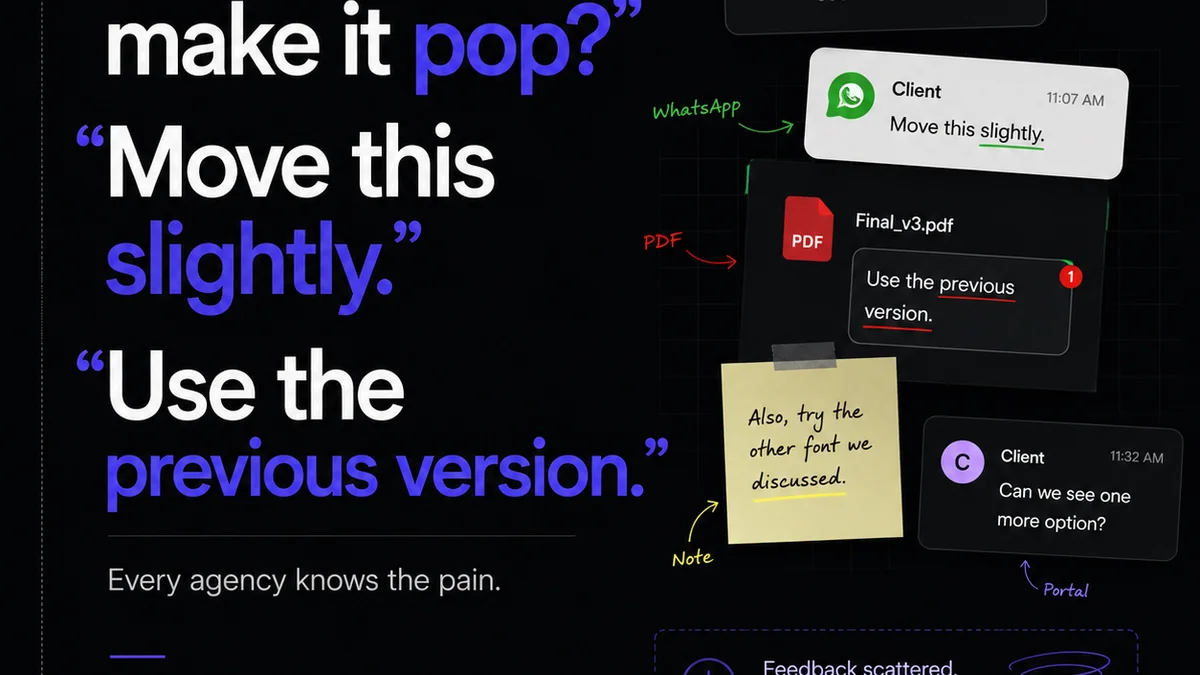
You can have the most comprehensive brand guide ever written. If your team is juggling feedback in endless email threads, making revisions in disconnected tools, and lacking a clear approval chain, that brand guide becomes decorative. It’s a pretty PDF nobody references in the heat of a deadline.
Brand drift happens not because people don't know the rules, but because the system makes it too easy to break them.
It's the subtle shift in tone, the slightly off-brand imagery, the inconsistent application of a campaign element. It creeps in when there's no single source of truth for *active projects*.
The Symptoms of Systemic Brand Drift
How do you know if your team is suffering from this? Look for these signs:
- Inconsistent Deliverables: Different teams or individuals produce work that looks and feels subtly different, even when working on the same client or campaign.
- Endless Revisions: Creative gets approved, then sent back because it doesn’t align with a stakeholder’s (or another team member’s) interpretation of the brand.
- “We’ll Fix It Later” Mentality: Small brand deviations are overlooked in the rush, with the intention to correct them “down the line” – a line that rarely arrives.
- Brand Guidelines Ignored: Despite having them, teams consistently fail to adhere to them, often citing “tight deadlines” or “misunderstanding.”
- Client Confusion: Clients start questioning if they’re working with one agency or several, due to inconsistencies in how their brand is represented.
- Wasted Time and Resources: Significant time is spent redoing work that should have been on-brand from the start.
These aren't isolated incidents. They’re symptoms of a broken workflow.
1. Establish a Single Source of Truth for *Active* Projects
Your brand guide is the static blueprint. You need a dynamic system for the building phase.
Think of it this way: You wouldn't build a house by handing every contractor a PDF of the architectural plans and expecting them to coordinate perfectly. You'd have a central project management system, regular site meetings, and clear communication channels.
The same applies to creative work. A centralized platform for client feedback, revisions, and approvals is your project’s command center.
Centralize Feedback, Not Just Assets
A common mistake is to only centralize final assets. But the real brand-defining moments happen during feedback and revision.
- Consolidated Feedback: All client and internal stakeholder comments live in one place, tied directly to the creative asset being reviewed. No more hunting through emails or Slack messages.
- Version Control: Every revision is tracked. Stakeholders see exactly what changed from one version to the next, reducing confusion and preventing scope creep.
- Clear Accountability: When feedback is consolidated, it’s clear who said what and when. This minimizes “he said, she said” arguments and ensures feedback is acted upon consistently.
This isn't about locking down creativity. It's about creating a transparent, auditable trail for creative decisions.
2. Define Roles and Responsibilities Clearly
Large teams often suffer from overlapping or undefined roles when it comes to brand stewardship and approvals.
Who has the final say on brand interpretation for Client X? Who signs off on the campaign’s visual tone? Who is responsible for ensuring all touchpoints align?
Without clarity, assumptions run rampant.
The Approval Bottleneck and the Brand Assassin
You might have a designated brand guardian. Great. But if that person is buried under a mountain of requests, or if their feedback isn’t integrated into the workflow, their role becomes ineffective.
Conversely, if *everyone* thinks they have the final say, you get conflicting instructions and a fragmented brand voice. Every stakeholder with an opinion becomes a potential brand assassin, unintentionally steering the ship off course.
- Map the Decision Tree: Visually map out who needs to review, who needs to approve, and in what order for different types of projects.
- Empower Your Brand Guardians: Ensure your brand leads have the tools and authority to enforce brand standards effectively.
- Train Your Stakeholders: Educate clients and internal teams on the feedback process and the importance of brand consistency. Frame it as a benefit to *their* success.
Clear roles mean fewer surprises and more consistent execution.
3. Standardize Your Review and Approval Process
The biggest culprits of brand drift are rushed reviews, subjective feedback, and unclear approval gates.
If your process is “send it to the client and hope for the best,” you’re inviting trouble.
A standardized process ensures that every piece of creative goes through the same gauntlet of checks and balances.
From First Draft to Final Sign-off
- Define Review Stages: Outline distinct stages: internal creative review, internal client services review, client review (initial), client revision, client final approval.
- Set Timelines for Feedback: Establish clear turnaround times for feedback at each stage. This combats the “slow drip” feedback that derails projects.
- Utilize Annotation Tools: Direct feedback onto the creative itself. This is far more precise than vague email comments.
- Require Explicit Approvals: Don’t rely on silence. Require a clear “Approved” status, ideally within a system that tracks it.
This structured approach leaves less room for interpretation and more room for on-brand execution.
4. Foster a Culture of Brand Ownership
Guidelines and workflows are essential. But they only go so far if the team doesn’t *care* about brand consistency.
This means moving beyond just compliance and towards genuine understanding and pride.
Beyond the Checklist
How do you build this culture?
- Educate Consistently: Don't just onboard new hires with the brand guide. Hold regular workshops, share case studies of great brand execution, and discuss brand challenges openly.
- Celebrate Brand Wins: Highlight projects or teams that exemplify strong brand consistency. Make it a point of pride.
- Involve Teams in Brand Evolution: Where appropriate, involve different teams in discussions about how the brand can evolve. This fosters a sense of ownership.
- Lead by Example: Agency leadership must consistently champion the brand and hold themselves and others accountable.
When your team understands *why* brand consistency matters – how it builds trust, recognition, and ultimately, client success – they become your greatest brand advocates.
Where Revue Fits In
Managing feedback, revisions, and approvals across large teams is where brand drift often takes root. Manual processes, scattered communication, and a lack of clear oversight create the perfect storm.
Revue acts as your central nervous system for creative collaboration.
It brings all client feedback into one place, directly on the creative asset. Every version is tracked, so you can see how the work evolved and who signed off on what. This eliminates ambiguity and ensures everyone is working from the same, most current information.
With clear revision histories and explicit approval statuses, you gain visibility into the entire process. This not only prevents brand drift but also streamlines your workflow, reduces costly rework, and builds stronger client trust.
Final Thought
Is your brand guide a living document guiding day-to-day decisions, or is it a dusty relic on a shared drive?
The difference often lies not in the quality of the document, but in the robustness of the workflow that brings it to life.
Frequently asked questions
What is brand drift?
Brand drift occurs when a brand's visual identity, messaging, or overall tone gradually becomes inconsistent across different touchpoints or over time. This often happens in larger organizations or agencies due to a lack of centralized control over creative output.
Why do large teams experience more brand drift?
Large teams often have more complex communication channels, more people involved in the creative process, and a higher likelihood of misinterpretations or disconnected workflows. Without robust systems, maintaining a unified brand vision becomes significantly harder.
How can I ensure my brand guidelines are actually followed?
Brand guidelines are just the first step. You need to integrate them into your daily workflow. Centralize feedback and approvals, clearly define roles, standardize your review process, and foster a culture where brand consistency is valued and understood by everyone.
What's the difference between asset management and feedback centralization?
Asset management is about storing final files (like logos and templates). Feedback centralization is about managing the *process* of creative development, where all comments, revisions, and approvals for active projects are tracked in one place.