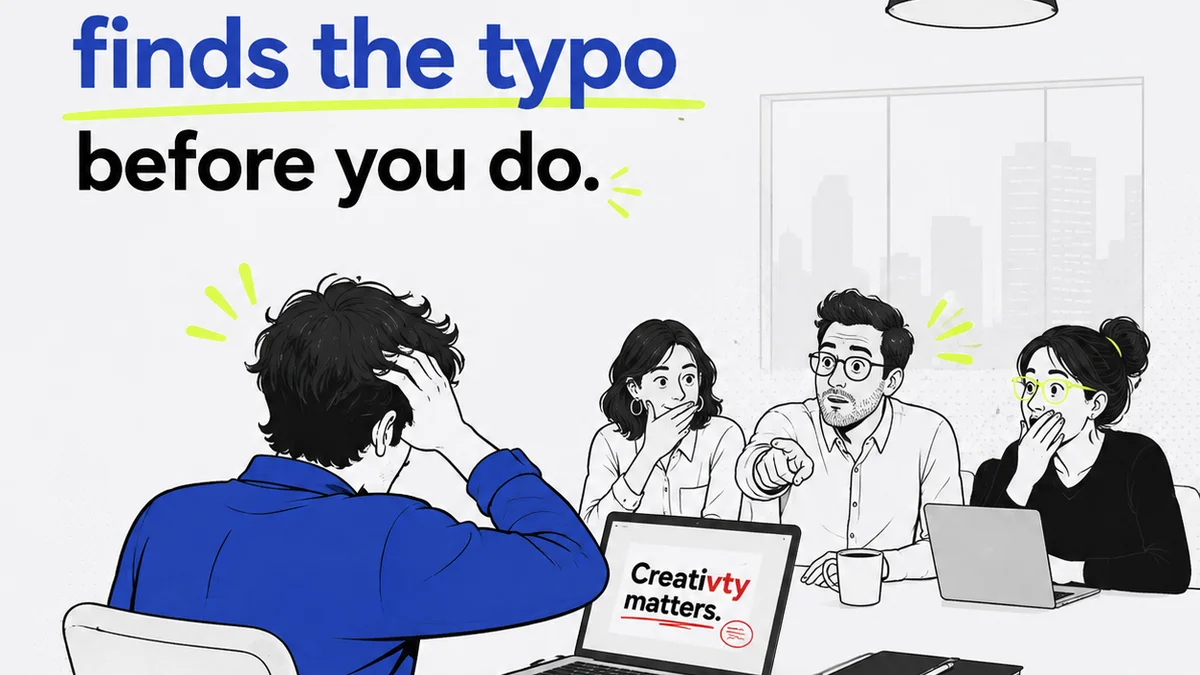
You’ve probably heard it a million times: print production errors are dead. With digital workflows, automated pre-press checks, and hyper-precise digital printing, the days of misaligned colors, incorrect bleeds, and smudged ink are over. That’s the common wisdom. None of that is wrong. But it’s incomplete.
The deeper truth is that while the *technical* errors are rarer, the *workflow* errors that lead to print problems are more pervasive than ever. And they’re costing agencies far more than just a reprint.
1. The Illusion of Digital Control
We live in a digital world. Every creative asset starts on a screen. This leads many to assume that the transition to print is seamless. Just hit ‘print’ and you’re done, right?
Wrong.
The gap between the screen and the printed page is a chasm. It’s not just about color profiles (CMYK vs. RGB) or resolution. It’s about how feedback is managed, how revisions are tracked, and who ultimately signs off on the final artwork before it goes to the press.
The Feedback Loop Breakdown
Think about your typical client feedback process for print collateral:
- Emails fly back and forth, buried under other client comms.
- Comments are made directly on PDFs, but which version is the latest?
- Verbal feedback is given in meetings, then reinterpreted by the account manager.
- Designers try to consolidate notes, often missing nuances or introducing new errors.
This fragmented communication is a breeding ground for errors. A tiny change requested in an email chain can be missed, or misinterpreted, leading to a costly mistake on the final printed piece.
The Revision Rabbit Hole
How many times has a print job gone wrong because the wrong file version was sent to the printer?
It’s a classic agency problem. Version control is a nightmare. Was that the final-final-really-final-this-time version? Or the one before that? Without a single source of truth, mistakes are inevitable.
This isn't a digital problem. It's a human and process problem, amplified by digital tools.
2. The Misunderstood Role of the Printer
Many agencies view their print vendor as a black box. You send them files, they send you printed materials. If something goes wrong, it’s easy to blame the printer.
But that’s a convenient scapegoat. A good printer has sophisticated pre-press checks. They’ll flag obvious issues. But they aren’t mind-readers.
What Printers *Can't* Catch
- Subtle copy errors that aren't grammatically incorrect but are factually wrong.
- Incorrect product names or pricing that slipped through edits.
- Outdated branding elements that weren't updated across the board.
- A missing disclaimer or legal text that’s crucial but easily overlooked in a sea of other feedback.
- A call to action that’s technically correct but misleading in context.
These aren't print errors; they are content and communication errors that manifest *in* print. The printer’s job is to reproduce what you give them, not to be your final quality assurance team for content accuracy.
The Cost of a
Frequently asked questions
Are print production errors still common in 2026?
While technical printing errors are rarer due to advanced technology, workflow errors leading to content mistakes or incorrect files being sent to print are still very common and costly for agencies.
What is the main cause of print production errors in modern agencies?
The primary cause is fragmented internal communication and client feedback management. This leads to version control issues, missed edits, and incorrect files being submitted for printing.
How can agencies prevent print production errors?
Agencies can prevent errors by centralizing all client feedback and file versions in one system, implementing clear approval workflows, and conducting thorough internal quality checks before final file submission.
Can print vendors catch all errors?
No. Print vendors are skilled at technical reproduction. They can catch some technical file issues, but they cannot verify content accuracy, outdated information, or the strategic intent of your design.