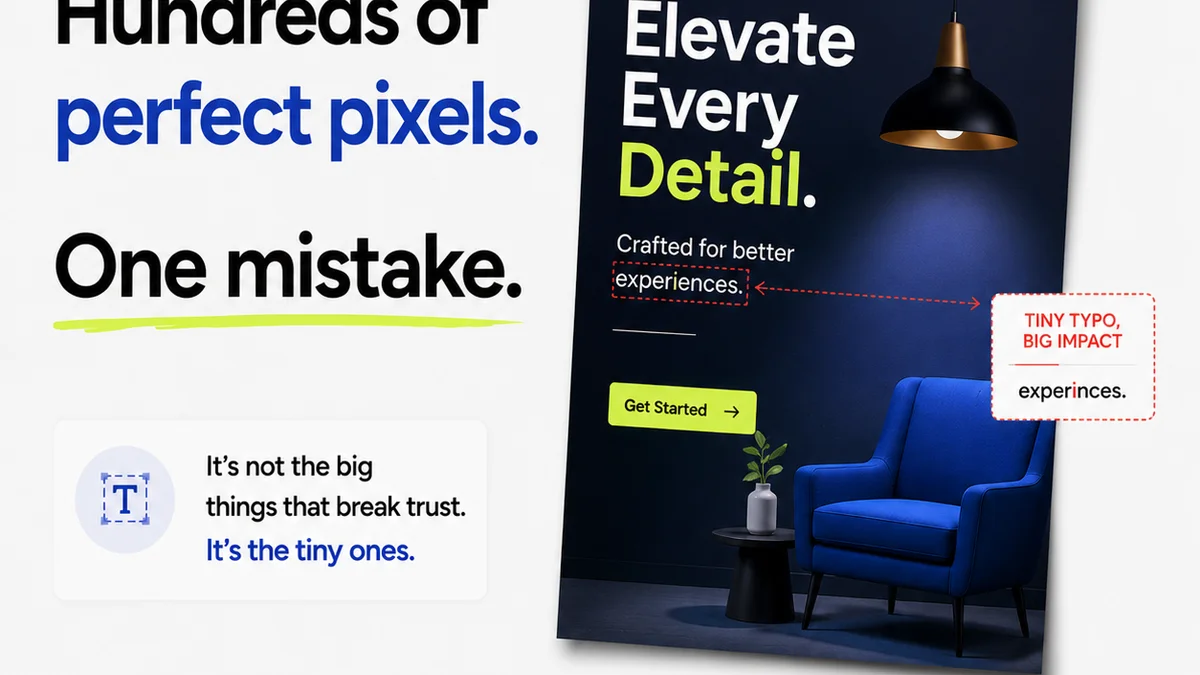
Everyone thinks print quality assurance (QA) is about catching mistakes on the final printed piece. That’s the easy part. The hard truth? Your print QA process is failing if you’re only looking at the finished product.
Real print QA is an operational discipline. It’s about embedding checks and balances throughout the entire creative and production workflow, from initial brief to final delivery. It prevents problems, rather than just finding them.
1. The Assumption: Print QA Starts at the Printer
This is the most common, and most dangerous, assumption. You send your files off, get a proof, sign off, and assume the printer handles the rest. Or worse, you don’t even get a proof. You just trust the final output will be right.
This approach guarantees you’ll be dealing with expensive reprints, missed deadlines, and unhappy clients.
The Deeper Truth: Print QA is a Workflow, Not a Final Step
Quality assurance for print begins the moment a project is conceived. It’s about establishing clear standards, communication protocols, and verification points at every stage.
This means defining requirements upfront, ensuring design files are built correctly, managing revisions meticulously, and setting clear expectations with your print partners.
The Cost of Neglect
- Last-minute file corrections at the printer.
- Incorrect specs leading to unusable print runs.
- Color shifts that don't match brand guidelines.
- Finishing errors (binding, cutting, folding).
- Delayed project completion and client frustration.
- Wasted print budget.
These aren't minor inconveniences. They are direct hits to your agency’s profitability and reputation.
2. The Foundation: Briefing and File Prep
Garbage in, garbage out. This old adage is especially true for print production. If the initial brief is vague or the design files aren't prepared correctly, no amount of QA at the end can truly salvage the project.
Defining Print Specifications Early
This isn't just about dimensions. It's about understanding the entire print ecosystem.
- Intended Use: How will the piece be handled? This affects paper stock, weight, and finishing.
- Color Requirements: CMYK for most commercial printing, but what about spot colors (Pantone)? Are brand colors critical and require specific ink mixes?
- Bleed and Trim: Are they correctly set up in the design file? This prevents white edges where the paper is cut.
- Resolution: Are all images and graphics at a sufficient resolution for print (typically 300 DPI)?
- Font Embedding: Are fonts properly outlined or embedded to avoid substitution issues?
- Finishing: Will the piece be folded, bound, laminated, or die-cut? These require specific file preparation.
These details must be captured in the initial brief and communicated clearly to the design team.
Building Files for Print Success
Designers need to be educated on print best practices. This isn't something to assume.
- Using CMYK color modes from the start.
- Setting up documents with appropriate bleed (usually 1/8 inch or 3mm).
- Avoiding RGB images unless specifically required for a unique effect (and understanding the conversion implications).
- Checking for overprint issues.
- Ensuring text is clean and vector-based where possible.
A robust print QA checklist begins here, with a file setup review before any design work is finalized.
3. The Bottleneck: Revision and Approval Chaos
This is where most agencies bleed time and money. Unstructured feedback, endless revision rounds, and unclear sign-offs create a perfect storm for errors.
The Problem with Email and Spreadsheets
Client feedback via email chains is notoriously difficult to track. Key comments get buried. Different versions of files get attached, leading to confusion about what the *actual* approved version is.
Spreadsheets for tracking revisions are slightly better but still prone to human error. Who updated what? When? Was it approved or just noted?
The
Frequently asked questions
What is the most common mistake in print quality assurance?
The most common mistake is treating print QA as a final step, only checking the printed output. True QA involves embedding checks throughout the entire design and production process, starting from the initial brief and file preparation.
Why is proper file preparation crucial for print QA?
Proper file preparation ensures that design files meet all technical specifications required for printing, such as correct color modes (CMYK), bleed, resolution, and font embedding. Errors here lead to costly mistakes and reprints, regardless of final proofing.
How can agencies manage client feedback for print projects more effectively?
Agencies can manage client feedback more effectively by using a centralized platform for comments and approvals. This eliminates confusion from email chains and spreadsheets, ensuring everyone is working from the latest approved version and all feedback is tracked.
What are the key elements of a comprehensive print QA checklist?
A comprehensive print QA checklist includes verifying the initial brief, checking design file setup (color, bleed, resolution), managing revisions with clear approval steps, confirming printer specifications, and inspecting the final proof against requirements. It's a multi-stage process.