You probably think a print QA checklist is pretty straightforward. Spot errors. Check colors. Make sure the client signed off. None of that is wrong. But it’s incomplete.
The hard truth is that by 2026, a truly effective print quality assurance process goes far beyond the final PDF. It’s about the entire lifecycle of the project, from initial brief to final delivery, and how information flows—or doesn’t flow—between everyone involved.
1. The Shifting Sands of Print Specs
Remember when print specs were mostly static? Paper type, weight, finish, ink coverage. These are still critical, of course. But the landscape is more complex now.
We're seeing a rise in dynamic printing, personalized runs, and variable data printing (VDP). These aren't niche applications anymore; they're becoming mainstream for direct mail, packaging, and even some marketing collateral.
The New Variables to Track
- Data Integrity for VDP: Is the data feed clean? Are there duplicates? Are the personalization fields correctly mapped? A single misplaced variable can derail an entire personalized campaign.
- Cross-Platform Consistency: If a campaign runs digitally and in print, how are the color profiles, messaging, and branding aligned? What looks good on screen doesn't always translate perfectly to CMYK.
- Sustainability Requirements: Are the chosen materials certified? Are the inks eco-friendly? Clients are increasingly asking about the environmental impact, and your QA needs to verify these claims.
- Supply Chain Resilience: With ongoing global disruptions, are your chosen printers and material suppliers reliable? What are the backup plans if a key component is unavailable?
Your print QA checklist needs to account for these variables, or you're setting yourself up for expensive mistakes.
2. The Human Element: Collaboration and Communication Breakdowns
The biggest print QA failures I see aren't technical; they're human. Specifically, they stem from poor communication and collaboration.
When feedback is scattered across emails, Slack messages, and informal calls, critical instructions get lost. A stakeholder approves a design based on an old brief, or a printer misinterprets a late-stage change. This is where the real problems start.
Common Communication Pitfalls
- Scattered Feedback: No single source of truth for client comments.
- Version Control Chaos: Which PDF is the *actual* final version?
- Unclear Roles & Responsibilities: Who is the final approver? Who is responsible for checking specific elements?
- Delayed Approvals: Client bottlenecks that push back production timelines, leading to rushed QA.
- Misinterpretation of Instructions: Ambiguous notes leading to incorrect execution by the printer.
A robust print QA process in 2026 demands a system that centralizes communication and clarifies every step of the approval journey. It’s not just about checking the output; it’s about ensuring the *input* was clear, consistent, and agreed upon.
3. Beyond CMYK: The Nuances of Color and Finish
Everyone checks CMYK values. That’s table stakes. But true print QA in 2026 involves a more sophisticated understanding of color and finishing.
Consider specialty inks, varnishes, foils, and embossing. These add significant production complexity and require specific checks that go beyond standard color proofs.
Advanced Print QA Checks
- Specialty Ink Verification: Is the correct Pantone color being used? Is the ink coverage appropriate for the effect (e.g., metallic sheen, fluorescent vibrancy)?
- Varnish & Coating Accuracy: Is the spot UV applied precisely where intended? Are the matte and gloss finishes correctly specified and executed?
- Foil & Emboss/Deboss Registration: Is the foil applied cleanly and aligned perfectly with the artwork? Is the embossing/debossing deep enough or too deep, and is it positioned correctly?
- Die-Cut & Creasing Precision: Are the cut lines accurate? Are the creases clean and correctly placed to avoid cracking or buckling?
- Color Consistency Across Runs: For longer print runs, how do you ensure color consistency from the first sheet to the last? This often involves monitoring ink density and color drift throughout the production process.
These are not minor details. They are the elements that elevate a print piece from good to exceptional. Missing them means a failure in quality, regardless of whether the text is spelled correctly.
4. The Digital Handshake: Pre-press and File Preparation
The quality of the final print is directly proportional to the quality of the files submitted to the printer. This is where pre-press checks are paramount.
In 2026, this means more than just checking bleed and resolution. It involves ensuring the file is built for the specific output device and process, especially with the rise of advanced finishing techniques.
Essential Pre-press QA Steps
- Color Profile Accuracy: Ensure the correct ICC profiles are used for the intended print process (e.g., SWOP, GRACoL, FOGRA).
- Bleed and Trim Management: Verify that bleed is sufficient and that trim marks are correctly placed.
- Font Embedding/Outlining: Confirm that all fonts are embedded or outlined appropriately to prevent substitution errors.
- Image Resolution and Mode: Ensure images are at the correct resolution (typically 300 PPI at final print size) and in the correct color mode (CMYK or grayscale).
- Overprint Settings: Check for unintended overprints, especially with black text or rich black builds, which can cause muddy colors or registration issues.
- Layer Management: For complex files with spot colors, varnishes, or foils, ensure layers are properly named and organized for the printer.
- Trapping: Understand if trapping is handled by the RIP or needs to be built into the artwork, and verify its application.
A thorough pre-press checklist is your first line of defense against print errors. It prevents issues before they ever hit the press.
5. Where Revue Fits In
Managing all these moving parts—from complex specs and evolving print technologies to fragmented communication and detailed pre-press checks—is a significant operational challenge. This is where a centralized platform becomes indispensable.
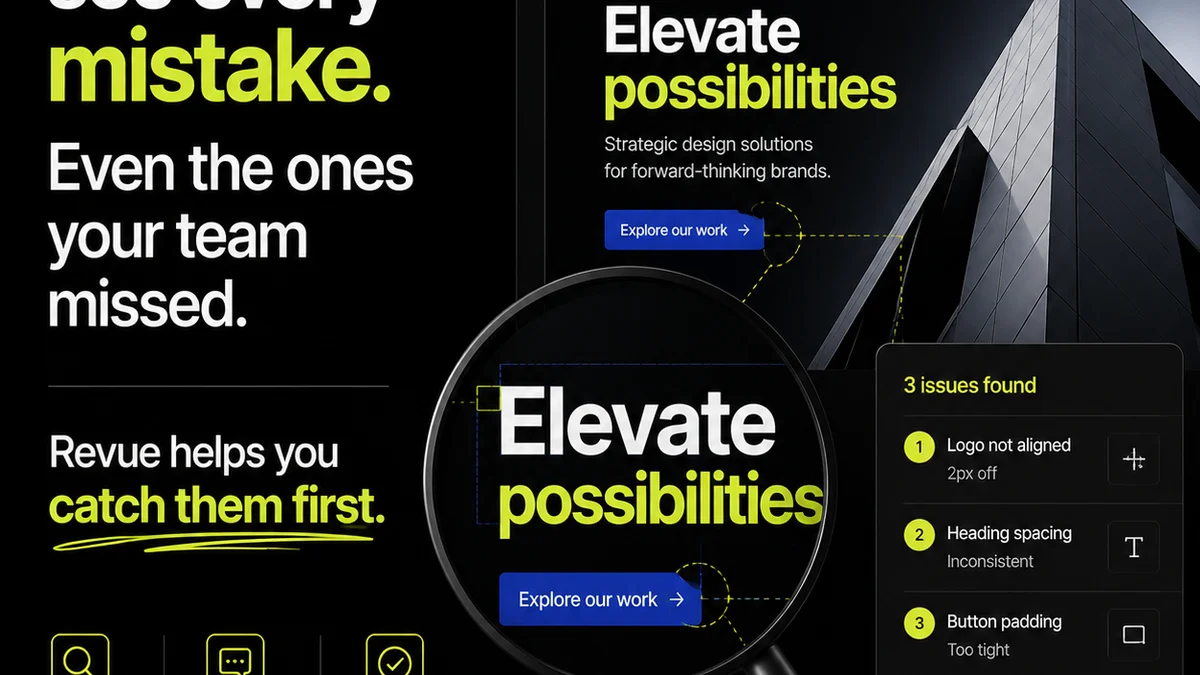
Revue is built to streamline these workflows. Instead of feedback living in disparate email threads or chat logs, every comment, revision, and approval is documented in one place, linked directly to the creative asset.
- Centralized Feedback: All client and stakeholder comments are logged against specific versions of the artwork. No more hunting for that one crucial email.
- Revision Visibility: Track every iteration of a design. See exactly what changed between versions, making it easier to spot discrepancies or unintended alterations during QA.
- Clear Approval Chains: Define and track who needs to approve what, and when. This eliminates ambiguity and ensures that only authorized stakeholders sign off.
- Automated Notifications: Keep everyone informed of new feedback, pending approvals, or completed revisions, reducing communication delays.
- Audit Trail: Maintain a clear record of all project activity, providing accountability and a reference point for any post-production issues.
By bringing order to the chaos of feedback and approvals, Revue helps ensure that your print QA checklist is applied to the right version, with the clearest possible instructions, and the final sign-off from the correct person. It’s about process integrity, not just pixel-peeping.
Final Thought
The print QA checklist of 2026 isn't just a document; it's a reflection of a mature, integrated creative workflow. Are your processes designed to catch errors before they happen, or are they merely a last-ditch effort to salvage a project gone wrong?
The real quality assurance starts long before the final proof.
Frequently asked questions
What are the biggest changes to print QA checklists by 2026?
By 2026, print QA checklists need to incorporate checks for dynamic and variable data printing, cross-platform consistency, sustainability requirements, and supply chain reliability, in addition to traditional checks.
How does communication impact print QA?
Poor communication is a leading cause of print errors. Scattered feedback, unclear roles, and version control chaos mean critical instructions can be missed or misinterpreted, leading to costly mistakes. Centralizing feedback is key.
What advanced checks should be included for specialty finishes?
For specialty finishes like foils, varnishes, and embossing, your QA checklist should verify correct ink types, precise application alignment, appropriate depth/effect, and registration accuracy. These elements are critical for the final aesthetic.
Why is pre-press QA so important for print quality?
Pre-press QA ensures the digital files are correctly prepared for the specific printing process. This includes checking color profiles, bleed, font embedding, image resolution, and overprint settings. High-quality files are the foundation of high-quality print.
How can a platform like Revue help with print QA?
Revue centralizes all feedback, revisions, and approvals in one place. This provides a clear audit trail, eliminates version control chaos, ensures clear communication, and verifies that final approvals come from the correct stakeholders, improving the integrity of the entire QA process.