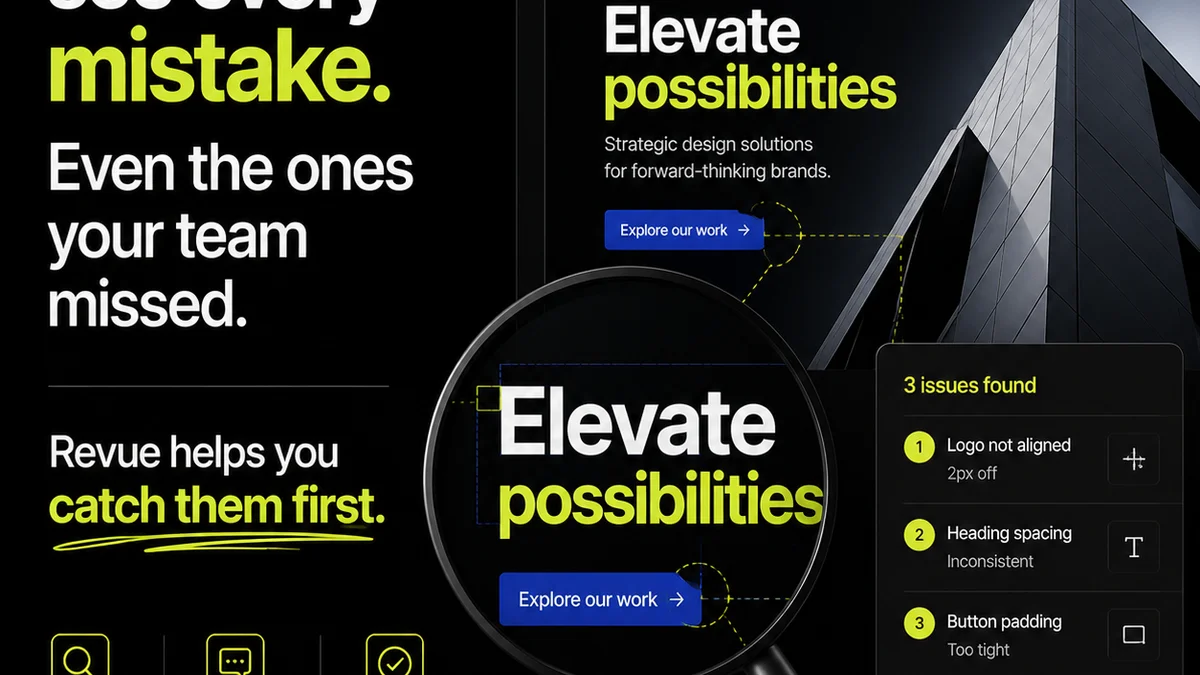
Everyone knows you need to proofread. It’s the final step. The last line of defense against typos and grammatical slip-ups. Nobody disputes its importance.
None of that is wrong. But it’s incomplete.
The hard truth is that effective proofreading in a creative agency setting isn't just about catching stray commas. It's about ensuring the *entire* creative output—from the smallest detail to the biggest concept—is polished, professional, and precisely what the client signed off on. A missed detail can unravel trust faster than any grammatical error.
1. The Real Cost of 'Good Enough' Proofreading
You might think a quick once-over is sufficient. A quick scan for obvious blunders before hitting send. This approach is a gamble.
A single, overlooked error can signal a lack of attention to detail. This is especially damning in a field where precision is paramount. Clients pay for expertise, for a keen eye that catches what they miss. When you miss things, you erode that perception.
Consider the downstream effects:
- Client embarrassment or confusion.
- Internal team scrambling to fix easily avoidable mistakes.
- Damage to your agency's reputation for quality.
- Costly re-work, eating into already tight margins.
- Loss of future business.
This isn't about perfectionism for its own sake. It's about operational excellence.
2. Beyond Spellcheck: A Comprehensive Proofreading Checklist
Your proofreading process needs to be more than just running a spellchecker. It needs structure. It needs a checklist that covers all the bases, from the obvious to the subtle.
Here’s a breakdown of what a robust proofreading checklist should include:
2.1. Content Accuracy and Consistency
This is where many proofreading efforts fall short. It's not just about spelling; it's about what's being said and if it's correct.
- Factual Verification: Are all names, dates, statistics, and claims accurate? Cross-reference with source material or client briefs.
- Consistency: Are terms used consistently throughout? (e.g., product names, brand messaging).
- Client Brief Alignment: Does the final output directly address the client's objectives and requirements as stated in the brief?
- Legal/Compliance: Does the content meet any industry-specific regulations or legal disclaimers required by the client?
- Contact Information: Are phone numbers, email addresses, and URLs correct and functional?
2.2. Design and Formatting Integrity
Visual elements and layout are as crucial as text. Errors here can be just as damaging.
- Typography: Are fonts consistent? Are font sizes appropriate for readability? Are there any widows or orphans (single words on a line)?
- Layout and Spacing: Is spacing between elements (text, images, buttons) consistent and visually appealing? Are margins correct?
- Image Quality and Placement: Are all images high-resolution and correctly placed? Are they cropped properly?
- Color Accuracy: Do colors match brand guidelines? Are they rendered correctly across different mediums (web, print)?
- Links and Buttons: Do all hyperlinks work and lead to the correct destinations? Are call-to-action buttons clearly visible and functional?
- Responsiveness (Digital): How does the design adapt across different screen sizes and devices?
2.3. Grammatical and Stylistic Polish
This is the more traditional aspect of proofreading, but it still requires a systematic approach.
- Spelling: Yes, spellcheck is a start, but manual review is essential for context-aware errors (e.g., 'their' vs. 'there').
- Grammar: Subject-verb agreement, correct tense usage, proper sentence structure.
- Punctuation: Commas, apostrophes, hyphens, semicolons – used correctly and consistently.
- Tone and Voice: Does the language align with the brand's established tone of voice? Is it appropriate for the target audience?
- Clarity and Conciseness: Is the message clear and easy to understand? Can any jargon be simplified?
- Active vs. Passive Voice: Is the appropriate voice used for impact and clarity?
2.4. Brand and Client Specifics
Every client is unique. Your proofreading must reflect that.
- Brand Guidelines: Adherence to the client's specific brand guidelines (logo usage, color palettes, typography, tone).
- Project-Specific Terminology: Use of any special terms or acronyms defined for this particular project or client.
- Deliverable Format: Does the final output match the agreed-upon file format and specifications?
3. Implementing a Proofreading Workflow
A checklist is only as good as the process it supports. How do you integrate this level of scrutiny into your agency's daily grind?
3.1. The 'Fresh Eyes' Rule
The person who created the work is often too close to it to spot errors. This is non-negotiable.
Assign proofreading to someone who wasn't directly involved in the creation process. This ensures a genuinely objective review.
3.2. Multiple Passes, Different Focuses
Don't try to catch everything in one go. Break it down.
- First Pass: Focus purely on content accuracy and factual verification.
- Second Pass: Concentrate on grammar, spelling, and punctuation.
- Third Pass: Review design, formatting, and brand consistency.
- Final Pass: A quick read-through for glaring errors, often read aloud.
3.3. Reading Aloud
This sounds simple, but it's incredibly effective. Reading text aloud forces you to slow down and process each word. Your ear will catch awkward phrasing or missed words that your eye might skim over.
3.4. Using Technology Wisely
Tools like Grammarly or Hemingway Editor can help flag potential issues. However, they are aids, not replacements for human review. They can miss context and nuanced errors.
Use them as a first layer of defense, then follow with manual checks.
3.5. Establishing Clear Sign-Offs
Every piece of work should have a clear, documented sign-off process before it goes to the client. This ensures accountability and confirms that all proofreading steps have been completed.
4. Where Revue Fits In
Managing feedback and revisions across multiple projects and clients can quickly become chaotic. This chaos is a breeding ground for errors.
Revue is designed to bring order to this process. By centralizing all client feedback and communication within a single platform, you eliminate the risk of missed comments or misunderstood revisions.
Every version of a creative asset is tracked. Every stakeholder comment is logged. This creates an undeniable audit trail, making it easy to verify that all agreed-upon changes have been implemented correctly.
When it comes time for final proofing, you're not hunting through scattered email threads or Slack messages. All the necessary context and approved changes are right there. This drastically reduces the chance of overlooking a critical detail that was communicated verbally or buried in a long email chain.
Revue streamlines the entire review and approval cycle, directly supporting a more rigorous and reliable proofreading process.
5. Final Thought
Proofreading isn't just a task; it's a critical quality assurance gate. It's the final act of care you show your client and your own work.
Are you treating it as such, or just another box to tick?
Frequently asked questions
What is the difference between proofreading and editing?
Editing focuses on larger-scale issues like structure, clarity, and overall message. Proofreading is the final step, focused on surface-level errors like typos, grammar, punctuation, and formatting mistakes before final delivery.
How can I proofread more effectively?
Use a structured checklist, get 'fresh eyes' from someone not involved in creation, read aloud, break your review into multiple passes focusing on different error types, and leverage technology as an aid, not a crutch.
Is reading aloud really necessary for proofreading?
Yes. Reading aloud forces you to slow down and process each word individually, making it much easier to catch awkward phrasing, repeated words, or missed words that your eyes might otherwise skim over.
How often should proofreading occur in a project?
Ideally, proofreading should happen at multiple key stages, especially before any client presentation and critically, before final delivery. A comprehensive final proofread is essential.