We all know the drill. The client’s latest social media campaign is live. You’re scrolling through, feeling a mix of pride and anxiety. You’re looking for engagement, for shares, for that little dopamine hit of seeing your work resonate. And then you see it. A glaring typo. A broken link. A factual error that undermines the entire message.
You might think, “It’s just a social post. Who’s going to notice?” Or maybe, “We have a process. Someone *should* have caught that.”
None of that is wrong. But it’s incomplete.
The hard truth? Proofreading social media creatives isn't just about catching typos. It’s a critical layer of quality control that directly impacts brand reputation, client trust, and your agency’s bottom line. It’s the final gatekeeper before your work goes out into the wild, and it’s often treated as an afterthought.
1. The High Stakes of a Low-Effort Task
Social media moves fast. That’s its superpower. It’s also its Achilles' heel. A single error, amplified by shares and comments, can spread like wildfire. What seems like a minor slip-up can have disproportionate consequences.
Brand Erosion
Every typo, every grammatical error, every factual inaccuracy chips away at your client’s brand credibility. If a brand can’t get its own social posts right, what does that say about its products or services?
Client Trust Diluted
When errors slip through, clients lose faith in your agency’s attention to detail. They start questioning your processes, your team’s competence, and ultimately, the value you provide. This erodes the foundation of your client-agency relationship.
Wasted Ad Spend
Many social posts are boosted or run as paid ads. An error in a paid ad isn't just embarrassing; it’s a direct financial loss. You’re paying to promote mistakes.
Missed Opportunities
A broken link means a lost click. An unclear call-to-action means a lost conversion. A factually incorrect statement can lead to backlash that distracts from the intended message.
2. The Realities of the Social Media Workflow
The pressure to produce content quickly for social media is immense. This speed often creates blind spots when it comes to quality control.
The
Frequently asked questions
Why is proofreading social media content more important than ever?
With the speed and reach of social media, even a small error can have a large, public impact on brand reputation and client trust. It's the final quality check before widespread dissemination.
What specific types of errors should I look for in social media creatives?
Beyond typos and grammatical errors, check for broken links, incorrect URLs, factual inaccuracies, outdated information, incorrect tagging, non-compliance with platform guidelines, and brand voice inconsistencies.
How can I implement a better proofreading process for social media?
Establish a clear, multi-stage review process. Use checklists. Assign proofreading to someone not involved in the initial creation. Leverage technology for grammar and spell-checking, but don't rely on it solely. Schedule dedicated time for review before publishing.
Can technology fully automate social media proofreading?
Technology is a valuable tool for catching basic errors like typos and grammar mistakes. However, it cannot fully replace human review for context, brand voice, factual accuracy, or strategic message alignment. Human oversight remains essential.
How does centralized feedback help with social media proofreading?
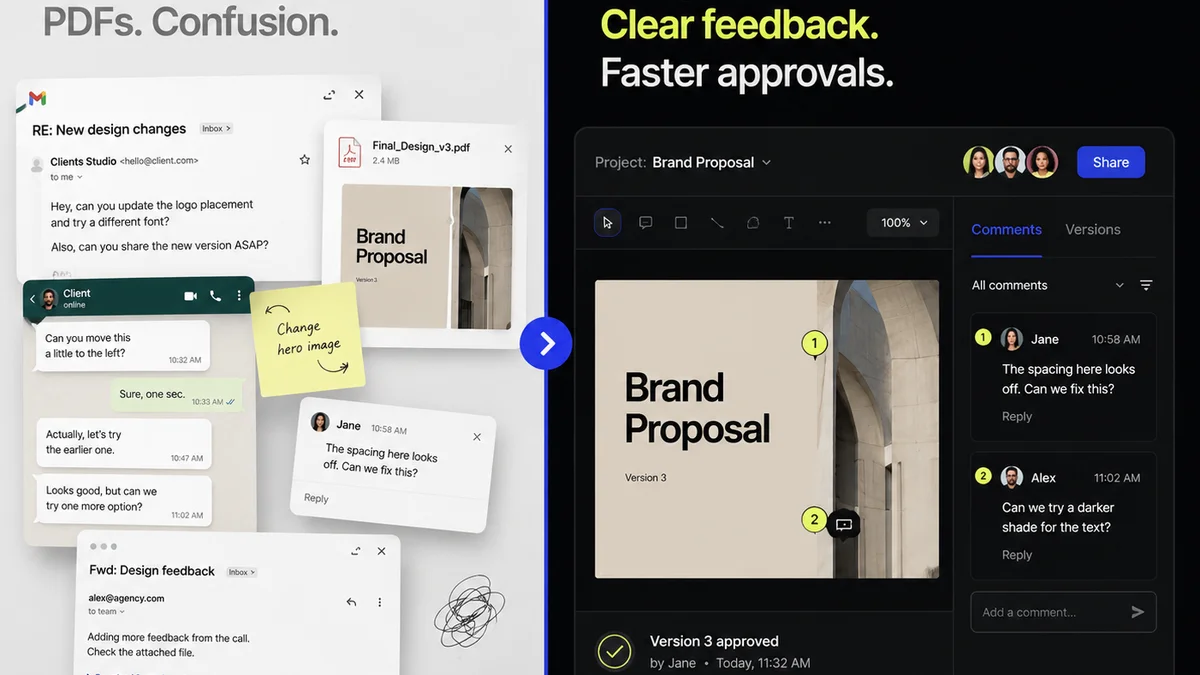
Centralizing feedback ensures all comments and revisions are in one place, reducing the chance of miscommunication or missed edits. It provides a clear audit trail and visibility into the approval process, making the final proofread more efficient and effective.