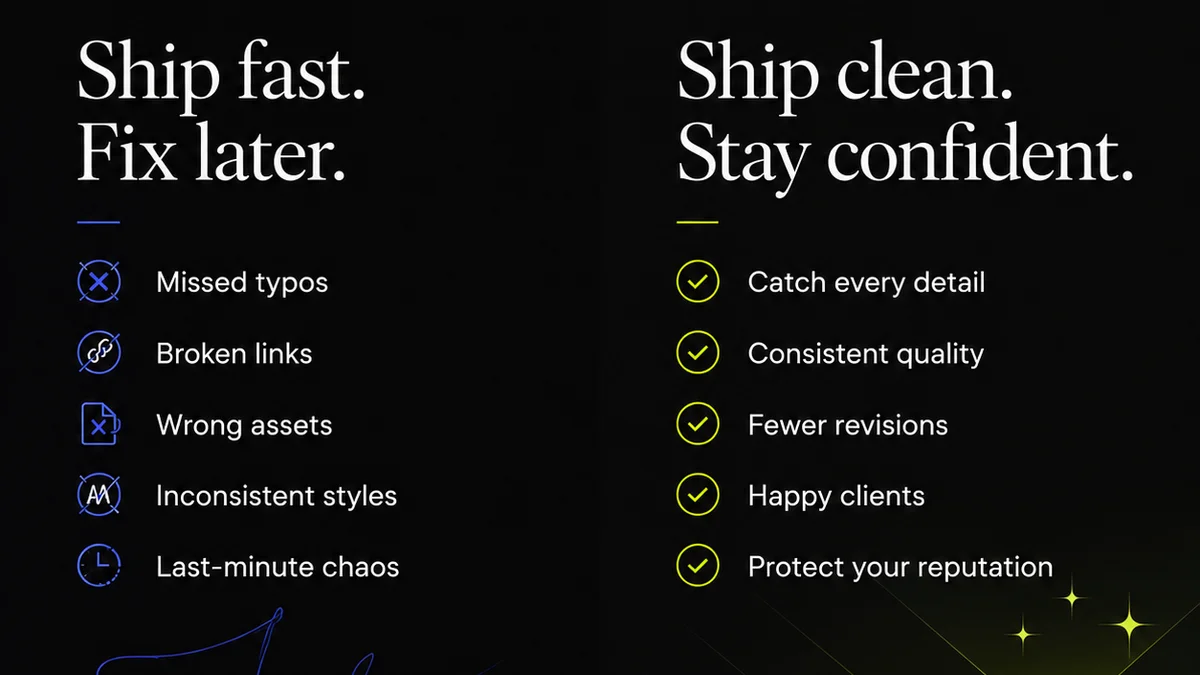
Everyone talks about workflow. They map out steps, assign tasks, and track progress. It sounds efficient. It sounds organized.
And none of that is wrong. But it’s incomplete.
The real differentiator for top agencies isn’t just having a workflow. It’s how they *approach* that workflow. They don’t see it as a necessary evil, a box to tick. They see it as a strategic tool.
A tool for ensuring quality. A tool for managing client expectations. A tool for building trust.
The hard truth? Your publication workflow is a direct reflection of your agency’s commitment to excellence. If it’s messy, your work will eventually show it. If it’s robust, your reputation will benefit.
1. Beyond the Checklist: Workflow as a Quality Gate
Most agencies treat publication as the finish line. The final export, the client sign-off, the upload. Done.
This is a mistake.
The best agencies build quality checks *into* the workflow, not just at the end of it. Publication isn’t the end; it’s a milestone within a larger quality assurance process.
The Illusion of 'Final'
What does 'final' even mean in creative work? Clients always have one more tweak. Stakeholders emerge from the woodwork. The landscape shifts.
Thinking of publication as the absolute end means you’re leaving yourself vulnerable to the inevitable 'just one more thing.'
Integrating QA at Every Stage
Instead, think of publication as a critical gate. Before you get there, specific checks must be passed.
- Is the copy error-free and on-brand?
- Are all assets correctly sized and formatted for the intended platform?
- Does the design adhere to brand guidelines?
- Has the client provided explicit, documented approval?
- Are there any technical requirements for the output (e.g., specific file types, metadata)?
These aren't afterthoughts. They’re prerequisites.
2. Client Collaboration: From Feedback Chaos to Clarity
Client feedback. The bane of many an agency’s existence. It’s often vague, contradictory, and arrives at the worst possible moment.
A poorly managed feedback loop directly impacts your publication workflow. Delays, misinterpretations, and scope creep are common symptoms.
The best agencies don't just *collect* feedback; they *manage* it.
The Single Source of Truth
Where does feedback live? In emails? Slack messages? Scattered documents? This is a recipe for disaster.
Top agencies establish a central hub for all client communication and feedback related to a project. This eliminates confusion and ensures everyone is working from the same set of instructions.
Structured Feedback Cycles
Don't leave feedback open-ended. Define clear feedback windows and processes.
- Set expectations upfront about when feedback will be requested and how it should be provided.
- Use tools that allow for contextual commenting directly on the creative assets.
- Require clients to consolidate feedback from multiple stakeholders into a single, prioritized list.
- Establish a clear process for addressing and resolving conflicting feedback.
This transforms feedback from a reactive burden into a proactive part of the creative process.
3. Revision and Approval: Building Predictability
Revisions and approvals are where projects often stall. Without a clear process, these stages can become black holes of time and resources.
Agencies that excel at publication workflow have mastered the art of making revisions and approvals predictable.
Defining Scope and Deliverables
It starts with the brief. A clear scope of work and defined deliverables prevent endless revision cycles.
What exactly is the client approving? What are the limits of revisions included in the fee?
Be explicit. Document it.
Streamlining the Approval Process
Approval shouldn't be a guessing game. Clients need to know what they’re approving and how to do it.
- Use clear version control so everyone knows which iteration they’re reviewing.
- Provide easy-to-understand summaries of changes made between versions.
- Implement a formal sign-off mechanism – a digital signature, a clear email confirmation, or a dedicated approval tool.
- Define what constitutes 'approval' and what happens if it's not received by a certain deadline.
This clarity prevents the dreaded 'we thought that was just a suggestion' conversation.
4. Asset Management: The Unsung Hero of Publication
You’ve done the creative work. You’ve navigated feedback. You’re ready to publish. Now what?
If your final assets are buried in random folders or named cryptically, your publication workflow is still broken.
Effective asset management is crucial for a smooth publication process.
Organization is Non-Negotiable
A well-organized digital asset management (DAM) system or a clearly structured cloud storage solution is essential.
Think about:
- Consistent naming conventions for all files.
- Logical folder structures that mirror project phases or asset types.
- Clear metadata tagging for easy searching and retrieval.
- Archiving and version history so you can always find what you need.
This isn't just about tidiness; it's about speed and accuracy when you need the final files most.
Preparing for Distribution
Publication isn't just about creating the final file. It's about preparing it for its intended destination.
Does the social media platform require specific aspect ratios? Does the website need optimized image file sizes? Is there a specific video codec required?
These technical considerations must be part of your final preparation steps, directly linked to your publication workflow.
5. Post-Publication Analysis: Learning and Iterating
The publication workflow doesn't truly end when the asset goes live. The best agencies understand the value of looking back.
What worked? What didn’t? How can the process be improved for the next project?
The Feedback Loop on Your Workflow
Hold internal debriefs after major publications.
Discuss:
- Were there any bottlenecks in the workflow?
- Was client feedback managed effectively?
- Were there any unexpected issues during the final stages?
- How accurate were the initial time and resource estimates?
This isn't about blame; it's about continuous improvement.
Measuring Success
Publication is often tied to campaign performance. Analyzing that performance provides data not just on the creative, but on the effectiveness of the workflow that produced it.
Did the asset meet its objectives? Were there any technical glitches on launch day that could have been prevented?
Use these insights to refine your processes, leading to better outcomes and happier clients.
Where Revue Fits In
Managing a complex publication workflow involves juggling feedback, revisions, approvals, and final asset delivery. It requires visibility and control.
Revue is built to bring that control to your creative process.
Centralize client feedback directly on creative assets, eliminating scattered communications and ensuring everyone is aligned.
Gain clear visibility into the revision and approval status for every piece of work, preventing bottlenecks and clarifying next steps.
Implement robust quality checks before publication, ensuring that only approved, polished work makes it to its final destination.
Revue streamlines the path from concept to completion, making your publication workflow more efficient, transparent, and reliable.
Final Thought
Your publication workflow isn't just a procedural document. It's a living system that defines your agency's reliability and the quality of your output.
Are you treating it as a strategic advantage, or just another task to get through?
Frequently asked questions
What is the biggest misconception about publication workflow?
The biggest misconception is that a publication workflow is just a checklist of steps to get a project out the door. In reality, the best agencies use it as a strategic system for quality control, client collaboration, and continuous improvement.
How can agencies improve client feedback management within their workflow?
Agencies can improve client feedback by establishing a single source of truth for all comments, defining structured feedback cycles with clear deadlines, and using tools that allow for contextual commenting directly on creative assets. This prevents chaos and ensures clarity.
Why is asset management critical for publication workflow?
Effective asset management is critical because it ensures that final, correctly formatted, and properly named files are readily available for publication. Without it, even a smooth creative process can be derailed by the inability to find or prepare the right assets, leading to delays and errors.
How does Revue help with publication workflow?
Revue helps by centralizing client feedback, providing clear visibility into revision and approval stages, and facilitating quality checks before publication. This streamlines the entire process, making it more transparent and efficient.