Everyone talks about smooth creative workflows. They mention clear briefs, talented teams, and timely feedback. None of that is wrong. But it’s incomplete.
The real bottleneck isn’t usually the creative process itself. It’s the messy, often opaque, back-and-forth between the team and the client. It’s the publication workflow.
This is where projects either fly or falter. It’s where brilliant concepts get diluted by endless revisions or lost in email chains. It’s where profit margins disappear.
The hard truth? Your creative genius means little if your publication workflow is a disaster.
1. Centralize Client Feedback, Ruthlessly
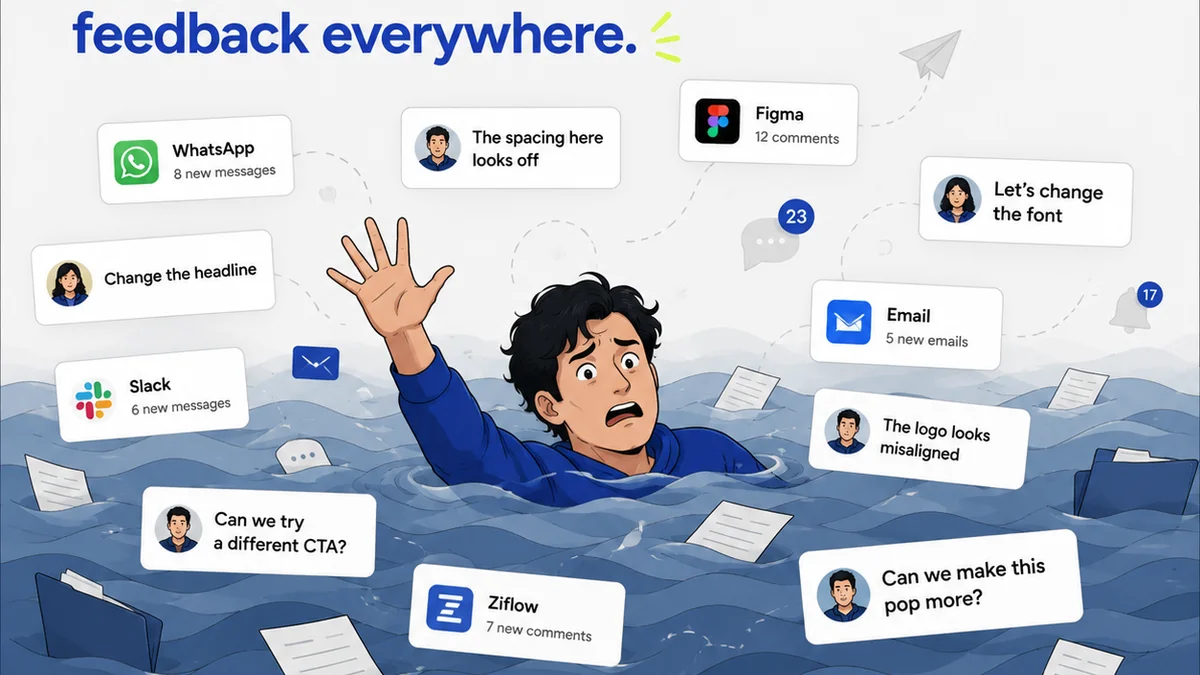
The assumption: Clients will send feedback in one place. The reality: They won’t. They’ll send it via email, Slack, text, carrier pigeon, and sometimes, directly to your desk.
This fragmentation is death by a thousand cuts. It leads to missed comments, conflicting instructions, and endless time spent hunting for information.
The Fix: One Source of Truth. Period.
- Designate a single platform for all client feedback. Every single piece.
- Train your clients on using it. Make it easy. Show them the benefit (less confusion for them, too).
- Empower your project managers to enforce this. No exceptions.
If feedback lands elsewhere, it’s not officially received. Simple. Brutal. Effective.
2. Define Clear Revision Cycles
The assumption: Clients understand what “a few revisions” means. The reality: Their definition and yours are probably miles apart.
“Just one more tweak” can spiral into an entire rework. Scope creep disguised as minor edits is a profit killer.
The Fix: Structure the Chaos.
- Establish a Revision Limit: Clearly state the number of revision rounds included in the project scope.
- Define What Constitutes a Round: Is it one set of comments, or unlimited back-and-forth within a given period? Be specific.
- Scope Creep Clause: Outline the process and cost for revisions outside the agreed-upon scope. This needs to be in your SOW.
- Time Boundaries: Set reasonable turnaround times for client feedback. If they delay, the project timeline (and potentially budget) shifts.
This isn’t about being difficult. It’s about managing expectations and protecting your team’s time and profitability.
3. Automate Approval Flows
The assumption: A quick email “Looks good!” is a formal approval. The reality: It’s a handshake that can evaporate faster than dew on a hot pavement.
Verbal or casual email approvals are ambiguous. Later, when things go wrong, no one remembers who said what or when.
The Fix: Formalize the Sign-Off.
- Implement a system where clients must actively approve work at key milestones.
- This could be a digital sign-off button, a timestamped PDF approval, or a dedicated proofing tool.
- Ensure the approval is linked to a specific version of the creative asset.
This creates an undeniable audit trail. It protects both you and the client.
4. Master the Art of the Internal Review
The assumption: Creative teams can self-police quality. The reality: Enthusiasm and familiarity can breed blindness.
The first set of eyes on a piece of work should not be the client’s. This is a rookie mistake.
The Fix: Build an Internal Gauntlet.
- Creative Director/Lead Review: Before anything goes to the client, it must pass a senior creative’s scrutiny.
- Project Manager Check: Ensure the work aligns with the brief and scope. Did we deliver what was asked?
- Quality Assurance (QA): If applicable (e.g., digital assets, code), a dedicated QA step is essential.
- Peer Review: Sometimes, a fresh pair of eyes from within the team can catch subtle errors.
This internal gatekeeping catches errors, ensures strategic alignment, and presents a polished, professional product to the client. It saves embarrassment and rework.
5. Schedule Regular Syncs (But Keep Them Focused)
The assumption: Ad-hoc calls solve everything. The reality: They often create more work than they solve.
Unscheduled calls interrupt deep work. They can lead to tangents and unclear action items. Clients might use them to dump a flood of feedback without context.
The Fix: Structured Communication Cadence.
- Weekly or Bi-Weekly Status Meetings: Fixed times, clear agendas.
- Milestone Check-ins: Scheduled calls tied to specific project phases.
- Pre-Production/Kick-off Calls: Essential for alignment.
- Post-Mortem Calls: Crucial for learning and improvement.
These structured touchpoints ensure everyone is aligned without disrupting the creative flow. Always follow up with written summaries and action items.
Where Revue Fits In
Managing the publication workflow is a complex balancing act. It requires discipline, clear processes, and the right tools.
This is precisely why Revue was built.
Revue acts as the central nervous system for your creative output. It streamlines the entire process from brief to final delivery.
- Centralized Feedback: All client comments live in one place, attached directly to the creative asset. No more hunting through emails.
- Version Control & Revision Tracking: Easily track every iteration. Clients see exactly what changed and why, making approvals clearer and revisions more efficient.
- Clear Approval Status: Know exactly where each asset stands – pending review, approved, or rejected. Eliminate ambiguity.
- Streamlined Collaboration: Keep your team and clients on the same page, reducing miscommunication and speeding up the entire publication cycle.
By centralizing and clarifying these critical steps, Revue empowers agencies and in-house teams to move faster, reduce errors, and ultimately, deliver better work with less friction.
Final Thought
The most effective creative teams don't just produce great work; they manage the *process* of producing great work with exceptional skill.
Your publication workflow isn't just administrative overhead. It's a strategic lever.
Are you treating it like one?
Frequently asked questions
What is a publication workflow in a creative context?
A publication workflow refers to the entire process of taking a creative asset from initial concept through internal review, client feedback, revisions, and final approval/delivery. It encompasses all steps involved in getting creative work 'published' or handed off to the client or end-user.
How can I prevent scope creep during client revisions?
Clearly define the number of revision rounds and what constitutes a 'round' in your Statement of Work (SOW). Implement a formal approval process for each round and establish clear pricing and procedures for any work requested beyond the agreed scope.
Why is internal review so important before client feedback?
Internal review acts as a crucial quality control gate. It allows your team to catch errors, ensure strategic alignment, and refine the work before it reaches the client, reducing the likelihood of major client-requested changes and saving time and resources.
How do I get clients to adopt a centralized feedback tool?
Emphasize the benefits for them: less confusion, faster turnaround, and clearer communication. Provide simple training and ensure the tool is intuitive. Empower your project managers to enforce its use consistently.