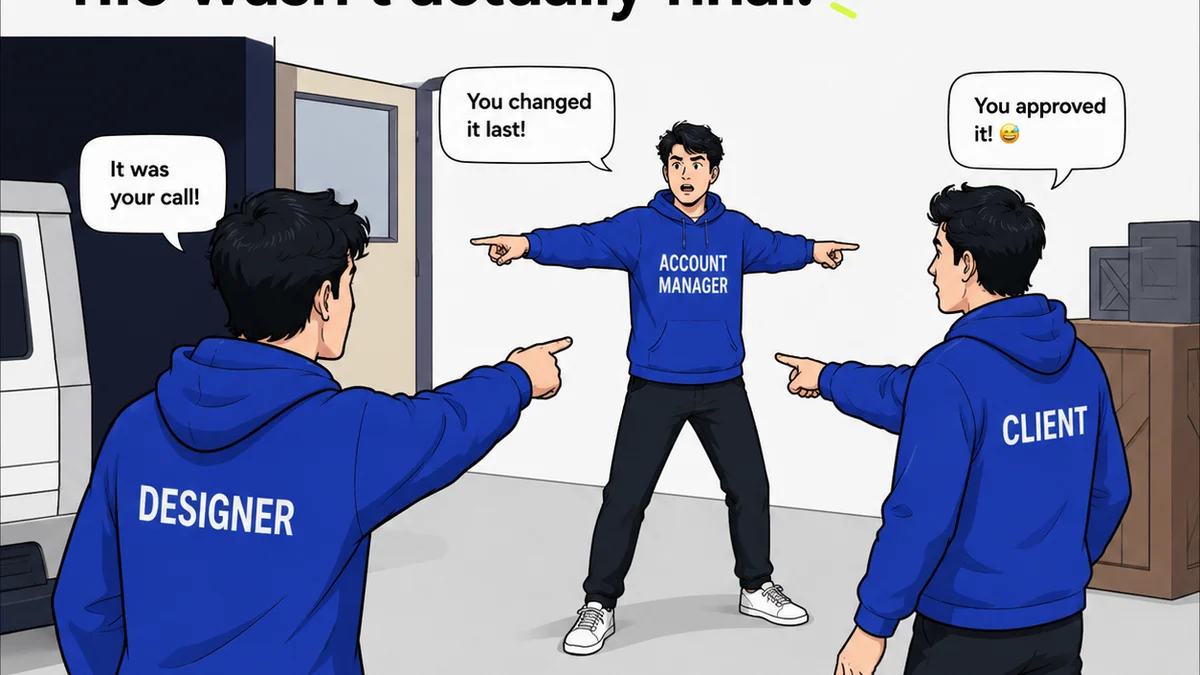
You’ve probably heard it a million times: a smooth publication workflow relies on clear communication, detailed briefs, and efficient project management. That’s all true. It’s also incomplete.
The real operational truth for growing agencies is that the *assumptions* you’re making about your current workflow are the actual bottlenecks. You’re so focused on the *process* that you’re missing the systemic flaws that are actively costing you time, money, and client trust.
1. The Myth of the 'Standard' Review Cycle
Every agency owner or creative director I talk to *thinks* they have a handle on client reviews. They’ve got their stages, their sign-offs, their deadlines. It’s all documented, right?
Wrong. The assumption that a 'standard' review cycle works for every project, every client, and every deliverable is a dangerous one. It leads to confusion, scope creep, and endless rounds of revisions that feel like they’re never going to end.
The Hidden Costs of Ambiguity
What happens when the assumption of 'standard' breaks down?
- Unclear Expectations: Clients don't know what's expected of them, or when.
- Subjectivity Overload: Feedback becomes vague (
Frequently asked questions
What's the biggest mistake agencies make with publication workflows?
The biggest mistake is assuming a one-size-fits-all approach to client reviews and approvals. Each client and project has unique needs, and rigidly sticking to a 'standard' process often leads to confusion, scope creep, and frustration for both the agency and the client.
How can agencies improve client feedback quality?
Improve client feedback quality by setting clear expectations upfront, providing contextual feedback tools (like annotation directly on assets), and educating clients on the difference between subjective preference and objective requirements. Regular check-ins also help align understanding.
What are the signs of a broken publication workflow?
Signs include constant scope creep, endless revision rounds, missed deadlines, internal team confusion about project status, client dissatisfaction with the process (even if they like the final output), and team burnout due to inefficient processes.
How does centralized feedback help?
Centralized feedback consolidates all client comments and revisions in one place, eliminating scattered email chains and version control issues. This provides a single source of truth, improves transparency, and makes it easier to track the history of feedback and approvals.