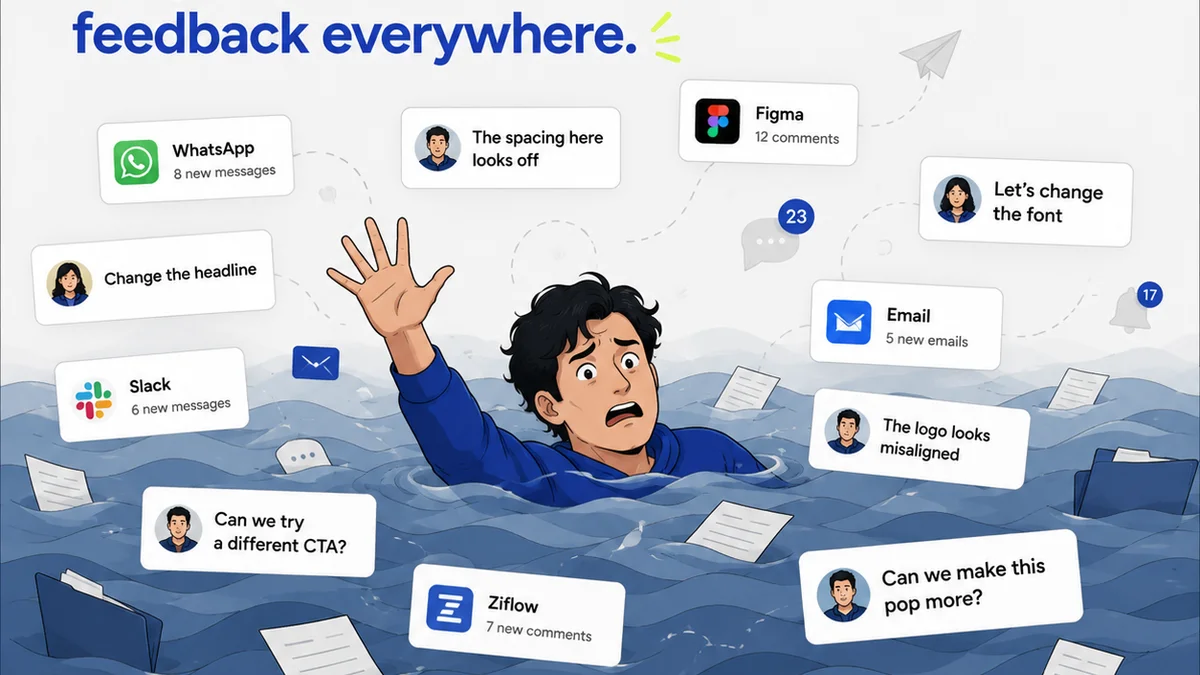
Everyone talks about the creative process. Brainstorming. Ideation. Execution. But the real bottleneck, the place where projects live or die, isn't in the studio. It’s in the handoff. It’s in the feedback loop. It’s in the approval chain.
Most leaders assume a smooth publication workflow is just about clear briefs and timely sign-offs. None of that is wrong. But it’s incomplete.
The hard truth? The modern publication workflow is a complex, interconnected system where efficiency, clarity, and control are paramount. And the tools and tactics you use today might be holding you back tomorrow.
Here are the trends you need to watch.
1. The End of the "Single Source of Truth" Illusion
For years, the mantra was "one file to rule them all." A single master document, meticulously managed. Sounds good, right?
It was never quite that simple. Even with the best intentions, versions proliferate. Emails get forwarded. Files get saved in the wrong folders. The "single source" quickly becomes a myth.
The real trend is towards distributed, accessible, and version-controlled information, not a singular, elusive file.
The Fragmentation Problem
Consider a campaign: copy, design, video, social assets. Each has its own format, its own review cycle, its own stakeholders. Trying to force them all into one monolithic file is a recipe for disaster.
- Copywriters need to see the layout, but not necessarily edit the design.
- Designers need feedback on visuals, not grammar.
- Video editors need approval on cuts, not the final soundtrack mix.
Each stakeholder needs the right context, not the entire universe of data.
The Rise of Contextual Platforms
Instead of one file, think of integrated platforms where different asset types live, but are linked. Where feedback on a video frame is tied to that frame, not a separate email thread about a timestamp.
This means moving away from generic file-sharing and towards specialized, but connected, review environments.
2. Proactive Quality Assurance, Not Reactive Polishing
The old model: get it done, get it approved, then do a quick spell-check and color check before hitting send. It’s a race against the clock, and QA is an afterthought.
This is where most agencies bleed time and margin. A missed comma, a misaligned logo, a broken link – these tiny errors snowball into costly rework and client frustration.
The shift is from reactive error correction to proactive quality assurance embedded throughout the workflow.
The Cost of "Good Enough"
Think about the last time a project went sideways. Was it a massive strategic failure? Or was it a series of small, preventable mistakes that eroded trust and added hours of tedious fixing?
Too often, it’s the latter. And it happens because QA is treated as a final gate, rather than a continuous process.
Building Quality In
This means:
- Automated checks for common errors (e.g., accessibility, brand compliance).
- Checklists that adapt to project type.
- Feedback mechanisms that flag potential quality issues early.
- Clear standards for what constitutes a "final" asset.
It’s about making quality the default, not the exception.
3. The Real-Time Revision vs. Batch Approval Dilemma
The common wisdom: batch feedback to save everyone time. Send a file, wait for all comments, then address them in one go.
This sounds efficient. It’s not.
Batching feedback often leads to conflicting comments, lost context, and endless back-and-forth as you try to reconcile disparate opinions weeks apart.
The trend is towards streamlined, contextual, and often real-time or near-real-time feedback that keeps momentum high.
Why Batching Fails
When you receive a batch of feedback, several things have likely happened:
- The original context of the work has faded.
- Stakeholders have forgotten their specific points.
- New, unrelated ideas have surfaced.
- The original brief might feel like a distant memory.
This creates a chaotic revision process where you’re not refining the original vision, but trying to accommodate a moving target.
The Power of Incremental Approval
Instead, think about breaking down the approval process into smaller, manageable stages.
This allows for quicker iterations and clearer decision-making.
- Approve the concept, then the layout, then the copy, then the final execution.
- For video, approve the storyboard, then the rough cut, then the fine cut, then the final mix.
Each stage has a clear goal and a defined approval point. This minimizes scope creep and ensures everyone is aligned at every step.
4. Visual Collaboration: Beyond the Red Pen
The days of emailing a PDF with scribbled notes are numbered. Clients and internal teams are demanding more interactive ways to provide feedback.
They want to point, click, and comment directly on the work.
This isn't just about convenience; it's about precision and reducing misinterpretation.
The Ambiguity of Email Feedback
“Make the logo bigger.” “The blue is wrong.” “Can we try something else?”
Without a visual anchor, these comments are open to interpretation. What “blue”? Which “logo”? What does “something else” mean?
This ambiguity is a major source of wasted time and internal friction.
Annotation Tools as a Standard
Modern workflows incorporate tools that allow stakeholders to:
- Annotate directly on images, videos, and web pages.
- Leave comments tied to specific elements.
- See a history of revisions and feedback in context.
This visual annotation transforms vague suggestions into actionable tasks, making the feedback process significantly more efficient and accurate.
5. Integration: Connecting the Dots in Your Tech Stack
Agencies use a lot of tools. Project management, DAM, creative software, communication platforms, accounting. The more tools you have, the greater the risk of silos.
The assumption is that each tool serves its purpose, and you manually transfer information between them.
This manual handoff is a prime source of errors and delays.
The trend is towards seamless integration, where data flows automatically between systems, creating a unified operational view.
The Cost of Disconnected Systems
Think about the information transfer:
- Taking client approval from an email and entering it into your PM tool.
- Downloading a final asset from a DAM to upload to a social scheduler.
- Copying project status from your creative tool to your client report.
Each manual step is an opportunity for a mistake or a delay. It’s also a drain on valuable team time.
Building a Connected Workflow
The goal is a tech stack where:
- Project status updates automatically trigger notifications.
- Approved assets are directly accessible from the project management tool.
- Client feedback within a review platform syncs with task management.
This isn't about having more tools; it's about making the tools you have work together harmoniously.
Where Revue Fits In
Navigating these trends requires a central nervous system for your creative output. That’s where Revue excels.
We understand that publication workflows are more than just delivering files. They’re about managing communication, ensuring quality, and maintaining visibility.
Revue provides a single, centralized platform designed to tackle these challenges:
- Centralized Feedback: Consolidate all client comments and stakeholder input in one place, directly linked to the creative assets. No more hunting through emails or chat logs.
- Revision & Approval Visibility: Track every version, every change, and every approval status clearly. Understand who signed off on what, and when.
- Quality Checks: Implement structured review processes and checklists to ensure assets meet your agency’s standards before they go out the door. Reduce errors and client surprises.
By bringing clarity and control to the often-chaotic post-creation stages, Revue helps agencies deliver exceptional work, on time, and on budget.
Final Thought
The future of publication workflows isn't about faster computers or fancier software. It’s about smarter processes. It’s about building systems that anticipate bottlenecks, enforce quality, and foster clear communication.
Are your current workflows built for the realities of today’s creative delivery, or are they still stuck in yesterday’s assumptions?
Frequently asked questions
What is the biggest mistake agencies make with publication workflows?
The most common mistake is treating quality assurance and client approval as final steps rather than integrated, ongoing processes. This leads to costly rework and missed deadlines.
How can I improve feedback loops with clients?
Move away from batched email feedback. Implement tools that allow for contextual, visual annotations directly on assets and encourage near-real-time feedback at key stages of the project.
What does 'distributed, accessible, and version-controlled information' mean for a workflow?
Instead of relying on a single master file, it means using systems where all relevant project information (briefs, assets, feedback, approvals) is easily accessible to the right people, with clear version history, regardless of where it originates.
How can technology help streamline publication workflows?
Technology can help by integrating different tools, automating repetitive checks, providing clear visual annotation for feedback, and centralizing all communication and asset versions, reducing manual data transfer and potential errors.