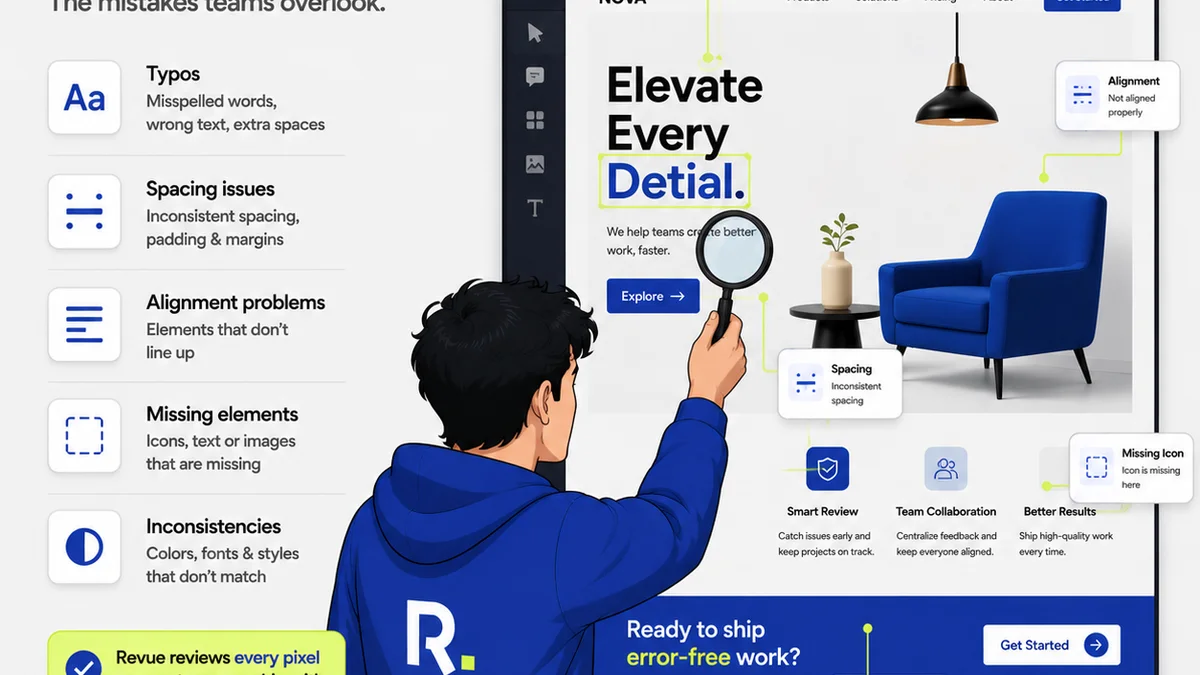
Everyone in a creative agency talks about quality. We say we deliver high-quality work. We hire people for their quality. We even fire people when their quality drops.
None of that is wrong. But it’s incomplete.
The hard truth? Quality isn’t a department. It’s not a final sign-off. It’s not even just about the output. Quality management is the operating system of your entire agency.
It's how you ensure consistency, reduce errors, and build a reputation that brings in better clients and better projects. Without a robust system, you're just hoping for the best. And hope is a terrible business strategy.
1. The Myth of the 'Quality Control Department'
Many agencies assume quality is something you check at the end. You have a QC person, a final review, a checklist before delivery. That's quality *assurance*, maybe. Or worse, quality *detection*.
This approach is reactive. It catches mistakes after they're made, after time and money have been spent. It’s like checking for leaks after the flood.
True quality management is proactive. It's built into every step.
It Starts with Clarity
What does 'quality' even mean for your agency? It's not just 'good design' or 'clever copy'. It's:
- Meeting client objectives precisely.
- Adhering to brand guidelines flawlessly.
- Delivering on time, every time.
- Communicating clearly and proactively.
- Ensuring the final output is technically sound and error-free.
If these aren't defined, how can you possibly manage quality?
It's Embedded in Process
Quality isn't an afterthought; it's a feature of your workflow. Every brief, every concept, every revision, every final file should have quality baked in.
- Are briefs comprehensive and clear from the start?
- Are creative concepts rigorously reviewed against the brief?
- Are revisions tracked and signed off properly?
- Are final files checked for technical specs and consistency?
This requires systems, not just talented individuals.
2. Building Quality into Your Workflow
Think of your agency's process as a manufacturing line for creative ideas. Every station needs to be optimized for quality.
Onboarding and Briefing
This is where many agencies stumble. A vague or incomplete brief is a guaranteed path to low quality and frustration.
The Fix: Standardize your intake process. Use detailed questionnaires. Have a mandatory briefing call for every new project. Document everything.
Creative Development
Brainstorming is important, but so is critical evaluation. Initial ideas need to be tested against the brief and client objectives.
The Fix: Implement internal review stages. Have a senior creative or CD review concepts before they go to the client. Use a structured feedback framework.
Client Feedback and Revisions
This is a minefield for quality. Unclear feedback, scope creep, endless revisions – they all erode quality and profitability.
The Fix: Standardize feedback channels. Use annotation tools. Define the number of revision rounds upfront. Track feedback and approvals meticulously.
Production and Delivery
The final output must be perfect. This means checking:
- File formats and specifications.
- Brand consistency across all assets.
- Grammar, spelling, and accuracy.
- Functionality (for digital assets).
The Fix: Create detailed checklists for each deliverable type. Have a dedicated person or system do a final pass.
3. The Human Element: Skills, Training, and Culture
Processes only work if people follow them. And people perform best when they are equipped and motivated.
Hiring for Quality Mindset
Look beyond just technical skills. Hire people who are detail-oriented, proactive, and care about the outcome.
Ask questions like: 'Describe a time you caught a critical error before it caused a problem.' Or, 'How do you ensure your work meets client expectations?'
Continuous Training
Skills evolve. Tools change. Client needs shift.
Invest in ongoing training for your team. This isn't just about software; it's about process, communication, and problem-solving.
Fostering a Quality Culture
Quality needs to be everyone's responsibility, from the intern to the CEO. This means:
- Celebrating successes that stem from rigorous quality management.
- Addressing failures openly, not to blame, but to learn and improve.
- Encouraging team members to flag potential quality issues without fear.
- Leading by example – demonstrating a commitment to excellence in your own work.
A culture where quality is paramount makes the systems stick.
4. Measuring and Improving Quality
You can't manage what you don't measure. But what metrics truly reflect quality?
Beyond Client Satisfaction Scores
High satisfaction scores can be misleading. A client might be happy because they got what they asked for, even if it wasn't what they *needed*.
Focus on metrics that indicate true quality and efficiency:
- Number of revisions per project.
- Client feedback turnaround time.
- Internal error rates (e.g., typos, incorrect specs).
- Project completion time vs. estimated time.
- Client retention rates.
- New client acquisition through referrals.
The Feedback Loop
Regularly review project outcomes. What went well? What could have been better? Where did quality slip?
Conduct post-project retrospectives. Involve the whole team.
Use this data to refine your processes, update training, and adjust your standards.
Where Revue Fits In
Managing quality across multiple clients and projects is a complex operational challenge. It requires visibility and control.
Revue centralizes client feedback, making it easy to track exactly what was requested and what was approved. This eliminates ambiguity and reduces the risk of misinterpretation.
Our platform provides clear revision history, ensuring you can always see the evolution of a project and pinpoint when changes were made and by whom.
This structured approach to feedback and approvals is foundational to maintaining creative quality. It ensures that every iteration moves the project closer to its goal, not further away.
By bringing clarity and accountability to the feedback loop, Revue helps you embed quality management directly into your client collaboration process.
Final Thought
Is quality management a cost center, a necessary evil, or the most powerful lever for agency growth and client loyalty?
Consider how much time and money is lost to rework, client dissatisfaction, and missed opportunities. Then ask yourself: what's the real cost of *not* managing quality effectively?
Frequently asked questions
What's the difference between quality assurance and quality control?
Quality assurance (QA) is about building quality into the process from the start, aiming to prevent defects. Quality control (QC) is about inspecting the output to identify and correct defects that have already occurred. True quality management integrates both.
How can I get my team to prioritize quality?
Foster a quality-first culture by leading by example, providing clear standards, offering continuous training, and celebrating quality-driven successes. Make it everyone's responsibility, not just a specific department's.
What are the key metrics for measuring quality in a creative agency?
Beyond client satisfaction, track metrics like revision rounds per project, feedback turnaround time, internal error rates, project completion efficiency, and client retention. These provide a clearer picture of operational quality.
How does technology help with quality management?
Technology, like centralized feedback platforms, provides clear documentation, version control, and accountability. This minimizes miscommunication, reduces rework, and ensures consistency, all critical components of quality management.