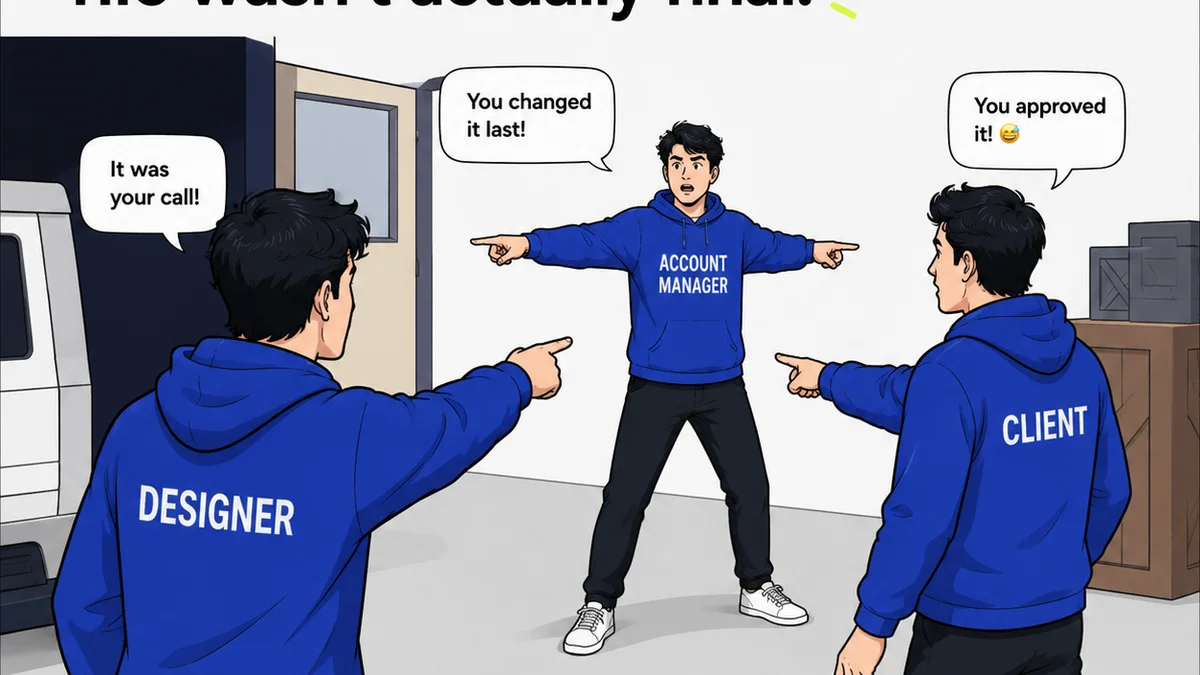
Everyone talks about KPIs. You’ve probably seen endless lists: client satisfaction scores, project completion rates, budget adherence. They sound good. They look good on a dashboard.
But most of these are lagging indicators. They tell you what *happened*, not why it happened, and certainly not what to do next.
The hard truth? The KPIs that truly matter for creative quality aren't about the *outcome* alone. They're about the *process* that leads to that outcome.
1. Revision Cycle Efficiency
This isn't just about how many rounds of revisions you do. It's about how *long* each round takes and how *effective* the feedback is.
The Assumption: Fewer Revisions Mean Better Quality.
This is a trap. Sometimes, fewer revisions mean the client wasn't clear enough, or the team didn't probe deep enough. Sometimes, it means you rushed the first pass.
The Reality: Efficient Revisions Drive Quality.
What you want is a process where feedback is specific, actionable, and resolved quickly. This means:
- Clear briefs upfront.
- Centralized feedback, not scattered emails.
- Defined points of approval.
- Timely, consolidated client responses.
- Internal review before client delivery.
A KPI here could be the average time from feedback delivery to final approval for a specific deliverable type. Another could be the percentage of feedback instances that are resolved within 24 hours.
2. Feedback Specificity Score
This one sounds abstract, but it's critical. Vague feedback kills creativity and wastes time. Think about feedback like:
- “Make it pop more.”
- “I don’t love the colors.”
- “Can we try something different?”
Does this sound familiar?
The opposite is feedback that says:
- “Consider a brighter shade of blue for the hero button, specifically hex #007bff, to increase click-through visibility.”
- “The current color palette leans too heavily on warm tones, which clashes with the client’s established cool-toned branding. Let’s explore blues and greens in the #a0c4ff range.”
- “We’ve explored option A and B. Let’s pivot to a completely different layout structure, focusing on a vertical content flow, to better suit mobile-first users.”
You can't directly *measure*
Frequently asked questions
What are the most important KPIs for creative quality?
The most important KPIs focus on the efficiency and clarity of your feedback and revision process, rather than just final outcomes. Look at revision cycle time, feedback specificity, and error rates before client delivery.
How can I measure feedback specificity?
While subjective, you can track the number of clarification requests needed per feedback round. A more advanced approach involves categorizing feedback into 'actionable' vs. 'vague' and tracking the ratio. Tools that centralize feedback can help identify patterns.
Are client satisfaction scores a good KPI for quality?
Client satisfaction scores are a lagging indicator. They tell you how the client felt *after* the project, but don't offer insight into *why*. While useful, they should be supplemented with process-oriented KPIs to identify and fix issues proactively.
How does Revue help with quality management KPIs?
Revue centralizes feedback, making it easier to track who provided what, when, and whether it was acted upon. This visibility helps in analyzing revision cycle times, identifying bottlenecks, and improving the overall clarity and efficiency of the feedback loop.