Everyone thinks scaling creative means throwing more money at the problem. More staff, bigger retainers, fancier software. That’s the obvious path.
None of that is wrong. But it’s incomplete.
The hard truth about scaling creative is that cost reduction isn’t about spending more. It’s about spending smarter. It’s about optimizing the engine, not just adding fuel.
1. The Myth of the 'Flat Rate'
Agencies love flat rates. Clients love them too. They promise predictability. But for creative work, flat rates are a breeding ground for hidden costs.
Scope Creep's Hidden Cousin: The 'Implicit Scope'
A flat rate often assumes a certain level of efficiency and understanding. When that implicit scope isn't met, you don't just get scope creep. You get a slow bleed.
Think about it:
- Unclear initial briefs that require constant clarification.
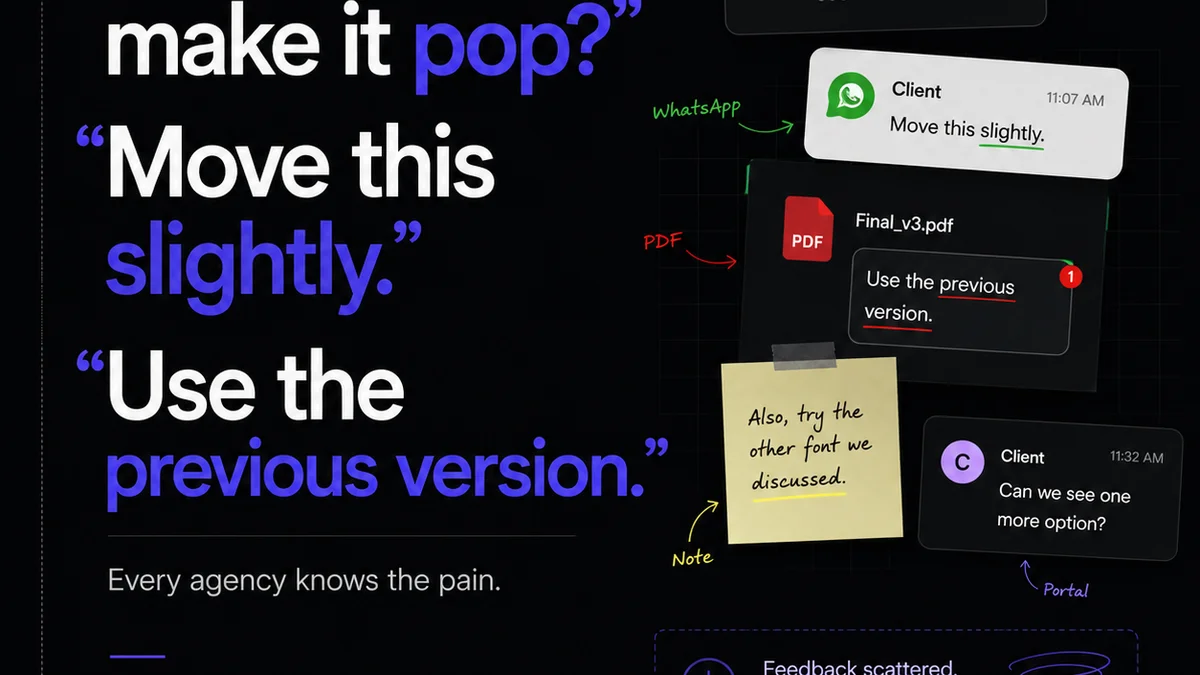
- Client feedback that’s vague or contradictory, necessitating multiple rounds of revision.
- Internal miscommunication leading to duplicated effort.
- Underestimating the complexity of a task and then trying to absorb the extra hours.
Each of these eats into your margin, especially on fixed-price projects. The
Frequently asked questions
How can agencies scale creative output without increasing costs proportionally?
By focusing on workflow optimization, clear communication, and efficient feedback loops rather than simply adding more resources. This involves standardizing processes, leveraging technology for collaboration, and defining project scopes rigorously.
What are the biggest hidden costs when scaling creative work?
Hidden costs often stem from scope creep, unclear briefs, inefficient revision cycles, internal miscommunication, and underestimating task complexity. These issues erode profit margins on fixed-price projects.
How does client feedback impact scaling costs?
Vague, contradictory, or excessive client feedback can significantly increase revision rounds, extend project timelines, and lead to duplicated effort, all of which drive up costs. Centralizing and clarifying feedback is crucial.
Can technology help reduce costs when scaling creative?
Yes, project management and client feedback tools can streamline communication, track revisions, ensure clarity, and automate parts of the workflow, reducing manual effort and preventing costly errors or delays.