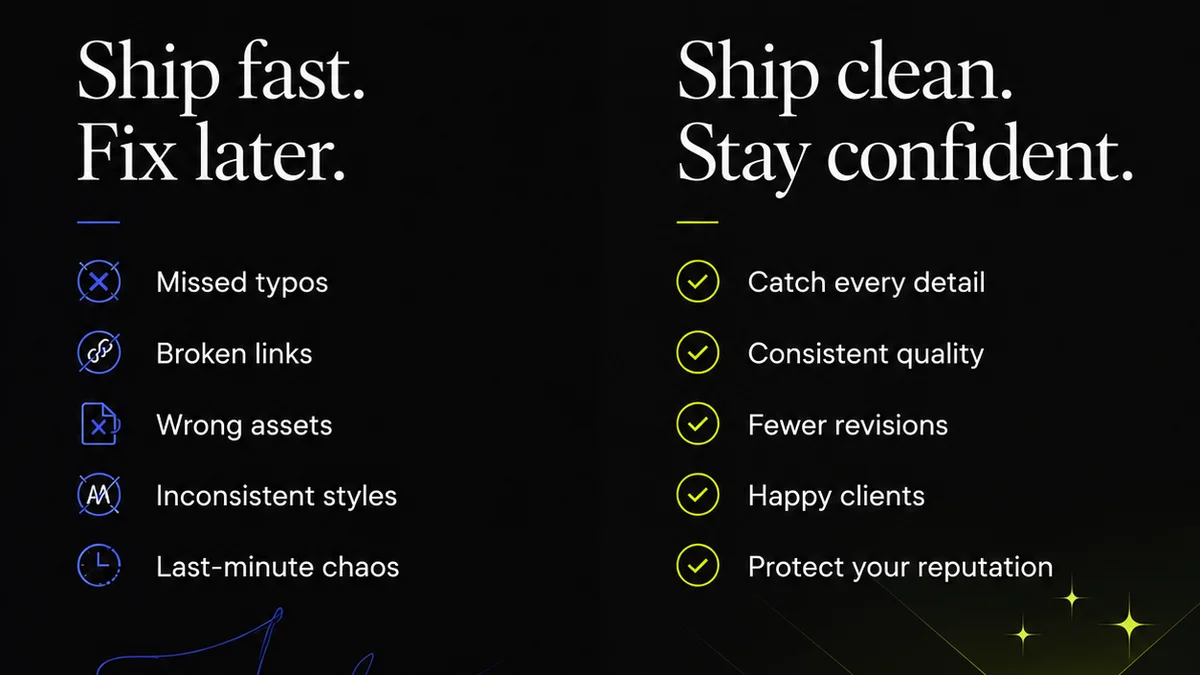
Everyone talks about design collaboration as if it’s about making pretty pictures faster. Or, maybe, about keeping the client from going rogue with their feedback.
None of that is wrong. But it’s incomplete.
The hard truth? Poor design collaboration isn’t just annoying. It’s a direct drain on your agency’s profitability. It’s a silent killer of margins, pushing projects past deadline and burning through billable hours like cheap gas.
This isn’t about better software. It’s about better process. It’s about understanding where the money leaks happen.
1. The Myth of the 'Quick Chat'
You’ve heard it a million times: “Just hop on a quick call.” “Send me a Slack message.” “A few notes in a Google Doc.”
These feel efficient. They feel agile. They feel like the path of least resistance.
But they’re often the exact opposite.
The Feedback Black Hole
When feedback is scattered across email chains, Slack threads, Zoom recordings, and scribbled notes, it’s impossible to track. What was the final decision? Who made it? What was the rationale?
- Decisions get lost.
- Context disappears.
Frequently asked questions
How does poor design collaboration increase agency costs?
Poor collaboration leads to scattered feedback, missed decisions, endless revisions, scope creep, and wasted billable hours, all of which directly inflate project costs and reduce profitability.
What's the biggest misconception about design collaboration?
The biggest misconception is that it's merely about speeding up the creative process or improving aesthetics. In reality, it's a critical operational function that directly impacts an agency's financial health.
Can better tools alone solve collaboration problems?
Tools are important, but they are only as good as the processes they support. A centralized platform is most effective when combined with clear communication protocols and defined workflows.
How can agencies ensure client feedback is actionable?
Establish clear channels for feedback, set expectations for the format and detail of feedback, and use a system that allows for direct annotation and contextual comments, minimizing ambiguity.