Everyone talks about cutting costs by optimizing ad spend or trimming headcounts. That’s fine. That’s the obvious stuff.
But it’s incomplete. It misses a huge, gaping hole in agency profitability: the cost of bad design handoff.
You think design handoff is just a final step, a quick file transfer. A formality before development starts. None of that is wrong. But it’s incomplete.
The Hard Truth About Design Handoff Costs
The real cost of design handoff isn’t in the time it takes to export a JPG. It’s in the endless, unproductive cycles of revision. It’s in the developer’s confusion. It’s in the client’s frustration that bleeds into future projects.
It’s the silent killer of project margins. And it’s almost entirely preventable.
A sloppy handoff isn’t just an inconvenience. It’s a direct hit to your bottom line. It’s wasted hours, missed deadlines, and damaged client relationships. All because the bridge between design and development was built on shaky ground.
1. The Myth of 'It's Just Files'
The assumption is that design is done when the final comps are approved. Then it’s just a matter of packaging it up. Easy.
This ignores the crucial context that designers and developers need.
Context is King (and Costly When Missing)
- What was the client’s original brief?
- What were the key user flows being designed for?
- Which elements are critical and which are secondary?
- What are the specific interaction states for this button?
- Are there edge cases we missed?
Without this context, developers are left guessing. They’re making decisions based on assumptions. Assumptions that are often wrong.
This leads to rework. And rework costs money. Every guess, every assumption, every missed detail is a potential billable hour you’re giving away.
2. The Revision Rollercoaster
A poor handoff guarantees more revision rounds than necessary. Designers deliver files, developers build them, clients review, and then… the feedback loop begins.
“Can we just move this a little?”
“This doesn’t look like the Figma file.”
“I thought this was supposed to animate.”
These aren’t just minor tweaks. They’re symptoms of a broken process.
The True Cost of Revisions
- Designer time: Re-explaining, re-exporting, re-validating.
- Developer time: Re-coding, re-testing, re-deploying.
- Project manager time: Chasing feedback, managing expectations, re-scoping.
- Client time: Re-reviewing, re-approving, re-explaining their own needs.
Each round adds overhead. It delays launch. It strains relationships.
And it all stems from a handoff that didn’t provide clarity.
3. Communication Breakdown: The Silent Profit Drain
Design and development teams often operate in silos. Handoff is supposed to be the bridge, but if that bridge is poorly constructed, communication grinds to a halt.
Developers might not understand the design intent. Designers might not understand the technical constraints. This friction is expensive.
Symptoms of Communication Breakdown
- Developers asking the same questions repeatedly.
- Designs being implemented incorrectly, leading to client complaints.
- Misunderstandings about asset specifications (colors, fonts, spacing, responsive behavior).
- A general sense of blame and finger-pointing between teams.
This isn’t about individual skill. It’s about systemic process failure. And it’s costing you more than you realize.
4. The Client Experience Penalty
Your client doesn’t care about your internal process. They care about results and their experience.
When a project drags on due to endless revisions, or when the final product doesn’t match their vision (because of miscommunication), they notice.
This erodes trust. It makes them hesitant to sign off. It makes them less likely to refer you. It can even lead to them scrutinizing your invoices more closely.
A smooth, clear handoff process contributes to a perception of professionalism and efficiency. A messy one does the opposite.
5. Quantifying the Unseen Costs
Let’s get specific. Imagine a project where the handoff was unclear.
- A developer spends 2 extra hours deciphering a complex component.
- A designer spends 1 hour re-exporting assets and explaining interactions.
- A project manager spends 3 hours mediating confusion and chasing approvals.
- The client, confused by the delays, requests a scope reduction discussion that takes another 2 hours from the PM and lead designer.
That’s 8 hours of billable time that just evaporated. At an average agency rate, that’s potentially $1,000-$2,000 lost on a single, poorly managed handoff.
Now multiply that by every project. The numbers become staggering.
Where Revue Fits In
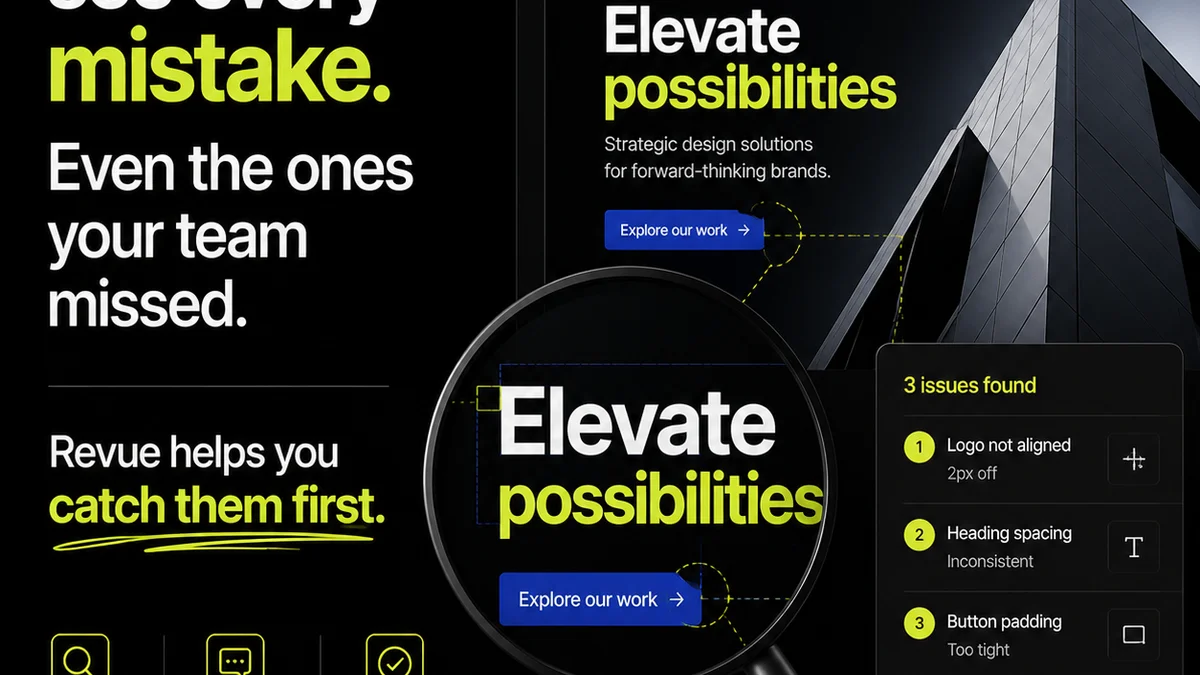
This is precisely why tools like Revue exist. They’re not just about pretty interfaces; they’re about operational efficiency. They tackle the core of the handoff problem.
Revue centralizes client feedback, ensuring that all communication and approvals are in one place. No more hunting through emails or Slack threads.
It provides clear visibility into revisions. Everyone sees what’s been changed, why it was changed, and who approved it. This minimizes confusion and prevents the same edits from being requested multiple times.
When it comes to quality checks, Revue acts as a single source of truth. Developers can easily refer to the approved designs and specifications, reducing guesswork and the likelihood of implementation errors.
By streamlining this critical phase, Revue helps you reduce those costly, unseen hours spent on clarification, rework, and miscommunication. It turns a profit drain into a profit center.
6. Building a Better Handoff Process
So, how do you actually improve? It starts with a mindset shift.
Handoff is not the end. It’s a critical phase.
Treat it with the seriousness it deserves.
Actionable Steps for Smoother Handoffs
- Standardize your templates: Create checklists and templates for what needs to be included in every handoff.
- Establish clear communication channels: Define where design discussions happen and where technical questions are directed.
- Invest in collaboration tools: Use software that bridges the gap between design and development, like Revue.
- Educate your teams: Ensure designers understand developer needs and vice versa. Cross-training can be invaluable.
- Build in review points: Schedule specific checkpoints for design-to-dev reviews *before* major development begins.
- Document everything: Use your chosen platform to log decisions, feedback, and approvals.
These aren’t revolutionary ideas. They’re fundamental operational practices.
But they are rarely implemented consistently. That’s where the cost creeps in.
7. The ROI of Clarity
Investing in a better design handoff process isn't just about avoiding costs. It’s about generating returns.
Faster project completion times. Higher quality deliverables. Happier clients. More profitable projects.
Think of it as preventative maintenance for your projects. A small investment upfront saves massive headaches and expenses down the line.
It’s the difference between a project that barely breaks even and one that becomes a case study in efficiency and profitability.
Final Thought
Are you treating design handoff as a technicality, or as the crucial bridge it is? The answer might be costing you more than you think.
Frequently asked questions
What are the biggest hidden costs of poor design handoff?
The biggest hidden costs are the wasted hours spent on unnecessary revisions, developer confusion, client frustration, and the resulting delays. These indirect costs often outweigh the initial design time.
How can a design tool like Revue help reduce handoff costs?
Revue centralizes feedback, provides clear revision history, and acts as a single source of truth. This minimizes miscommunication, reduces guesswork for developers, and streamlines the approval process, all of which cut down on costly rework.
Is design handoff really that important for profitability?
Absolutely. A smooth handoff prevents scope creep, reduces the need for multiple revision cycles, and ensures developers build exactly what was intended. This directly protects your project margins and improves client satisfaction, leading to repeat business.
What are the key elements of a good design handoff checklist?
A good checklist includes clear specifications for assets, interactions, responsive behavior, typography, color palettes, and any specific client requirements or constraints discussed. It also ensures all necessary files and context are readily accessible.