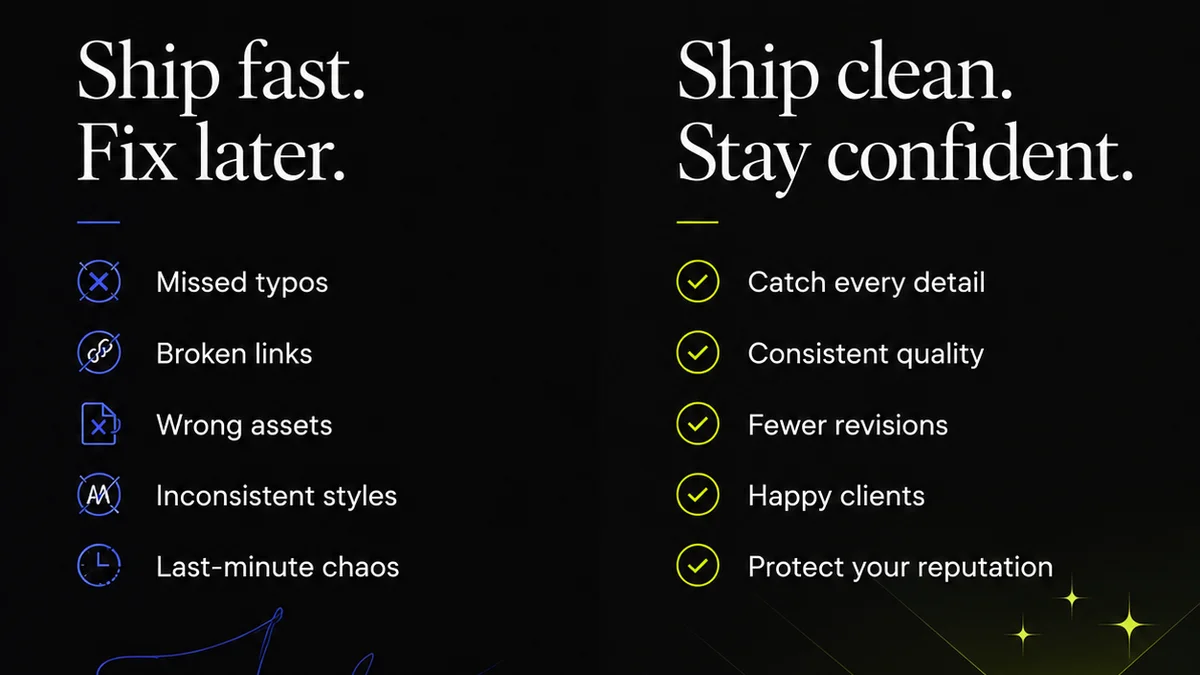
Everyone knows that client feedback can be a drain. You’ve probably heard that streamlining your review process saves time and reduces frustration. And that’s all true.
But it’s incomplete.
The hard truth is, inefficient creative reviews aren’t just annoying; they’re a direct hit to your bottom line. We’re talking about wasted hours, missed deadlines, and projects that spiral into unprofitable black holes. The real cost isn't just the extra work; it's the opportunity cost of what you *could* have been doing.
Let’s dig into the operational realities of review automation and how it can actually cut costs, not just speed things up.
1. The Hidden Bill for 'Minor' Revisions
You think those quick, last-minute tweaks are cheap. A few hours here, a few hours there. But add them up across a project, then across all your projects, and the hours become days. Days become weeks. Weeks become a significant chunk of your team’s billable capacity.
This isn’t just about the designer’s time. It’s the project manager chasing down feedback, the account manager relaying messages, the QA team re-testing. Every touchpoint adds overhead.
The Symptoms of Costly Revisions
- Feedback loops stretching beyond 48 hours.
- Clients asking for revisions that were already discussed and signed off.
- Multiple rounds of the *same* feedback on different assets.
Frequently asked questions
What is review automation in a creative agency context?
Review automation refers to using software or defined processes to streamline the collection, organization, and approval of client feedback on creative assets, reducing manual effort and potential errors.
How does automating reviews save money?
It saves money by reducing the hours spent on manual tasks like chasing feedback, consolidating comments, and tracking revisions. This frees up your team's billable time and minimizes costly errors or rework from miscommunication.
Can automation handle complex feedback, or is it only for simple approvals?
Modern review automation tools can handle complex feedback, including visual annotations, version control, and detailed revision tracking, making them suitable for a wide range of creative projects.
What are the biggest cost drains in traditional creative reviews?
The biggest cost drains include wasted team hours on administrative tasks, scope creep disguised as 'minor' revisions, delays in project timelines leading to increased overhead, and the cost of fixing errors caused by miscommunication or lost feedback.