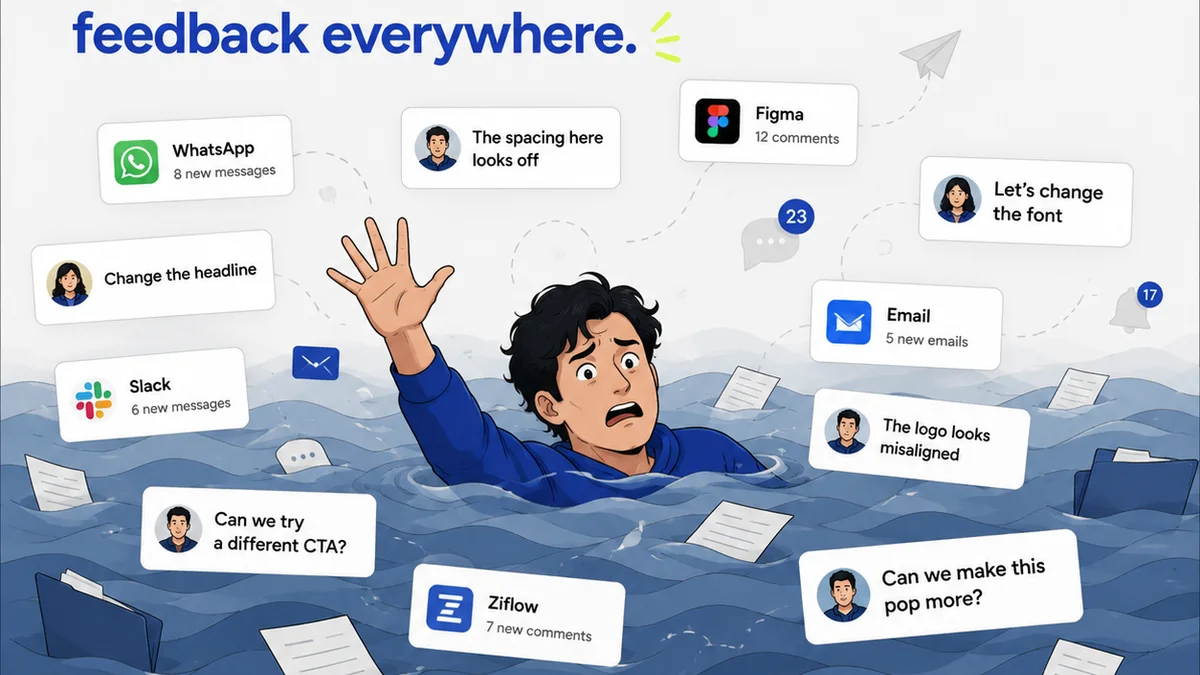
Everyone wants to produce more creative work, faster. It’s the eternal siren song of the agency world: hit deadlines, delight clients, and boost profitability by simply working quicker. You might think the answer lies in hiring more people, investing in fancy new software, or just… working harder.
None of that is wrong. But it’s incomplete.
The hard truth is that reducing creative production time isn't about speed. It's about eliminating the friction that slows you down in the first place. It’s about optimizing your workflow from the inside out. If you’re not seeing significant gains, you’re likely missing the real bottlenecks.
1. The Illusion of 'Creative Flow' vs. Real Bottlenecks
We often blame slow production on a lack of 'creative flow'. That elusive state where ideas pour out and work gets done effortlessly. While flow is great, relying on it is a recipe for unpredictable output. It’s an outcome, not a strategy.
The real culprits are rarely the creative sparks themselves. They are the operational drag:
- Endless, unstructured feedback loops.
- Unclear project briefs and scope creep.
- Wasted time searching for assets or previous versions.
- Manual, repetitive quality assurance checks.
- Client revisions that go back to the drawing board.
- Internal miscommunication and siloed teams.
These aren't minor annoyances; they are direct drains on billable hours and team morale. They kill momentum faster than any creative block.
Challenging the 'Art vs. Science' Myth
There’s a pervasive idea that creative work is purely art, immune to process and efficiency. That imposing structure will stifle innovation. This is a dangerous misconception.
Great creative work *requires* a solid foundation. Think of a sculptor: they don't just randomly chip away. They understand their materials, their tools, and the form they're aiming for. The process enables the art.
Your agency is no different. By systematizing the non-creative parts of the process, you free up your creatives to actually *be* creative.
2. Deconstruct Your Production Pipeline
You can’t fix what you don’t understand. The first step to reducing production time is a brutally honest audit of your current workflow. Map out every single step involved in a typical project, from kickoff to final delivery.
Be specific. Don't just write 'client review.' Break it down:
- Initial brief review.
- Internal stakeholder review.
- First client feedback round (email? video call? shared doc?).
- Internal revision based on feedback.
- Second client feedback round.
- Final approval.
Time each stage. Where are the longest waits? Where do requests get lost or misinterpreted?
Identify the 'Time Sinks'
Look for these common time sinks:
- The 'Waiting Game': How long does work sit idle waiting for feedback, approval, or the next person in line?
- The 'Re-Work Cycle': How often does feedback send a project back to an earlier stage due to miscommunication or unclear requirements?
- The 'Information Scavenger Hunt': How much time do team members spend looking for project assets, past feedback, or client contact information?
- The 'Manual Tally': How much time is spent manually checking for brand compliance, technical specs, or other QA points?
Quantify these where possible. Even rough estimates are better than guesswork. If a single project involves 10 hours of searching for files and clarifying feedback, that’s a massive drain.
3. Streamline Feedback and Approvals
This is where most agencies bleed time. Unstructured feedback is the enemy of efficient production.
What does unstructured feedback look like?
- Vague comments like “I don’t like it.”
- Feedback buried in long email chains.
- Conflicting opinions from multiple stakeholders without clear hierarchy.
- Verbal feedback that isn't documented.
- Feedback on the wrong version of the asset.
This leads to endless revision cycles, frustration, and missed deadlines.
Implement a Centralized Feedback System
The solution? A single source of truth for all feedback and approvals.
This means:
- Clear Briefs Upfront: Define success metrics and scope explicitly.
- Designated Reviewers: Identify who provides feedback and when.
- Structured Feedback Channels: Use tools that allow comments directly on the asset, with clear version control.
- Consolidated Feedback: Ensure all feedback from a single round is gathered and presented together.
- Clear Approval Workflow: Define the steps and sign-offs needed for final approval.
When feedback is clear, contextual, and actionable, revisions become targeted and efficient. You move forward, not in circles.
4. Optimize Asset Management and Version Control
How much time does your team spend looking for the latest version of a logo, a specific image file, or an approved copy deck?
If it’s more than a few minutes, you have a problem.
Poor asset management and version control leads to:
- Using outdated assets, requiring costly rework.
- Duplicated effort because no one knows what already exists.
- Wasted time searching through shared drives or email attachments.
- Confusion about which version is the 'final' one.
The Power of a Single Source of Truth
Invest in a system where all project assets are stored, organized, and easily searchable. This system should also manage versions meticulously.
Key features to look for:
- Centralized repository for all file types.
- Automatic version history tracking.
- Clear naming conventions.
- Search functionality based on metadata or tags.
- Permissions and access controls.
When your team can find what they need instantly and be certain it’s the correct, latest version, hours are reclaimed. This isn't just about convenience; it's about preventing errors that snowball into significant delays.
5. Automate Quality Assurance (QA)
Manual QA is necessary, but it’s often a time-consuming bottleneck, especially for repetitive checks.
Think about:
- Brand guideline compliance.
- File naming conventions.
- Resolution and format checks.
- Proofreading for common errors.
- Technical specifications for digital assets.
These checks are critical but can be tedious and prone to human error when done manually, especially under deadline pressure.
Leverage Technology for Checks
Where possible, automate these checks. Many tools can flag inconsistencies or errors automatically.
For aspects that still require a human eye, create standardized checklists. This ensures consistency and thoroughness, even when QA is rushed.
The goal is to catch errors early and consistently, preventing them from reaching the client and requiring rework. Automating the routine allows your QA specialists to focus on the more nuanced aspects of quality.
6. Where Revue Fits In
Reducing production time by 30% isn't about magic bullets. It's about systematically removing friction points. It's about having clarity at every stage.
Revue is built to tackle these exact challenges head-on.
Centralized Feedback: No more hunting through email chains. All client and stakeholder feedback lives in one place, directly linked to the creative asset. This provides context and eliminates misinterpretation, drastically cutting down revision cycles.
Revision and Approval Visibility: Track the entire history of feedback and revisions. See who approved what and when. This transparency prevents scope creep and ensures everyone is aligned, moving projects forward efficiently.
Quality Control: While Revue doesn't replace specialized QA tools, its structured workflow helps ensure that assets move through defined stages, making it easier to identify where quality checks need to happen and ensuring nothing falls through the cracks.
By bringing clarity and control to the feedback and approval process, Revue helps agencies reclaim hours lost to miscommunication and endless back-and-forth. It transforms a chaotic, time-consuming phase into a streamlined, predictable part of production.
7. Final Thought
Reducing production time by 30% isn't a lofty, unattainable goal. It's the direct result of treating creative production as a process that can be optimized, not just a talent that needs to be unleashed.
Are you optimizing your workflow, or just hoping for the best?
Frequently asked questions
What are the biggest time sinks in creative production?
The biggest time sinks are typically unstructured feedback loops, unclear briefs leading to scope creep, time wasted searching for assets or previous versions, manual and repetitive quality assurance checks, and internal miscommunication.
How can I get clearer client feedback?
Implement a centralized feedback system where comments are tied directly to the asset. Define clear review processes, designate specific reviewers, and consolidate all feedback from a single round to avoid conflicting or vague comments.
Does streamlining workflow stifle creativity?
No, quite the opposite. By systematizing the non-creative aspects like feedback, approvals, and asset management, you free up creatives to focus their energy on the actual creative work, leading to better output and less frustration.
How important is version control in reducing production time?
Version control is critical. Without it, teams waste hours searching for the correct files, using outdated assets, and duplicating efforts. A clear version history prevents errors and ensures everyone is working from the latest, approved version.
Can software alone reduce production time?
Software is a tool, not a solution. While tools like Revue can significantly streamline processes, the real gains come from understanding your workflow, identifying bottlenecks, and implementing disciplined processes that the software supports. It's about process first, then tools.