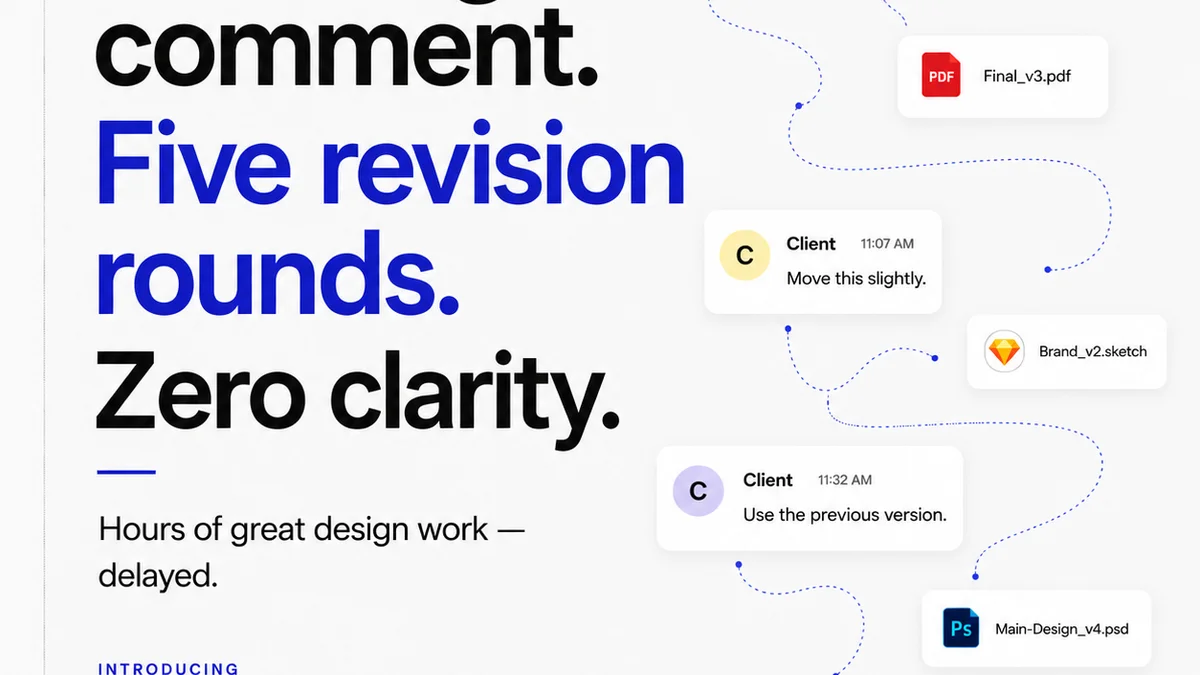
Everyone thinks creative project delays are all about scope creep. Clients wanting “just one more thing.”
None of that is wrong. But it’s incomplete.
The hard truth? Delivery delays are often baked into your own internal processes. Or, more accurately, the lack of them.
1. The Myth of the Fluid Creative Process
We like to think of creativity as this organic, unpredictable force. That it can’t be boxed in by schedules and workflows.
This romantic notion is killing your timelines.
Agencies and in-house teams that consistently hit deadlines don’t do it by magic. They do it by building a framework around that creative spark. A framework that anticipates bottlenecks and builds in checks and balances *before* they become crises.
The Unspoken Cost of "Flexibility"
Sure, being able to pivot is essential. But when your entire process is “wait and see,” you’re not being flexible; you’re being reactive.
- Every time a designer has to stop and ask clarifying questions that should have been answered upfront, time is lost.
- Every time a stakeholder needs to hunt down the latest version of a file, time is lost.
- Every time a QA pass uncovers an issue that should have been caught earlier, time is lost.
This isn’t flexibility. This is inefficiency disguised as agility.
2. Feedback Chaos: The Silent Killer of Timelines
Client feedback is a major culprit, yes. But the *way* you manage feedback is the real problem.
Email chains longer than a novel. Slack messages buried under a mountain of memes. Annotations scattered across PDFs and JPEGs.
This isn't collaboration; it's a recipe for disaster.
The Multi-Channel Nightmare
When feedback lives in a dozen different places, it creates confusion:
- Which version are we working on?
- Did Sarah approve this, or was that just a preliminary thought?
- What did Mark mean by "make it pop"?
Each question requires a dig, a clarification, a re-work. It’s death by a thousand tiny cuts.
The "We'll Get To It" Trap
Without a clear system for consolidating and prioritizing feedback, it often gets pushed aside. Especially if it’s not from the primary contact.
This leads to rework later, when assumptions have hardened and the original intent is forgotten.
3. Revision Rounds: From Progress to Paralysis
Everyone expects revisions. It’s part of the creative process.
But when revision rounds become endless loops, something is fundamentally broken.
The issue isn’t the number of rounds; it’s the lack of clarity and control within each round.
The Blurry Line Between Revision and Redesign
Are you making a small tweak, or are you fundamentally rethinking the entire concept based on one person’s sudden inspiration?
Without clear definitions and a documented brief, it’s easy for a minor revision request to balloon into a full-blown redesign, derailing the schedule.
Lack of Version Control
How many times has your team worked on a version that was already superseded by a newer, uncommunicated change?
This isn't just frustrating; it's a massive waste of billable hours and a direct cause of missed deadlines.
4. The Bottleneck of Approvals
Approvals. The gatekeepers of progress.
When approvals are slow, opaque, or require chasing down individuals, your entire project grinds to a halt.
This isn't just about the client; it’s often about internal delays too.
Internal Handoffs Gone Wrong
Does your design team have to wait for the account manager to get client sign-off? Does the copywriter need approval from legal before the designer can proceed?
Each handoff is a potential point of failure. If there’s no clear process or accountability, these steps become black holes.
The "Waiting on Someone" Syndrome
This is the most common complaint. "We're waiting on X to approve."
It’s a symptom of a system where responsibility isn’t clear, or where there are no defined turnaround times for stakeholders.
5. Quality Checks: The Afterthought That Costs Time
You’ve delivered. Hooray!
Except… there’s a typo. A link is broken. The image resolution is too low.
These aren’t minor oversights; they’re signs of a rushed or nonexistent quality control process.
The Illusion of Speed
Rushing to meet a deadline often means skipping the final checks. This seems like a shortcut, but it almost always backfires.
Clients notice these errors. They erode trust and often lead to requests for fixes that feel like they should have been covered in the original scope.
Who Owns the Final Polish?
If there’s no designated person or process for a final review before delivery, mistakes are inevitable.
This isn’t about blame; it’s about ensuring a professional, polished output every single time.
Where Revue Fits In
You can’t just wish these problems away. You need a system designed to prevent them.
Revue isn’t about stifling creativity; it’s about creating the structure that allows creativity to flourish without derailing your delivery schedule.
How?
- Centralized Feedback: All client comments, markups, and approvals live in one place, tied directly to the asset. No more hunting through emails or Slack. Get clear, actionable feedback every time.
- Revision Visibility: Track every change, every version, and every approval status. Understand what’s been done, who did it, and what’s next. Eliminate confusion and wasted effort.
- Streamlined Approvals: Set up clear approval workflows. Notify stakeholders automatically. Get faster sign-offs and reduce internal bottlenecks.
- Quality Assurance: Build in structured review stages. Ensure every asset is checked for brand consistency, technical specs, and creative integrity before it ever gets to the client.
This isn’t about more process for process’s sake. It’s about building a predictable, reliable engine for creative delivery.
Final Thought
Are delivery delays a sign of a difficult client, or a signal that your internal workflow needs an upgrade?
The answer might be more uncomfortable, but it’s also more actionable.
Focus on what you can control: your process. That’s where real efficiency is found.
Frequently asked questions
What's the difference between scope creep and process issues causing delays?
Scope creep is when clients request work outside the original agreement. Process issues are internal inefficiencies in how you manage feedback, revisions, approvals, and quality checks, which lead to delays even within the agreed scope.
How can centralized feedback prevent delays?
Centralized feedback consolidates all comments and markups in one place, directly linked to the asset. This eliminates confusion, reduces the need for clarification, and ensures everyone is working from the same, up-to-date information, preventing rework and speeding up decision-making.
What are the common internal bottlenecks in creative projects?
Common internal bottlenecks include unclear communication channels, lack of version control, slow internal review and approval processes, and inadequate quality assurance steps before delivery. These all require people to wait or re-do work.
How do I implement better quality checks without slowing things down?
Integrate structured QA steps into your workflow, rather than making them an afterthought. Use checklists and define clear responsibilities for final reviews. Tools that automate parts of this process, like identifying broken links or incorrect image resolutions, can also significantly speed up checks.