Everyone assumes creative projects go off the rails because designers are flaky, distracted, or just plain bad at details. It’s a convenient narrative.
It lets agency owners and creative directors off the hook. It means the problem is with *them*, not *us*.
None of that is wrong. But it’s incomplete.
The hard truth? Most human error in creative projects isn’t about individual incompetence. It’s about systemic breakdown. It’s about a process that invites mistakes.
Your workflow is the real culprit.
1. The Myth of the "Perfect" Designer
We like to think that if we just hire the *right* person, the problems will disappear. The designer with the flawless portfolio, the one who never misses a deadline or a detail.
That’s a fantasy.
Even the most meticulous designer is still human. They’re juggling multiple projects, client demands, internal reviews, personal life.
Expectations of perfection are unrealistic. They breed burnout and resentment.
Instead of searching for a mythical unicorn, focus on building a process that supports *any* competent designer.
The Real Problem: Unstructured Feedback
Client feedback is a prime source of errors. Think about how it typically lands:
- A vague email with a single line of feedback: "Make it pop."
- A Slack message buried under dozens of others.
- A last-minute phone call.
- Notes scribbled on a PDF that gets lost.
This chaos is a breeding ground for misinterpretation. The designer has to guess what the client *really* means.
Guessing leads to wasted revisions. Wasted revisions lead to missed deadlines and frustrated clients.
The Fix: Structured, Centralized Feedback
The solution isn’t more designer training. It’s better client communication infrastructure.
Your feedback process needs to be:
- Clear: Feedback should be specific and actionable.
- Centralized: All comments live in one place, tied to the specific asset.
- Contextual: Comments should reference the exact element being discussed.
- Trackable: You need to know who said what, when, and what action was taken.
When feedback is structured, designers spend less time deciphering and more time executing. Fewer misunderstandings mean fewer errors.
2. The Illusion of "Good Enough" Revisions
Another common pitfall is the revision cycle itself. We treat revisions as a simple back-and-forth, a minor tweak here and there.
This is dangerous.
Each revision is an opportunity for something to be missed. A change in one area can break something else entirely.
The more rounds of revisions, the higher the chance of error.
The Hidden Costs of Endless Revisions
Think about what happens:
- A client asks for a small change.
- The designer makes the change, maybe forgetting a related element.
- The project manager approves it without a thorough check.
- The client spots a new issue, or the original one wasn't fully resolved.
- Repeat.
This isn’t just inefficient; it’s a recipe for quality slippage. Details get lost in the shuffle.
The Fix: A Defined Approval Process
You need a clear gatekeeping system for revisions. This means:
- Defined Scope: What is included in each revision round?
- Clear Ownership: Who is responsible for checking the work before it goes back to the client?
- Version Control: Always know which version is the latest and most approved.
- Final Sign-off: A formal, documented approval step before final delivery.
This structured approach ensures that every change is accounted for and verified. It transforms revisions from a chaotic free-for-all into a controlled, quality-assured process.
3. The Blind Spot of Internal Handoffs
Mistakes don’t just happen at the client interface. They happen internally, too.
Think about the handoff from creative to production, or from design to copy. Are these transitions smooth and error-free?
Often, they’re not.
Assumptions are made. Details are overlooked. Files get misnamed or misorganized.
The Consequences of Poor Handoffs
Consider these scenarios:
- A designer hands off a file, assuming the production artist knows all the specific color profiles or bleed settings.
- Copy is updated in one place but not in the final design file.
- Assets are delivered in the wrong format.
These aren’t malicious acts. They’re the result of fragmented communication and lack of clear checklists.
The Fix: Standardized Checklists and Templates
Implement rigorous internal checks:
- File Naming Conventions: Consistent and logical naming saves confusion.
- Asset Libraries: Keep all final assets organized and easily accessible.
- Handoff Checklists: Ensure all necessary information and specifications are included.
- Cross-Team Training: Make sure everyone understands the requirements of the next stage.
A well-defined handoff process minimizes ambiguity and ensures that critical details aren’t dropped when a project moves between teams or individuals.
4. The Risk of Reactive Quality Control
Many agencies only check for errors *after* the client finds them. This is a fundamentally reactive approach.
It’s like waiting for the fire alarm to go off before checking if the smoke detectors are working.
By the time a client points out a mistake, damage has likely already been done. Trust erodes. Reputations suffer.
Why Reactive QC Fails
The problems with this model are obvious:
- Increased client frustration.
- More extensive (and expensive) rework.
- Damage to client relationships.
- Internal blame games.
It’s a costly way to operate.
The Fix: Proactive, Integrated Quality Assurance
Quality control shouldn't be an afterthought. It needs to be built into the workflow:
- Pre-flight Checks: Implement automated or manual checks at key project milestones.
- Proofreading Procedures: Dedicated time and multiple sets of eyes for proofing copy and design elements.
- Style Guide Adherence: Regular checks to ensure branding and design consistency.
- Final Review Gates: A mandatory, comprehensive review before any deliverable leaves your agency.
Proactive QA catches errors early, when they are cheapest and easiest to fix. It’s about building quality *in*, not inspecting it *out*.
Where Revue Fits In
You’re probably thinking, “This all sounds great, but how do we actually *do* it?”
This is where a centralized platform for creative project management becomes essential.
Revue is built to tackle these exact workflow breakdowns.
Imagine this:
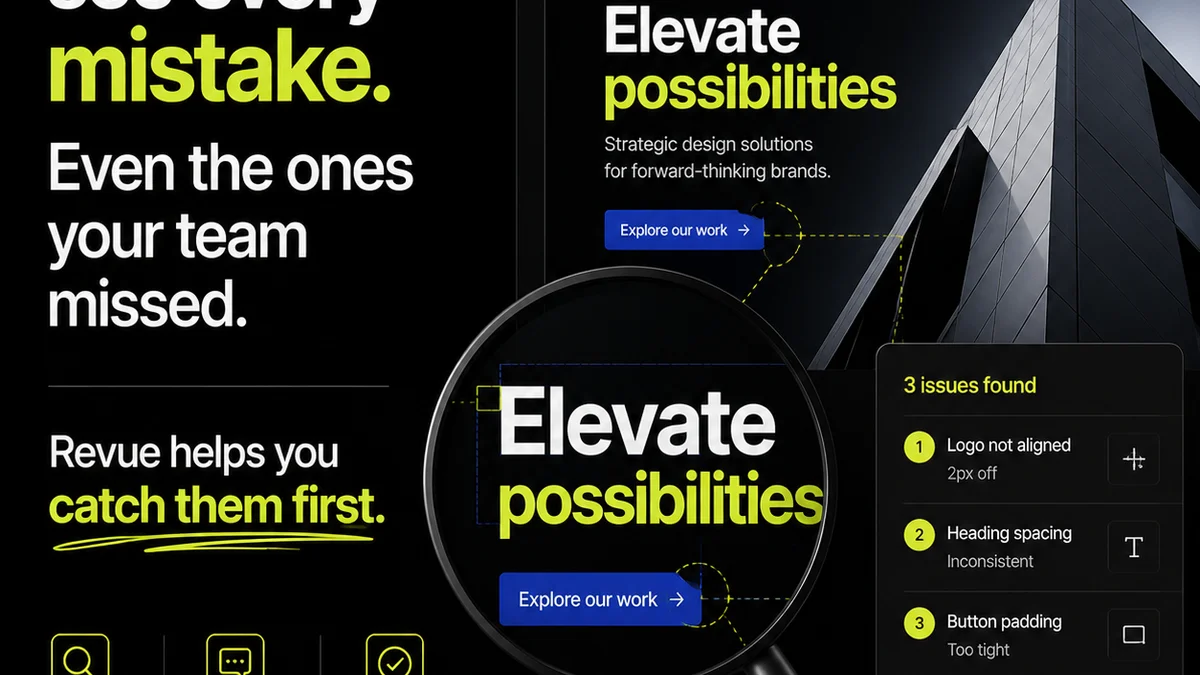
- Centralized Feedback: All client comments are captured directly on the visual asset within Revue. No more digging through emails or Slack threads. Every comment is contextual and timestamped.
- Clear Revision Tracking: See every version of an asset, who approved it, and what feedback led to the changes. This provides an auditable trail and prevents confusion during revisions.
- Streamlined Approvals: Define clear approval stages and get formal sign-offs directly within the platform. This eliminates ambiguity and ensures accountability.
- Integrated Quality Checks: By having all feedback and revision history in one place, your team has the complete picture needed for thorough quality assurance before final delivery.
Revue doesn’t magically eliminate human error. What it *does* do is create a transparent, organized, and accountable environment where the *system* supports your team in minimizing those errors.
Final Thought
The goal isn’t to create error-proof designers. It’s to build error-resistant processes.
Are you setting your team up for success, or are you inadvertently designing for failure?
Frequently asked questions
What is the biggest cause of human error in design projects?
The biggest cause is often not individual mistakes, but systemic issues within the project workflow. This includes unstructured feedback, unclear revision processes, poor internal handoffs, and reactive quality control rather than proactive checks.
How can I make client feedback more effective?
Make feedback clear, contextual, centralized, and trackable. Use a platform where clients can comment directly on the visual asset, ensuring specificity and reducing misinterpretation. Avoid vague comments and ensure all feedback is recorded in one place.
What's the best way to manage design revisions?
Implement a defined approval process with clear scope for each revision round. Ensure version control is in place and have a formal sign-off step before final delivery. This turns revisions into a controlled, quality-assured process rather than a chaotic back-and-forth.
How does a project management tool like Revue help reduce errors?
Revue centralizes feedback, tracks revisions transparently, streamlines approvals, and provides a clear history of project changes. This organization and visibility minimize miscommunication and ensure that details aren't missed, supporting a more robust quality assurance process.