Everyone talks about scope creep like it’s an inevitable client-side disease. You assume your client just doesn’t understand the full implications of their requests. That’s not entirely wrong. But it’s incomplete.
The deeper, harder truth? Scope creep often starts long before the client even utters a word. It’s an internal systems failure, not just an external problem.
1. The Myth of the 'Simple Change'
Clients ask for what they think are minor tweaks. A color adjustment here, a slightly different headline there. It feels easy. It feels harmless.
But each of these “simple changes” has a ripple effect.
The Hidden Costs of Small Asks
- Designers have to re-render assets.
- Developers have to rewrite code.
- Project managers have to update timelines and documentation.
- QA testers have to re-verify functionality.
- Account managers have to communicate the changes (and potential delays).
Individually, these might be small. Collectively, they drain your resources and erode your profit margins. This is where scope creep begins its insidious work.
2. Your Proposal Isn't a Contract. It's a Wish List.
Many agencies treat their initial proposals as a starting point, not a definitive agreement. They want to be flexible, to be good partners. That’s admirable. It’s also dangerous.
A proposal that lacks specificity becomes a breeding ground for misinterpretation. What you intended as a single round of revisions might be seen by the client as an open-ended buffet.
Define Deliverables Ruthlessly
- Be explicit about the number of concepts presented.
- Clearly define the number of revision rounds per deliverable.
- Specify the exact formats and specifications for final files.
- Outline the process for handling out-of-scope requests from the start.
Your proposal needs teeth. It needs to set clear expectations that both parties sign off on. This isn't about being rigid; it's about being professional.
3. The 'Discovery' Phase Is Your Firewall
Many agencies rush through discovery. They want to get to the creative work. They believe they understand the client’s needs well enough.
This is a critical mistake. An underdeveloped discovery phase is the primary reason for later scope creep.
What a Robust Discovery Looks Like
- Deep Dive Interviews: Go beyond surface-level needs. Understand business goals, target audiences, competitive landscape, and success metrics.
- Stakeholder Alignment: Ensure all key client stakeholders are involved and aligned on objectives and scope before creative work begins.
- Competitive Analysis: Understand what competitors are doing and how this project fits into the broader market.
- Technical Audit: If it’s a web or app project, thoroughly assess the existing tech stack, integrations, and potential limitations.
- Content Audit: If content is involved, understand the existing content, its performance, and what needs to be created or migrated.
A thorough discovery phase acts as your first line of defense against scope creep. It forces clarity and agreement upfront.
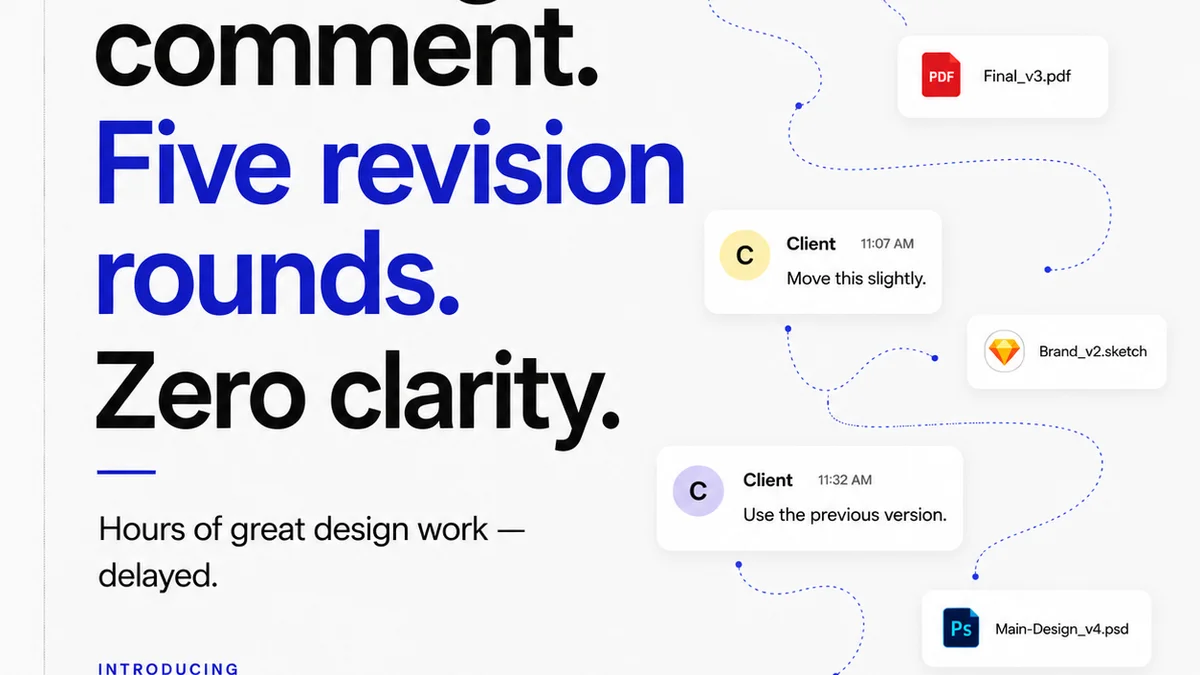
4. Feedback Isn't Feedback. It's Direction.
The feedback stage is where most projects derail. Clients provide vague, contradictory, or incomplete feedback. Your team tries to interpret it.
This interpretation gap is a direct path to scope creep.
Standardize Your Feedback Process
- Centralized Platform: Use a single source of truth for all feedback. Email chains and scattered documents are chaos.
- Clear Action Items: Train clients to provide specific, actionable feedback. Instead of “I don’t like it,” push for “The headline needs to be more benefit-driven for a B2B audience.”
- Designated Point Person: Have one client contact responsible for consolidating and delivering feedback. Avoid multiple voices shouting conflicting opinions.
- Revision Round Tracking: Log every feedback request and every revision made. This creates an audit trail.
When feedback is unstructured, it’s easy for clients to loop back, ask for things they already agreed were out of scope, or request fundamental changes that weren't part of the original plan.
5. The 'Us vs. Them' Mentality Kills Profit
The adversarial relationship—where the agency feels the client is always trying to get more for less, and the client feels the agency is nickel-and-diming them—is toxic.
It’s a symptom of poor process, not inherent malice.
Build a Collaborative Framework
- Transparent Communication: Share project progress, potential roadblocks, and budget implications openly.
- Proactive Problem Solving: Anticipate challenges and discuss them with the client early.
- Shared Ownership: Frame the project as a partnership working towards a common goal.
When both sides feel respected and informed, the impulse to “win” or “get away with something” diminishes. This fosters a more productive environment and naturally reduces scope creep.
Where Revue Fits In
Managing scope creep isn't just about saying 'no'. It's about having the systems in place to manage expectations, track progress, and maintain clarity throughout the project lifecycle.
This is precisely why we built Revue. It acts as your central hub for client collaboration and project oversight.
- Centralized Feedback: All client comments, annotations, and approvals live in one place. No more hunting through emails or Slack messages. Every piece of feedback is logged against the specific version it relates to.
- Revision Visibility: Easily track every iteration of a design or piece of content. Clients can see exactly what has changed based on their feedback, making it harder to claim something wasn't addressed or to introduce new, unrelated requests.
- Approval Workflow: Formalize the sign-off process. Once a client approves a version, it’s locked. Any subsequent changes require a new request and a clear understanding of whether it’s in or out of scope.
- Quality Assurance: Use Revue to conduct internal QA checks before presenting work to the client. Ensure all requirements are met and feedback has been implemented correctly, reducing back-and-forth and potential scope creep from missed details.
By structuring your client feedback and approval process within a dedicated platform, you create an objective record that supports your project scope and protects your team’s time and profitability.
Final Thought
Scope creep isn't a force of nature. It's a management problem.
It's a failure of clear communication, robust process, and defined expectations.
Are you managing your projects, or are your projects managing you?
Frequently asked questions
What is the most common cause of scope creep in creative agencies?
While clients requesting more than initially agreed upon is a factor, the most common root cause is often an underdeveloped discovery phase and a lack of clearly defined deliverables and revision processes in the initial proposal. This creates ambiguity that leads to misinterpretations and out-of-scope requests later.
How can a proposal prevent scope creep?
A proposal prevents scope creep by being highly specific about deliverables, the number of revision rounds included, project timelines, and the process for handling out-of-scope requests. It should serve as a clear, agreed-upon contract, not a vague starting point.
What's the best way to handle client feedback to avoid scope creep?
The best approach is to centralize all feedback in one platform, ensure feedback is specific and actionable (not vague), designate a single client point person for feedback consolidation, and meticulously track all revision rounds. This creates clarity and an audit trail.
Can technology help reduce scope creep?
Yes, project management and client feedback tools like Revue can significantly help. They provide a centralized platform for communication, feedback, and approvals, creating visibility and an objective record that supports the original scope and makes it harder for creep to occur unnoticed.