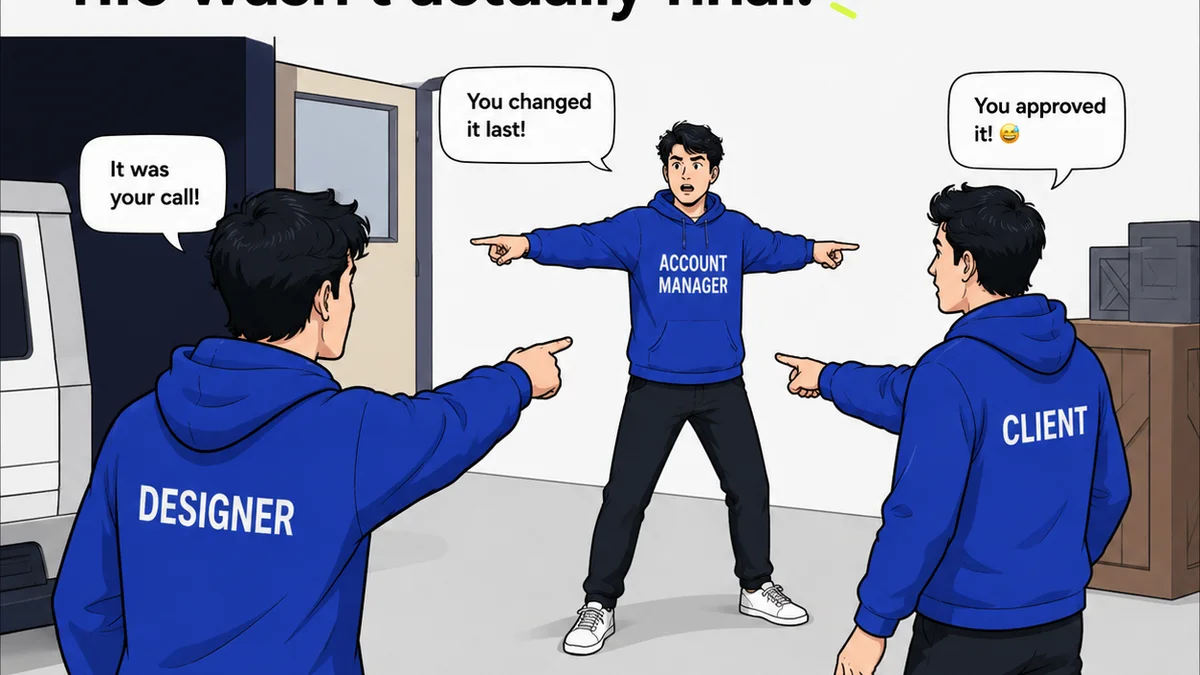
Everyone talks about scope creep. You hear about clear briefs, detailed SOWs, and strict change order processes. None of that is wrong. But it’s incomplete.
The real problem with scope creep, especially for enterprise teams, isn't a lack of documentation. It's a failure to manage *expectations* and *communication* at a fundamental level. It’s about the subtle erosion of project boundaries, driven by internal dynamics and a misunderstanding of the client's true objectives.
1. The Illusion of Control: Why Your SOW Isn't Enough
A Statement of Work (SOW) is a legal document. It’s essential, but it’s not a magic shield against scope creep. Think of it as the blueprint, not the construction manager.
Enterprise projects are complex. They involve multiple stakeholders, evolving market conditions, and often, a lack of deep technical understanding on the client side. The SOW is a snapshot in time, and the real world rarely stays still.
The deeper truth? You can have the most ironclad SOW, but if the client feels unheard or if their strategic goals shift, they'll push back. They won't see it as 'scope creep'; they'll see it as 'necessary adaptation'.
The Hidden Drivers
- Unclear Client Objectives: If the client can't articulate their core business goal for the project, how can you possibly define its scope?
- Internal Politics: A new executive joins, a competitor launches something new – these internal shifts can trigger 'urgent' requests that blow up the original plan.
- Fear of Saying No: Especially with large, valuable clients, teams might hesitate to push back, leading to a slow bleed of extra work.
- Lack of a Dedicated Project Owner (Client-Side): When no single person on the client team has the authority to make decisions, the project becomes a committee effort, ripe for scope expansion.
2. Beyond the Brief: Understanding the 'Why' Behind the 'What'
The project brief is where most teams start. But a good brief is just the beginning. You need to dig deeper.
What is the client *really* trying to achieve? Is it a new product launch? A brand refresh to attract a new demographic? A compliance requirement?
If you only focus on the 'what' – the specific deliverables listed in the brief – you miss the 'why'. And when the 'why' shifts, the 'what' becomes negotiable.
This requires active listening and probing questions. Don't just take the brief at face value. Ask follow-up questions that challenge assumptions and uncover underlying business needs.
Questions That Cut Through
Frequently asked questions
What is the most common cause of scope creep in enterprise projects?
While poor documentation plays a role, the most common cause is a failure to manage client expectations and underlying communication breakdowns. This often stems from unclear client objectives, internal client politics, or a fear of saying 'no' to valuable clients.
How can I ensure a client's 'urgent' requests don't derail my project?
Treat all requests, urgent or not, as change requests. Evaluate their impact on timeline, budget, and resources. Communicate this impact clearly to the client and require formal approval before proceeding. This process helps manage expectations and quantify the cost of 'urgency'.
Is it ever okay to accept a scope change without a formal change order?
Generally, no. For enterprise projects, formal change orders are critical. However, if a minor adjustment is truly negligible in terms of time and cost, and agreed upon verbally by key stakeholders, document it immediately in an email follow-up to create a record. But this should be the rare exception, not the rule.
How does better client communication prevent scope creep?
Proactive and transparent communication ensures everyone is aligned on project goals, progress, and potential challenges. By regularly updating clients, addressing concerns early, and clearly explaining the implications of any proposed changes, you build trust and reduce the likelihood of unilateral scope expansion.