The common wisdom is that running a remote design team is all about flexibility, async communication, and trusting your people. None of that is wrong. But it’s incomplete.
The deeper, harder truth? Leading a remote design team effectively requires a radical commitment to operational clarity and process. It’s less about perks and more about precision.
1. The Illusion of 'Same Same'
Many agencies and in-house teams try to replicate their in-office workflows, just… online. They assume that if everyone has Slack and Zoom, the core experience remains identical. This is a trap.
Remote work isn't just a location change; it's a fundamental shift in how information flows, how collaboration happens, and how accountability is maintained. Trying to force old habits into new spaces leads to friction, miscommunication, and ultimately, lower quality creative output.
The Ghost of the Office Walk-by
In a physical office, a quick chat over someone's shoulder, a glance at a monitor, or a spontaneous whiteboard session happen organically. These informal touchpoints are invaluable for quick alignment and problem-solving.
Replicating this online is difficult. Relying solely on scheduled video calls can feel formal and interruptive. Unstructured DMs get lost. The subtle, constant feedback loops of an office are hard to reconstruct.
Information Silos Bloom in the Wild
Without a central hub, knowledge fragments. Who's working on what? What's the latest feedback from the client? Where's the final approved asset? These questions become exponentially harder to answer when your team is spread across time zones and home offices.
This lack of visibility is a silent killer of productivity and morale. It leads to duplicated effort, missed deadlines, and frustration on all sides.
2. Standardize Where It Counts
If your remote design team is going to thrive, you need to bake standardization into your core processes. This isn't about stifling creativity; it's about creating a predictable, reliable framework so that creative energy can be focused on the work itself, not on navigating chaos.
Feedback Protocols: The Unsung Hero
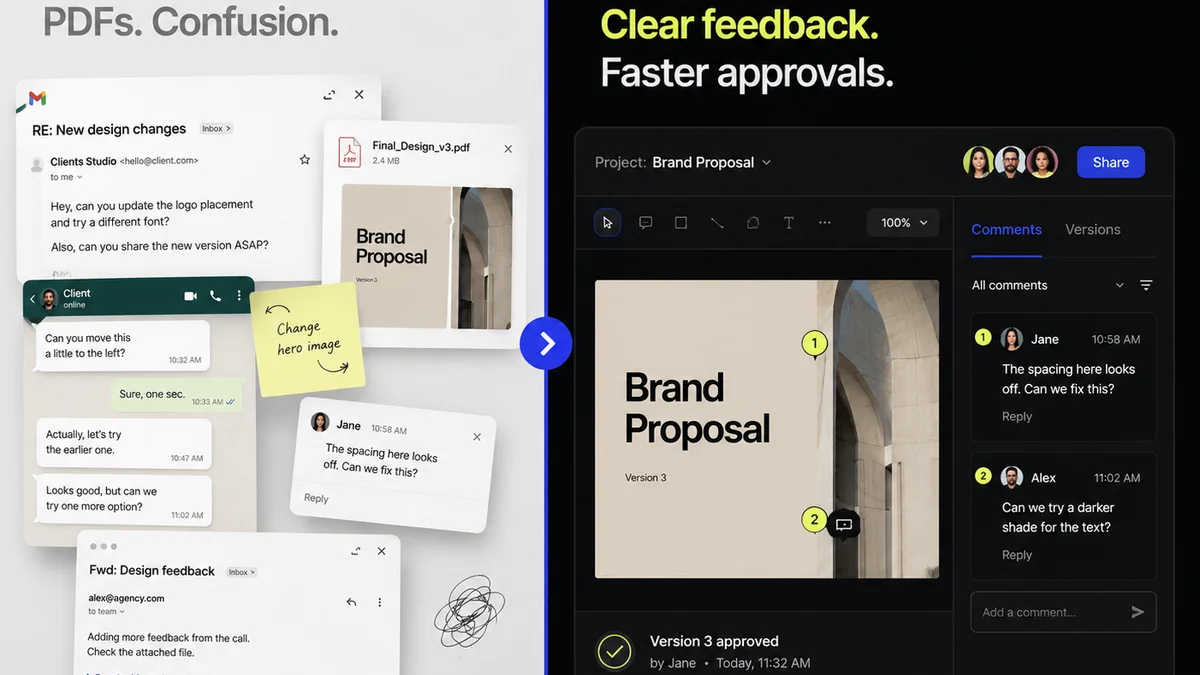
Client feedback is the lifeblood of agency work. But when it’s scattered across email threads, Slack channels, and random video call notes, it becomes a nightmare to manage. Remote teams amplify this problem tenfold.
- Clients get frustrated when their comments aren't seen or actioned.
- Designers waste time hunting for the latest revision instructions.
- Account managers struggle to track what's been approved and what's still pending.
- Quality control becomes a guessing game.
A standardized system for collecting, organizing, and acting on feedback is non-negotiable. This means a single source of truth where all client input resides, is clearly attributed, and can be easily tracked against specific design elements.
Revision Cycles: From Black Hole to Black and White
The revision process can easily become a black hole for remote teams. Without clear visibility into the history of changes, who requested them, and which version is currently 'live', teams can spin their wheels endlessly.
Standardizing how revisions are logged, communicated, and approved provides crucial clarity. It ensures everyone is working from the same page and understands the progression of the design.
Asset Management: Beyond the Shared Drive
A messy shared drive is bad enough in an office. Remotely, it’s a recipe for disaster. Version control issues, difficulty finding final files, and a general lack of order can cripple a team’s output.
Implementing a clear, consistent system for naming, organizing, and storing final assets is vital. Think about versioning, clear folder structures, and definitive 'final' markers.
3. Asynchronous Mastery, Not Just Acceptance
Async communication is often touted as the silver bullet for remote teams. But simply *accepting* async doesn't make you good at it. True async mastery means structuring your work and communication so that people can contribute effectively on their own schedules, without constant real-time input.
The Art of the Detailed Brief
In an office, a quick verbal clarification can solve many brief ambiguities. Remotely, your written briefs must be exceptionally clear, comprehensive, and anticipate potential questions. Assume nothing.
Context is King (Especially Remotely)
When you're not in the same room, context is easily lost. Every communication, every request, every piece of feedback needs sufficient background information. Why is this change being requested? What problem does it solve? Who is the target audience?
Over-communicating context is essential. This might mean more detailed project management tickets, richer annotations on designs, or even short Loom videos explaining complex points.
Structured Check-ins, Not Just 'Stand-ups'
While daily stand-ups can be adapted for remote teams, they often become performative. True async progress tracking is about structured updates that provide real insight without demanding real-time presence.
- Use project management tools for task status updates.
- Require clear, concise summaries of progress and blockers.
- Schedule focused, outcome-oriented meetings only when absolutely necessary.
4. The Human Element: Proactive Connection
It’s easy to get so caught up in process and tools that you forget the 'team' part of 'remote team'. The lack of casual, in-person interaction can lead to feelings of isolation and disconnect, impacting morale and collaboration.
Intentional Socialization
You have to deliberately create opportunities for non-work interaction. This isn't about forcing forced fun; it's about creating space for people to connect as humans.
- Virtual coffee breaks.
- Online game sessions.
- Dedicated non-work Slack channels.
- Virtual team lunches.
The key is making these optional and genuinely low-pressure.
Visibility of Work, Not Just People
While social connection is important, visible progress on the actual work is equally crucial for team cohesion. When people can see what their colleagues are working on, the shared sense of purpose is reinforced.
This requires transparent project management and clear communication about project status and individual contributions. It combats the feeling that work is happening 'somewhere' without tangible evidence.
Empathy in Action
Understand that remote work comes with unique challenges for individuals. Different home environments, varying levels of distractions, and the blurring of work/life boundaries require empathy from leadership.
Be flexible. Check in on your team members as individuals, not just as task-doers. Recognize that performance can look different when people are working remotely.
Where Revue Fits In
Managing a remote design team means wrestling with feedback, revisions, and approvals across distributed channels. This is where a centralized platform becomes indispensable.
Revue provides a single source of truth for all client feedback, no matter where it originates. Comments are pinned directly to the creative asset, eliminating ambiguity. Revision history is clear, showing who requested what and when.
This visibility streamlines the entire review and approval process, ensuring remote teams stay aligned and productive. It automates the tracking of changes, reduces the back-and-forth, and provides a clear audit trail – all critical for maintaining quality and efficiency when your team isn't in the same room.
Final Thought
Running a remote design team isn't about replicating the office online. It's about building a more intentional, structured, and transparent operational framework. It requires a different kind of leadership – one that prioritizes clarity, consistency, and connection.
Are you building a remote-first operation, or just doing remote office work?
Frequently asked questions
What's the biggest mistake leaders make with remote design teams?
The biggest mistake is assuming remote work requires no change to existing office-based processes. Leaders often try to replicate in-office workflows online, leading to communication breakdowns, lost context, and inefficiencies. True success comes from adapting and standardizing processes specifically for a distributed environment.
How can I ensure client feedback is managed effectively with a remote team?
Implement a centralized system for all client feedback. This platform should allow feedback to be pinned directly to creative assets, track revision history, and provide clear status updates. This eliminates scattered communication across emails and chat apps, ensuring nothing gets missed and designers always work with the latest instructions.
What are the key elements of successful asynchronous communication for design teams?
Successful async communication requires highly detailed briefs, over-communication of context, and structured updates. Assume no prior knowledge and provide all necessary background information in writing. Utilize project management tools for progress tracking rather than relying solely on real-time meetings.
How do I foster team connection and morale in a remote design setting?
Proactively create opportunities for both work-related and social interaction. This includes intentional virtual social events (like coffee breaks or game sessions), dedicated non-work communication channels, and ensuring visibility of team members' work and contributions. Empathy and understanding of individual remote challenges are also crucial.