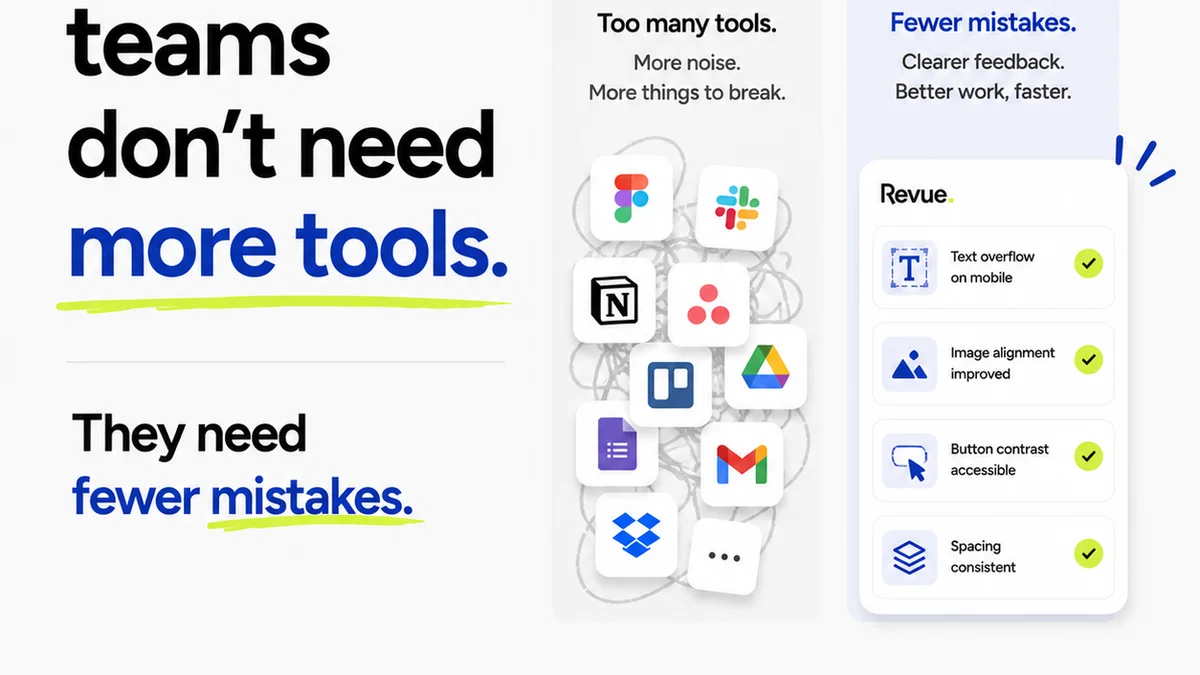
Everyone talks about streamlining creative workflows. They’ll tell you it’s about better project management software, clearer briefs, and faster communication.
None of that is wrong. But it’s incomplete.
The real bottleneck? Client reviews and approvals. It’s where projects go to die, or at least get stuck in endless loops of minor tweaks. World-class agencies know that true efficiency isn't just about doing more work, faster. It's about reducing wasted effort. And that means mastering review automation.
The Hard Truth: Feedback Isn't Free
You think you're just getting feedback. You're not. You're paying for it with time, money, and lost momentum. Every email chain, every confusing annotation, every missed revision costs your agency dearly.
This isn't a minor inefficiency. It's a fundamental drag on profitability and team morale.
Agencies that master review automation don't just move faster. They make more money on every project and deliver happier clients.
1. The Chaos of Unstructured Feedback
What does a typical review cycle look like in most agencies?
- Client receives a link (email, cloud storage).
- Client provides feedback in a scattered way: email replies, Slack messages, handwritten notes on a PDF, verbal comments on a call.
- Project manager or account manager tries to consolidate this Frankenstein feedback.
- This consolidation is prone to errors, misinterpretations, and omissions.
- Designer/developer has to decipher vague or conflicting instructions.
- Another round of revisions, another round of feedback.
It's a recipe for disaster.
This unstructured feedback loop is the primary reason projects run over budget and behind schedule. It’s the silent killer of agency profits.
The Cost of Confusion
Every hour spent deciphering feedback is an hour not spent on billable work or strategic client development.
Misinterpreted feedback leads to costly rework. Sometimes, it means starting over.
Client frustration mounts with each delayed deliverable and perceived lack of progress. This erodes trust.
2. The Myth of 'Faster' Feedback Tools
Many tools promise to speed up feedback. They offer annotation features, comment threads, even version control.
But here’s the contrarian take: most of these tools just digitize the chaos. They don't solve the underlying problem of unstructured, unmanaged feedback.
You can annotate a PDF all you want, but if the feedback isn't clear, actionable, and centrally managed, you're still stuck.
Annotation Isn't Automation
Tools that allow commenting directly on a design are a step up. But they often:
- Lack context: Who said what? When? Is this a critical change or a suggestion?
- Create silos: Feedback lives within the tool, separate from project management and other communication.
- Require manual consolidation: Someone still has to extract the relevant actions and assign them.
- Don't integrate with approval workflows: The
Frequently asked questions
What is review automation in an agency context?
Review automation for agencies means using technology to streamline the process of receiving, organizing, acting on, and approving client feedback and creative work. It aims to reduce manual effort, minimize errors, and speed up turnaround times.
How does review automation save agencies money?
It saves money by reducing the time spent deciphering feedback, minimizing costly rework due to misinterpretation, and preventing project delays that increase overhead. By speeding up approvals, it also allows agencies to move on to the next billable task faster.
Is review automation only for large agencies?
No. Smaller and mid-sized agencies can benefit significantly from review automation. The core principle is managing feedback efficiently, regardless of agency size. Tools can scale to fit different operational needs.
What are the key benefits of automating client reviews?
Key benefits include faster project completion, reduced errors and rework, improved client satisfaction through clearer communication and quicker progress, better team collaboration, and increased profitability by optimizing billable hours.