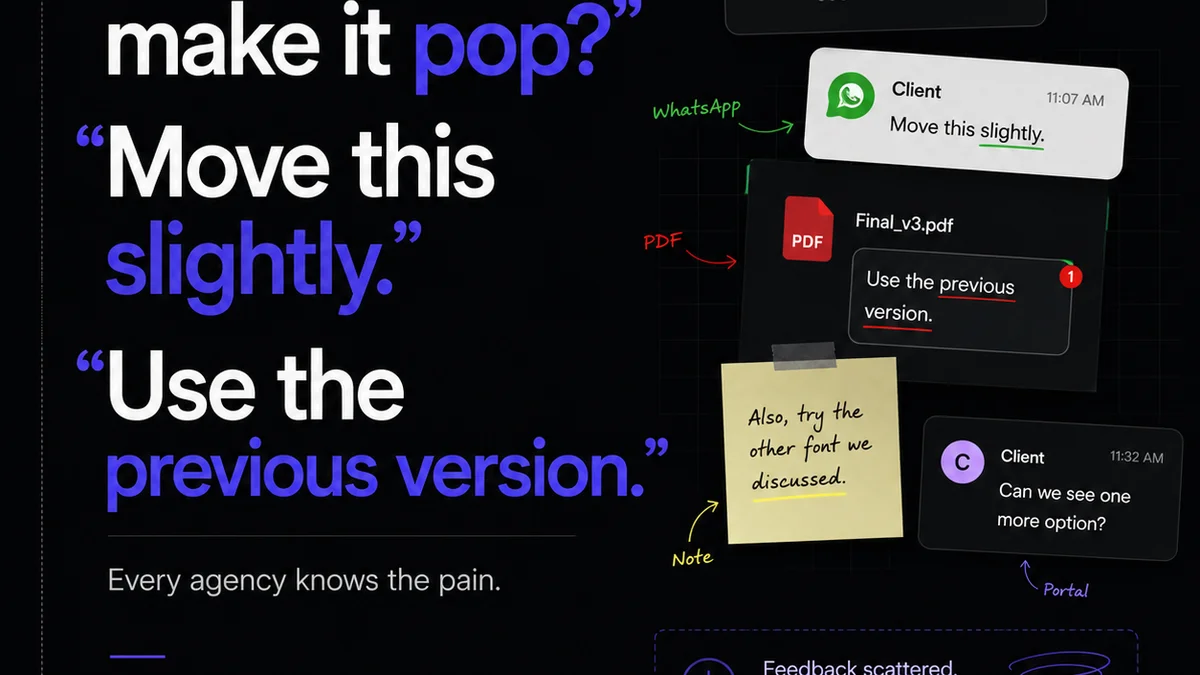
Everyone knows revision management is a pain. You've probably heard it's about clear communication, detailed briefs, and setting expectations. None of that is wrong. But it’s incomplete.
The hard truth? Poor revision management isn't a communication problem. It’s a process problem. And it’s costing you time, money, and client trust.
1. The "Just One More Thing" Trap
It starts small. A client asks for a minor tweak. Then another. Before you know it, you’re deep into scope creep, battling endless rounds of revisions that weren’t in the original plan.
This isn't malicious. It's often a symptom of a fuzzy start and unclear endpoints. Clients don't see the hours ticking by. They see a design they *almost* love.
Why it happens:
- Vague initial briefs
- Undefined approval gates
- Fear of saying "no"
- Lack of a centralized feedback hub
This creates a situation where revisions become the default instead of the exception. Every "quick change" adds up, silently draining project profitability.
2. Feedback Chaos: Email, Slack, and Doodles
Where does feedback live in your agency? If it’s scattered across a dozen email threads, a dozen Slack channels, and a hundred sticky notes, you’re drowning.
Decisions get lost. Context disappears. What one person approved might be contradicted by another in a different channel. This leads to rework, misinterpretations, and ultimately, a product that misses the mark.
You can’t manage what you can’t see. And you certainly can’t execute effectively when feedback is a digital scavenger hunt.
Symptoms of feedback chaos:
- "Didn't we already discuss this?"
- "Who signed off on that color change?"
- "I thought you said to make it *more* blue, not less."
- Wasted time searching for crucial comments
This disorganization is a direct hit to efficiency. It’s not just about finding information; it’s about ensuring the *right* information guides the work.
3. The Illusion of "Approved"
You get the email: "Looks good, approve." Great, right? Not so fast.
What does "approved" actually mean? Does it mean the client loves it, or just that they're tired of looking at it? Does it mean final, or just final for *this* round?
Without a clear, documented, and version-controlled approval process, you’re operating on assumptions. This is a recipe for disputes down the line when the client remembers a conversation that never made it into the official record.
The dangers of informal approvals:
- Undefined scope boundaries
- Difficulty tracking project history
- Ambiguity about finality
- Increased risk of legal or contractual disputes
True approval requires a clear timestamp, a specific version of the work, and a record of who approved it. Anything less is a gamble.
4. Quality Control as an Afterthought
Revisions often focus on client-facing elements. But what about the behind-the-scenes quality? The code, the file structure, the accessibility standards?
Skipping rigorous quality checks during the revision process means you’re layering potential problems onto existing work. A design might look good, but if the underlying assets aren’t optimized or the code isn't clean, you’re setting up future failure.
This impacts performance, maintainability, and the overall user experience. It’s the difference between a project that’s merely "done" and one that’s truly finished and built to last.
Key areas for QC during revisions:
- Asset optimization (file size, format)
- Code hygiene and performance
- Accessibility compliance (WCAG guidelines are a good start)
- Cross-browser/device compatibility
- Adherence to brand guidelines
Integrate QC checks early and often. Don't let them be a last-minute scramble.
Where Revue Fits In
Managing revisions effectively isn't about mastering a complex tool; it's about implementing a structured process. This is where a centralized platform like Revue becomes indispensable.
Revue provides a single source of truth for all creative assets and client feedback. It streamlines the entire revision cycle by:
- Centralizing Feedback: All comments, annotations, and discussions live directly on the asset. No more hunting through emails or Slack.
- Managing Revisions: Track every version of a design, see what changed between iterations, and understand the revision history at a glance.
- Streamlining Approvals: Implement clear, documented approval workflows. Know exactly who approved what, and when.
- Enhancing Quality Checks: Ensure all feedback and required changes are addressed before final delivery, maintaining project integrity.
By bringing order to the chaos, Revue helps your team focus on creating great work, not wrestling with inefficient processes.
Final Thought
Revision management is more than just tracking changes. It’s a reflection of your agency’s operational maturity. Are you reacting to feedback, or proactively guiding the creative process to a successful conclusion?
The difference defines your agency’s efficiency, profitability, and reputation.
Frequently asked questions
What is the biggest mistake agencies make in revision management?
The biggest mistake is treating revision management as purely a communication issue. The root cause is often a flawed creative process, lack of clear endpoints, and disorganization in how feedback is collected and acted upon.
How can I prevent scope creep during revisions?
Prevent scope creep by establishing clear project briefs, defining specific approval gates, and using a centralized system to track all feedback and changes. Be firm about what constitutes out-of-scope work and communicate any additional costs or timelines clearly.
Why is feedback scattered across email and Slack a problem?
Scattered feedback leads to lost context, missed decisions, and conflicting instructions. It makes it impossible to track the project's history accurately, increasing the risk of errors, rework, and client disputes. A single source of truth is essential.
How does a centralized platform help with approvals?
A centralized platform provides a clear, documented record of approvals. It timestamps who approved what and when, linking approvals directly to specific versions of the work. This removes ambiguity and protects against future disagreements.