Everyone thinks revision management is about managing clients. That they’re indecisive, that they don’t know what they want, that they change their minds constantly. None of that is entirely wrong. But it’s incomplete.
The hard truth about revision management is that the biggest bottlenecks aren’t the clients. They’re the internal processes, the communication breakdowns, and the lack of clear systems on your end.
This isn’t about finger-pointing. It’s about understanding the real drivers of revision hell and fixing them. So you can deliver better work, faster, and with less friction.
1. The Assumption: Clients Are the Problem
It’s easy to blame the client. They sent feedback late. They asked for too many rounds. They used vague language. They didn’t sign off when they said they would.
These are all common complaints. And sometimes, they’re true.
But thinking this way lets you off the hook. It prevents you from looking at your own workflows. The ones that might be contributing to these very issues.
The Real Problem: Unclear Scoping and Briefs
If a client doesn’t know what they want, it’s often because you didn’t help them define it clearly enough upfront.
A vague brief leads to vague feedback. And vague feedback leads to endless revisions.
Did you:
- Ask enough probing questions?
- Document objectives and KPIs?
- Define success metrics?
- Establish clear deliverables and scope?
- Get written sign-off on the brief itself?
If the answer to any of these is no, you’ve already set the stage for trouble. The client isn’t being difficult; they’re working with incomplete information.
The Real Problem: Poorly Defined Feedback Loops
How do you collect feedback? Via email chains? Slack messages? Random phone calls?
This chaotic approach is a recipe for disaster. Information gets lost. Context is stripped away. It’s hard to track what’s been addressed and what hasn’t.
Clients get frustrated trying to consolidate their thoughts. You get frustrated trying to interpret them.
2. The Assumption: More Revisions = More Client Satisfaction
Many agencies operate under the illusion that accommodating every single client request, no matter how small or how late, is the key to a happy client. It’s a customer-service mindset gone rogue.
This approach often leads to scope creep, budget overruns, and burnt-out teams. It rarely leads to a better final product.
The Hard Truth: Revisions Should Be About Refinement, Not Reinvention
A healthy revision process is about making targeted improvements based on agreed-upon goals. It’s not about letting clients redesign the work scope-by-scope.
Your job is to guide the client toward the best possible outcome, not just to blindly execute their every whim.
The Real Problem: Lack of a Clear Revision Policy
Do you have a written revision policy? Is it communicated upfront?
A good policy clearly states:
- The number of revision rounds included in the project fee.
- What constitutes a revision versus a new scope of work.
- The process for submitting feedback (e.g., a specific tool, a consolidated document).
- Timelines for feedback and revisions.
- The process for handling out-of-scope requests (e.g., additional fees, separate SOWs).
Without this clarity, you’re leaving the door wide open for endless back-and-forth.
The Real Problem: Not Educating the Client
Clients aren’t design or marketing experts. They need guidance.
You need to educate them on:
- Why certain design choices were made.
- What the implications of their requested changes might be (e.g., impact on usability, brand consistency, technical feasibility).
- The value of sticking to the original brief and objectives.
This doesn't mean being condescending. It means being a strategic partner.
3. The Assumption: Feedback is Always Actionable
You receive feedback. It seems straightforward. You implement it. Then the client says, “That’s not quite it.”
Sound familiar?
The problem isn’t that the client is impossible. It’s that the feedback itself was flawed.
The Hard Truth: Not All Feedback is Created Equal
Feedback often reflects personal taste, gut feelings, or a misunderstanding of the project goals, rather than objective critique.
Your process needs to filter and interpret feedback, not just blindly accept it.
The Real Problem: Ambiguous or Subjective Feedback
Phrases like:
- “Make it pop more.”
- “I don’t like the blue.”
- “It feels… off.”
These are opinions, not actionable directives. They lack the specificity needed for effective revisions.
When you receive feedback like this, your immediate response should be to ask clarifying questions. What does “pop” mean in this context? What specifically about the blue isn’t working? What feeling are you trying to evoke?
The Real Problem: Lack of a Centralized Feedback System
Trying to track feedback across scattered emails, Slack messages, and verbal notes is a nightmare. It’s easy for crucial details to get lost or misinterpreted.
When feedback isn’t centralized, it’s hard to:
- See the full history of comments.
- Identify conflicting feedback from different stakeholders.
- Ensure all feedback has been addressed.
- Track who provided which feedback.
This lack of a single source of truth inevitably leads to rework and frustration.
4. The Assumption: The Final Sign-off is the End of Revisions
You get the final approval. Everyone breathes a sigh of relief. Then, a week later, the client remembers something. Or a new stakeholder weighs in.
This is a common pitfall that extends the revision cycle far beyond what was agreed upon.
The Hard Truth: Sign-off Needs to Be Formal and Final
A sign-off should represent a commitment. Not a temporary pause.
Your process needs to enforce this finality.
The Real Problem: Weak or Informal Approval Processes
If an approval is just a casual “Looks good!” in an email, it carries little weight.
A formal approval process should involve:
- A clear deliverable ready for review.
- A designated point person for approval.
- A formal mechanism for approval (e.g., a button click in a review tool, a signed PDF).
- Confirmation that this approval signifies the end of the current scope and fee.
Anything less is an invitation for further requests.
The Real Problem: Not Defining
Frequently asked questions
What is the biggest mistake agencies make in revision management?
The biggest mistake is blaming clients. The real issues often lie in internal processes like unclear briefs, chaotic feedback loops, and informal approval methods that create confusion and prolong revisions.
How can I prevent scope creep during revisions?
Prevent scope creep by clearly defining project scope and deliverables in the initial brief, establishing a formal revision policy upfront, and using a system to track and manage feedback, distinguishing between revisions and out-of-scope requests.
What makes feedback actionable?
Actionable feedback is specific, objective, and directly relates to the project's goals. Vague comments like 'make it pop' are not actionable. Always ask clarifying questions to understand the 'why' behind the feedback.
How important is a centralized feedback system?
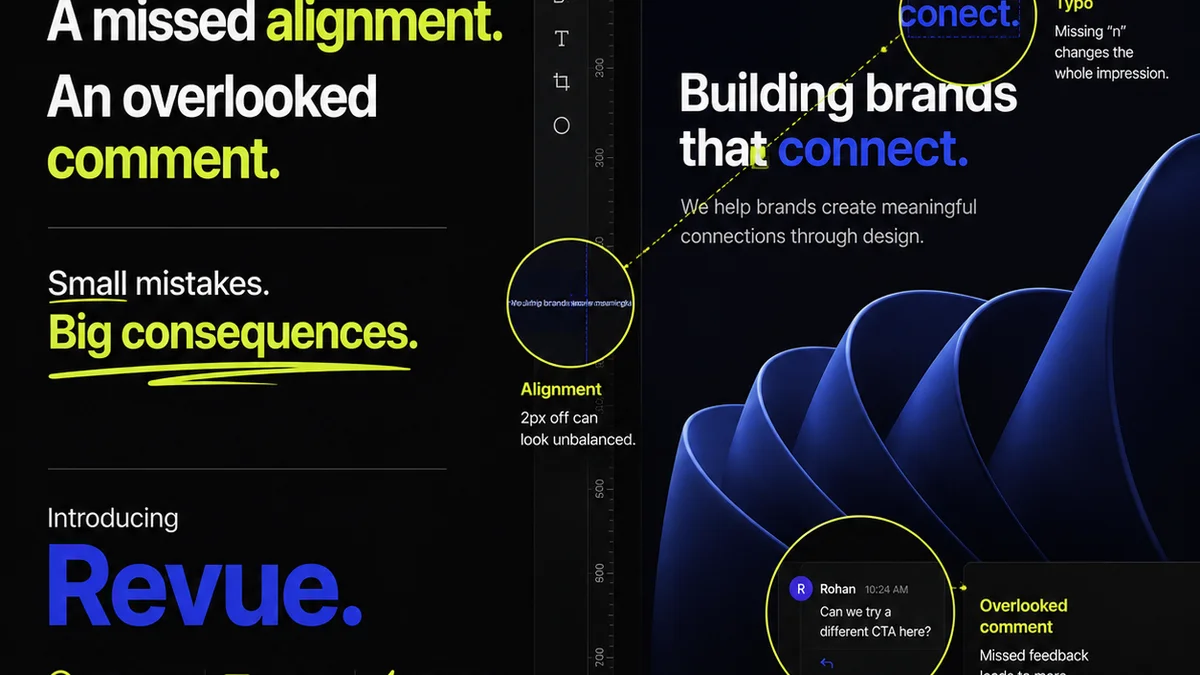
Extremely important. A centralized system like Revue provides a single source of truth for all comments, tracks feedback history, identifies conflicting input, and ensures all feedback is addressed, reducing miscommunication and rework.